Blog Details
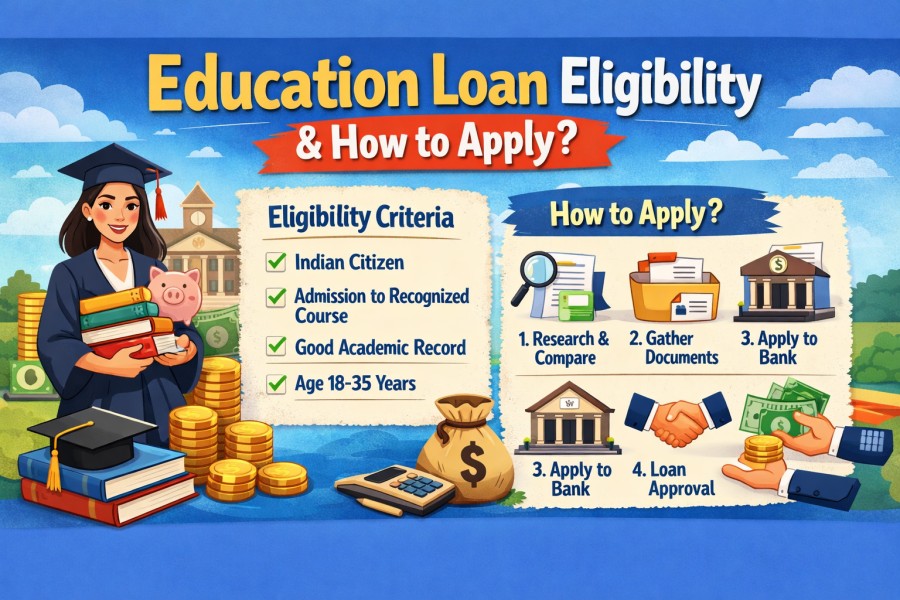
What is the Education Loan Eligibility & How to Apply?
Higher education is one of the most important investments in your future, but rising tuition fees and living costs can make it financially challenging. This is where an education loan plays a crucial role, helping students fund their studies in India or abroad without immediate financial stress. However, before applying, it’s essential to understand the education loan eligibility criteria, required documentation, and the correct application process.
From choosing between a secured and an unsecured education loan to estimating your education loan EMI using an education loan calculator, proper planning can make the entire process smooth and hassle-free. In this guide, we’ll discuss everything you need to know about eligibility requirements, study loan documents, and a step-by-step process for applying for a loan for abroad study or domestic education.
What is an Education Loan?
An education loan, also known as a student loan, is a financial solution that helps students cover the cost of higher education. It supports expenses such as tuition fees, accommodation, travel (especially for overseas study), books, and other academic needs.
Instead of paying the entire cost upfront, students can rely on an education loan and repay it in easy EMIs after completing their course. The repayment typically begins after a grace period, giving students time to secure a job.
Many lenders offer both secured (collateralized) and unsecured education loans, depending on the loan amount and applicant profile. Before applying, students can use a study loan calculator to estimate their education loan EMI and plan repayment efficiently.
In simple terms, an education loan makes quality education accessible by reducing the immediate financial burden while offering flexible repayment options.
Related blog: Is an Education Loan Calculator Useful for Studying Abroad?
What are the Education Loan Eligibility Criteria in 2026?
Understanding the education loan eligibility criteria in 2026 is the first step toward securing funding for your higher education. Lenders evaluate multiple factors, such as your academic background, admission status, and your co-applicant's financial stability, before approving a loan.
Whether you're applying for a domestic course or a loan for abroad study, meeting these criteria improves your chances of approval and helps you get better education loan interest rates and flexible student loan EMIs. Before applying, check if you meet the basic education loan eligibility conditions:
1. Nationality: The applicant must be an Indian citizen to apply for an education loan from Indian banks or financial institutions.
2. Age Limit: Applicants are generally required to be between 16 and 35 years at the time of application.
3. Academic Qualification: A strong academic record in 10th, 12th, and graduation is preferred, as it increases the chances of loan approval.
4. Admission Status: You must have secured a confirmed admission to a recognized university or college, either in India or abroad, or have a loan for overseas study.
5. Course Eligibility: Loans are typically approved for graduation, post-graduation, and professional courses such as Engineering, Medical, MBA, and other technical programs.
6. Co-applicant Requirement: A co-borrower (parent, guardian, or spouse) is mandatory. The co-applicant should have a stable income and a good credit score to support the application.
7. Collateral Requirement
- Up to ₹7.5 lakh → Usually no collateral required
- Above ₹7.5 lakh → Collateral is required, making it a secured education loan
What are the documents required for a study loan?
To apply for an education loan, you must submit a set of important study loan documents for verification. These documents help lenders assess your academic background, admission status, and your co-applicant's financial capability. Additionally, doing a proper loan comparison before applying can help you choose the best lender with lower interest rates and better repayment options.
1. Student Documents (Applicant)
These documents confirm your identity and academic eligibility:
- Application Form: Duly filled and signed application form with passport-size photographs
- KYC Documents: PAN Card (mandatory), Aadhaar Card, Passport, Voter ID, or Driving License
- Academic Documents: Mark sheets and passing certificates of 10th, 12th, and graduation (if applicable)
- Proof of Admission: Admission/Offer Letter from the university, along with the detailed fee structure
- Entrance Exam Scores (if required): GRE, GMAT, TOEFL, IELTS, etc. (mainly for abroad studies)
- Course Expense Details: Breakdown of tuition fees, accommodation, and other living expenses
2. Co-applicant / Guarantor Documents
A co-applicant (parent/guardian/spouse) is mandatory for most education loans:
- KYC Documents: PAN Card and address proof (Aadhaar, Passport, utility bill, etc.).
- Income Proof (Salaried): Last 3 months’ salary slips, Form 16, and 6 months’ bank statements.
- Income Proof (Self-Employed): Last 2 years’ ITR, 6 months’ bank statements, and business proof.
3. Additional Documents (If Applicable)
- Passport: Mandatory for students applying for a loan for overseas study.
- Collateral Documents: Required for a secured education loan (property papers, FD receipts, etc.).
- Scholarship Letter: Proof of any scholarship or financial assistance received.
Final Tip
Always ensure your study loan documents are complete and accurate before submission. Proper documentation not only speeds up approval but also improves your chances of getting better education loan interest rates and manageable student loan EMIs.
Related blog: How to Calculate Education Loan Interest: Step-by-Step Guide
How to Apply for an Education Loan (Step-by-Step)
Applying for an education loan in 2026 is simple and largely digital, but following the right process is crucial for quick approval. From checking education loan eligibility to final disbursement, each step plays an important role. Doing proper loan comparison, preparing study loan documents, and understanding your education loan EMI in advance can significantly improve your chances of approval.
Step 1: Check Eligibility & Course Details
Start by verifying your education loan eligibility:
- Must be an Indian citizen (usually 16–35 years)
- Confirmed admission to a recognized college/university
- The course should be graduation, post-graduation, or professional
- Co-applicant (parent/guardian) required
This step ensures you meet basic criteria before applying.
Step 2: Compare Lenders (Loan Comparison)
Do a detailed loan comparison between:
- Public sector banks (SBI, etc.)
- Private banks (HDFC, ICICI)
- NBFCs
Compare key factors:
- Education loan interest rates (fixed vs floating)
- Processing fees
- Loan amount limits
- Repayment tenure & flexibility
Choosing the right lender can reduce your total repayment burden.
Step 3: Calculate EMI in Advance
Use a study loan calculator to estimate your:
- Monthly student loan EMIs
- Total interest payable
This helps you plan repayment and avoid financial stress later.
Step 4: Prepare All Required Documents
Keep all study loan documents ready:
- KYC documents (PAN, Aadhaar, Passport)
- Academic records & admission letter
- Co-applicant income proof
- Collateral documents (for secured education loan)
Complete documentation speeds up approval.
Step 5: Fill the Application Form
You can apply through:
- Bank/NBFC official website (online mode)
- Visiting the nearest branch (offline mode)
- Government Vidyalakshmi Portal
Fill in accurate details and upload all documents carefully.
Step 6: Application Review & Verification
The lender evaluates your application based on:
- Academic performance
- Course & university credibility
- Co-applicant’s income and credit score
- Collateral (if applicable)
Some lenders may also conduct a verification call or personal discussion.
Step 7: Loan Sanction & Offer Letter
Once approved:
- You receive a sanction letter
- It includes the loan amount, the education loan interest, tenure, and terms
Review all terms carefully before accepting.
Step 8: Loan Agreement & Disbursement
- Sign the loan agreement
- Submit any pending documents
- Loan amount is disbursed:
- Directly to the institution (most common)
- Or in installments based on the fee schedule
Important Things to Remember
- Secured vs Unsecured Loan: Secured loans have lower interest but require collateral; unsecured loans are faster but costlier
- Co-applicant is Mandatory: A financially stable co-borrower improves approval chances
- Moratorium Period: Repayment of education loan EMI usually starts after course completion + 6–12 months
Final Tip
Always do proper loan comparison, calculate your student loan EMIs, and keep your study loan documents ready before applying. A well-planned application increases approval chances and ensures you get the best deal on your education loan.
Conclusion
An education loan is one of the most effective ways to finance your higher education without putting immediate pressure on your finances. Whether you are planning to study in India or applying for a loan for abroad study, understanding the complete process from education loan eligibility to documentation and application is essential for a smooth experience.
By comparing loans, checking your eligibility in advance, and using an education loan calculator to estimate your EMI, you can make informed financial decisions. Choosing between a secured education loan and an unsecured option, along with preparing the right study loan documents, will significantly improve your chances of approval.
With the right planning and approach, you can not only secure funding easily but also manage your student loan EMIs efficiently, making your education journey stress-free and financially smart.
Compare the best lenders, calculate your education loan EMI, and get expert guidance with Loan Quantum, your smart partner for hassle-free student loans.
Frequently Asked Questions
No, Collateral is not required for smaller loans (usually up to ₹7.5 lakh). For higher amounts, lenders may require security, making the loan a secured one.
Yes, most lenders require a co-applicant (parent/guardian/spouse) with a stable income and good credit score.
Do a proper loan comparison by checking interest rates, processing fees, repayment terms, and lender credibility before applying.
Yes, education loan interest starts accruing from the time of disbursement. However, repayment begins after the moratorium period.
Approval typically takes 7–15 working days, depending on the lender, loan type, and completeness of your study loan documents.