Blog Details
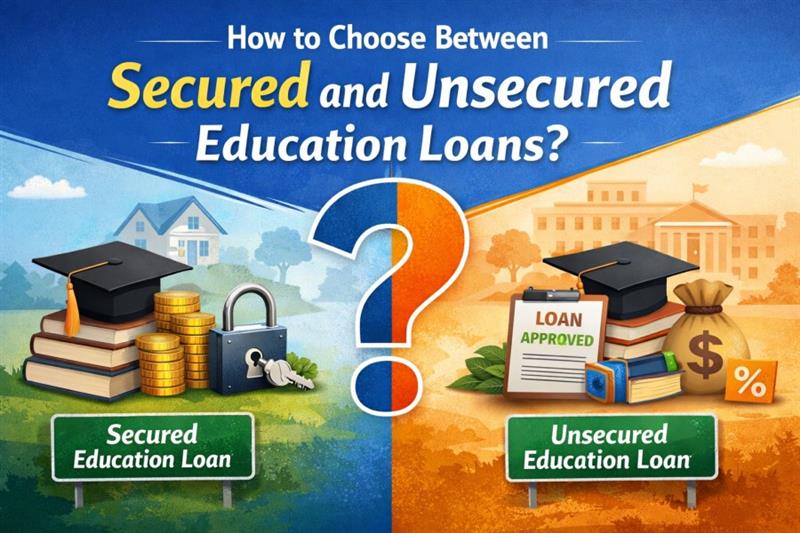
How to Choose Between Secured and Unsecured Education Loans?
Higher education is one of the most significant expenditures you'll ever make. From tuition fees to accommodation, travel, and living expenses, the costs quickly add up. This is where an education loan becomes a crucial financial tool for students and families. However, one of the biggest decisions borrowers' faces is choosing between a secured education loan and an unsecured education loan.
Making the wrong choice can lead to higher interest costs, financial stress, or even risk to your assets. That’s why it’s essential to understand both options in depth and use tools like a study loan calculator or an education loan calculator to make a well-informed decision.
In this guide, we’ll break down everything you need to know, from differences and benefits to practical tips, so you can choose the right loan and manage your study loan EMI effectively.
What is an Education Loan?
An education loan is designed to help students finance their academic journey. It typically covers:
- Tuition fees
- Hostel and accommodation costs
- Travel expenses (for international education)
- Books, laptops, and study materials
- Miscellaneous academic expenses
Most lenders also offer a moratorium period, which means you start repaying your loan after completing your course (plus 6–12 months).
What is a Secured Education Loan?
A secured education loan requires you to pledge an asset as collateral, such as property, fixed deposits, or insurance policies.
Key Benefits:
1. Lower Interest Rates: Since the loan is backed by collateral, lenders offer lower interest rates compared to unsecured loans.
2. Higher Loan Amounts: You can secure large amounts, often ₹50 lakh to ₹1 crore or more, making it ideal for studying abroad.
3. Longer Repayment Tenure: Repayment periods can extend up to 15 years, reducing your study loan EMI burden.
Drawbacks of Secured Education Loans
- Risk of losing the pledged asset in case of default
- Longer processing and approval time
- Documentation can be complex
What is an Unsecured Education Loan?
Unsecured education loans do not require collateral. Instead, approval depends on:
- Academic performance
- Co-applicant income
- Credit score (CIBIL)
Key Benefits:
1. No Collateral Required: You don’t need to risk property or assets.
2. Faster Approval: Processing is quicker since there is no collateral verification.
3. Simpler Documentation: Less paperwork compared to secured loans.
Drawbacks of Unsecured Education Loans
- Higher interest rates
- Lower loan limits
- Stricter eligibility criteria
Comparison: Secured vs Unsecured Education Loan
| Factors | Secured Education Loan | Unsecured Education Loan |
|---|---|---|
| Collateral | Required | Not required |
| Interest Rate | Lower | Higher |
| Loan Amount | High (₹1 Cr+) | Moderate |
| Processing Time | Longer | Faster |
| Risk | High (asset risk) | Low |
| EMI | Lower | Higher |
Secured and Unsecured Education Loans: How to Choose?
Choosing the right option depends on your financial situation, the cost of the course, and your risk of tolerance.
1. Evaluate Your Loan Requirement
- If your course costs ₹50 lakh+ → secured loan is better
- If your requirement is smaller → unsecured loan works
Tip: Use a study loan calculator to estimate your required EMI before choosing.
2. Check Availability of Collateral
Before choosing an education loan, check whether you have assets such as property or fixed deposits to pledge. If yes, a secured loan offers lower interest on education loans; if not, an unsecured loan is the better option.
3. Compare Interest Rates Using an Education Loan Calculator
The interest rate directly impacts your study loan EMI.
Example:
- ₹30 lakh loan
- 10% vs 13% interest
The EMI difference can be thousands per month
Using an education loan calculator helps you:
- Compare loan options
- Estimate total repayment
- Avoid over-borrowing
4. Consider Your Repayment Capacity
Before finalizing your loan:
- Calculate the expected salary after graduation
- Estimate EMI using a study loan calculator
- Ensure EMI < 30–40% of expected income
5. Understand Risk vs Convenience
| Factors | Secured Loan | Unsecured Loan |
|---|---|---|
| Risk | High (asset loss possible) | Low |
| Convenience | Moderate | High |
If you default on a secured loan, the lender can take your collateral.
6. Look at the Approval Timeline
- Need urgent funds? → Unsecured loan
- Planning early? → A secured loan is better
When Should You Choose a Secured Education Loan?
A secured education loan makes sense when your financial needs are higher, and you’re looking for long-term affordability. You should consider this option if:
- You require a large loan amount, especially if your total education cost is ₹50 lakh or more
- You or your family have assets like property, fixed deposits, or insurance policies that can be pledged as collateral
- You want lower education loan interest, which helps reduce the overall price of borrowing
- You prefer smaller and more manageable student loan EMIs after completing your studies
- You are planning for a longer repayment period and want flexibility in tenure
- You want to improve your chances of approval with stronger loan eligibility
In simple terms, a secured loan is a good choice if you are focused on saving money in the long run and are comfortable pledging an asset.
When Should You Choose an Unsecured Education Loan?
An unsecured education loan is a better option when convenience and speed are your priorities. You should go for this type of loan if:
- You don’t have a collateral or prefer not to risk your assets.
- You need quick approval because of tight admission deadlines.
- Your loan requirement is moderate and doesn’t exceed ₹40–50 lakh.
- You have a strong academic background and a financially stable co-applicant
- You meet the lender’s loan eligibility criteria, including a good credit score.
- You value faster processing and simpler documentation, even if it means paying slightly higher education loan interest rates.
In short, an unsecured loan works best when you need flexibility and quick access to funds without involving collateral.
Role of the Study Loan Calculator & Benefits
Before applying, always use a study loan calculator for informed decisions.
Benefits:
- Calculate the monthly study loan EMI
- Compare secured vs unsecured loans
- Understand total interest payable
- Plan repayment strategy
Tax Savings on Education Loans
One of the most underrated advantages of taking an education loan is the opportunity to benefit from significant tax savings. While most borrowers focus only on interest rates and student loan EMIs, understanding tax benefits can help you reduce the overall cost of borrowing.
Tax Benefits Under Section 80E
UnderSection 80E of the Income Tax Act, borrowers can claim deductions on the interest paid on an education loan. This applies whether the loan is taken for higher education in India or abroad.
Key Features of Section 80E:
1. Deduction on Interest Paid Only: You can claim a deduction on the interest portion of your EMI, not the principal amount. This is important when calculating your repayment using an education loan calculator, as it helps you understand the tax-adjusted cost.
2. No Upper Limit on Deduction: Unlike other sections, there is no maximum cap on the amount you can claim as a deduction. Whether your interest outgo is ₹50,000 or ₹5 lakh annually, the entire interest component is eligible.
3. Benefit Available for 8 Years: The deduction can be claimed for a maximum of 8 consecutive years starting from the year you begin repayment, or until the interest is fully repaid, whichever comes first.
Key Factors to Consider Before Choosing
1. Total Cost of Education: If your total education cost exceeds ₹40–50 lakh, a secured education loan is usually more suitable due to higher limits and lower education loan interest. For smaller amounts, an unsecured option can be sufficient and easier to access.
2. Availability of Collateral: If your family has assets like property or fixed deposits, a secured loan can reduce your overall repayment burden and improve loan eligibility. If not, an unsecured loan is the more practical and accessible choice.
3. Repayment Capacity: You should evaluate your future income and ensure you can comfortably manage your student loan EMIs after graduation. Using a study loan calculator or an education loan calculator helps you plan repayment realistically.
4. Loan Approval Timeline: If you need funds urgently, an unsecured loan is better due to faster processing and minimal documentation. If you have time to plan, a secured loan can offer better long-term benefits with lower interest rates.
5. Risk Tolerance: A secured loan involves pledging an asset, which carries the risk of losing it in case of default. If you want to avoid this risk, an unsecured loan offers greater peace of mind, even with higher interest rates.
Conclusion
Choosing between a secured and an unsecured education loan is a decision that goes beyond eligibility; it directly impacts your financial future. A secured loan offers clear advantages, including lower interest rates on education loans, higher loan amounts, and more affordable student loan EMIs, making it ideal for students planning an expensive education, especially abroad. However, it entails pledging an asset, which adds a level of risk.
On the other hand, an unsecured loan offers convenience, faster approval, and no collateral requirement. While the education loan interest may be higher, it offers flexibility and peace of mind for those who do not want to risk their assets. The right choice ultimately depends on your financial situation, loan eligibility, repayment capacity, and risk tolerance. Before making a decision, it is always wise to use a study loan calculator or an education loan calculator to compare options and plan your student loan EMIs effectively.
Make smarter borrowing decisions with Loan Quantum. Compare, calculate, and choose the right education loan today.
Frequently Asked Questions
Secured education loans generally have lower interest rates because they are backed by collateral, reducing the lender’s risk.
Loan eligibility depends on factors such as academic performance, chosen course and university, co-applicant income, and credit score. For secured loans, the value of collateral also plays an important role.
Yes, secured loans usually take more time because lenders need to verify and evaluate the collateral. Unsecured loans are faster since they rely mainly on your academic and financial background.
Yes, you can. Most lenders allow prepayment of education loans either partially or fully. Prepaying your loan can reduce your overall education loan interest and lower your future student loan EMIs.
Yes, most lenders require a co-applicant (usually a parent or guardian). Their income and credit score play a key role in determining your loan eligibility, especially for unsecured loans.