Blog Details
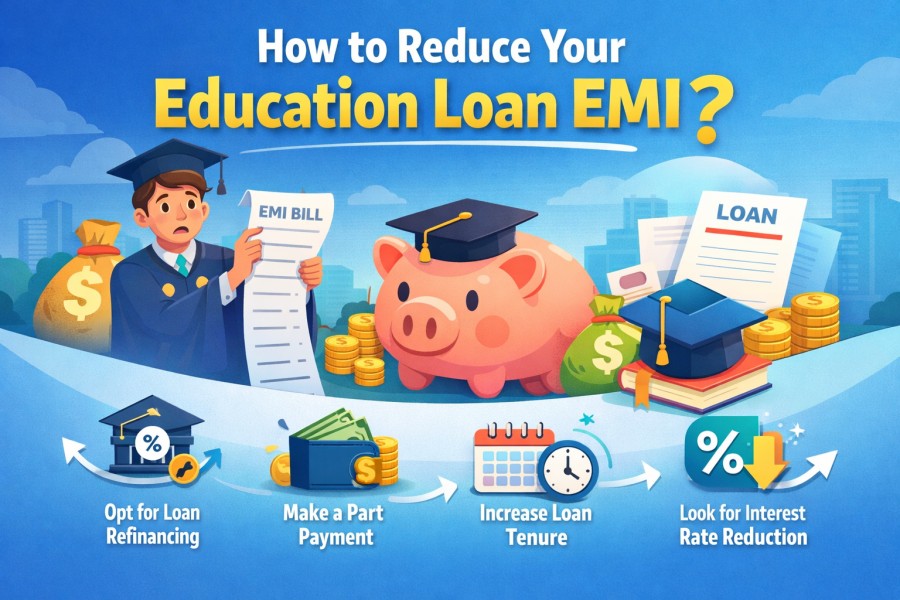
How to Reduce Your Education Loan EMI - Smart strategies
Taking an education loan is a major financial step that helps students achieve their academic and career goals. However, once the repayment phase begins, managing your monthly EMI can feel overwhelming, especially when interest costs start adding up.
If you're wondering how to reduce your EMI burden while maintaining financial stability, this guide covers everything you need. From understanding how a student loan works to smart repayment strategies, this blog will help you make informed decisions.
How does a study loan work for students?
Before exploring ways to reduce EMIs, it’s important to understand how an education loan works. A study loan covers expenses such as tuition fees, accommodation, books, and travel. The repayment begins after the moratorium period of the loan, which includes the course duration plus an additional 6–12 months.
During this time:
- Some lenders allow you to defer payments
- Interest may still accrue
- Early payments can reduce your burden later
Once repayment begins, your EMI depends on:
- Loan amount
- Education loan interest rate
- Repayment tenure
Using an education loan EMI calculator helps you calculate your EMI in advance and plan your finances better.
Education Loan Eligibility and Its Impact on Study EMI
Your education loan eligibility plays a crucial role in determining your loan terms.
Lenders evaluate:
- Academic performance
- Course and institution
- Financial background
- Co-applicant profile (if applicable)
A strong eligibility profile can help you secure:
- Lower interest rates
- Better repayment terms
- Flexible EMI options
This directly reduces your overall EMI burden.
Related blog: How to Use an Education Loan Calculator to Plan Your Student Loan EMIs
Key Factors That Affect Education Loan EMI
Understanding these factors helps you manage repayment effectively:
- Higher loan amount = Higher EMI
- Higher Study loan interest rate = Increased cost
- Short tenure = High EMI, low total interest
- Long tenure = Low EMI, higher total interest
This is why using a study loan EMI calculator for loan comparison is essential before choosing a lender.
Top 10 Smart Ways to Reduce Your Education Loan EMI
Managing your study loan EMI effectively is essential for maintaining financial stability after completing your studies. While loan repayment may seem overwhelming at first, there are several smart and practical strategies you can use to reduce your EMI burden without compromising your long-term financial health. Below are detailed and actionable ways to make your education loan repayment more manageable.
1. Opt for a Longer Repayment Tenure
One of the simplest ways to reduce your EMI is by increasing the repayment tenure of your education loan. When you extend the tenure, the total loan amount is spread over a longer period, which lowers your monthly installment.
However, it’s important to understand the trade-off. While your EMI becomes more affordable, the total interest paid over time increases. This strategy works best for individuals who want immediate relief in monthly cash flow and are comfortable paying slightly more interest in the long run.
2. Start Paying Interest During the Moratorium Period
The moratorium period on an education loan is a phase during which repayment is not mandatory, typically covering your course duration plus an additional 6–12 months. Many borrowers take full advantage of this break and delay all payments.
But here’s the catch: interest continues to accumulate during this period. If you start paying at least the interest component early, you can significantly reduce your overall loan burden.
This approach helps in:
- Preventing interest from being added to the principal
- Reducing EMI after the moratorium ends
- Lowering total repayment cost
Even small payments during this phase can make a big difference later.
3. Choose a Loan with Lower Interest Rates
The education loan interest rate directly impacts your EMI amount. Even a slight reduction in the interest rate can lead to noticeable savings over time. Before finalizing your loan, conduct a thorough loan comparison. Evaluate different lenders based on:
- Interest rates offered
- Processing fees
- Repayment flexibility
- Hidden charges
Using a study loan EMI calculator can help you calculate EMIs across different scenarios and choose the most cost-effective option.
4. Make Partial Prepayments Regularly
Partial prepayment is one of the most effective ways to reduce your EMI and overall interest burden. Whenever you receive extra income, such as bonuses, freelance earnings, or savings, you can use it to pay off a portion of your loan.
Benefits of prepayment include:
- Reduction in principal amount
- Lower EMI or shorter tenure
- Significant savings on interest
Most lenders allow prepayments with minimal or no charges, making this a highly recommended strategy.
5. Refinance Your Loan at a Lower Interest Rate
If you already have an existing education loan with a high interest rate, refinancing or balance transfer can be a smart move. This involves transferring your loan to another lender offering better terms.
Refinancing can help you:
- Secure a lower interest rate
- Reduce your EMI
- Improve repayment flexibility
Before opting for this option, ensure you check for processing fees and other loan costs to confirm that the overall benefit outweighs the cost.
6. Choose Collateral-Free Loans Carefully
A collateral free education loan is ideal for students who do not have assets to pledge. However, these loans often come with higher interest rates compared to secured loans.
If you opt for such loans:
- Carefully review terms and conditions
- Compare multiple lenders
- Check eligibility for a loan without collateral and co applicant
Choosing the right lender can still help you manage EMI efficiently, even without collateral.
Read also: Is an Education Loan Calculator Useful for Studying Abroad?
7. Take Advantage of Subsidies and Special Schemes
In India, several government-backed schemes are designed to reduce the financial burden of students. These may include:
- Interest subsidies
- Deferred repayment options
- Support for economically weaker sections
In some cases, these benefits can reduce the effective interest cost, making your loan closer to a student loan without interest for a certain period. Checking your education loan eligibility for such schemes can help you save significantly.
8. Improve Your Credit Profile
Your credit score plays a crucial role in determining your loan terms. A strong credit profile can help you secure:
- Lower interest rates
- Better repayment options
- Easier approval process
To maintain a good credit score:
- Pay EMIs on time
- Avoid defaults
- Manage other debts responsibly
A better credit profile can also help you during refinancing or future borrowing.
9. Use an Education Loan EMI Calculator for Better Planning
An education loan calculator is an essential tool for financial planning. It allows you to:
- EMI calculates accurately
- Compare different loan options
- Adjust tenure and interest rates
- Plan prepayments
Regular use of this tool ensures that you stay informed and make smarter repayment decisions.
10. Increase EMI Gradually as Income Grows
When you start your career, your income may be limited, making it difficult to pay higher EMIs. However, as your salary increases over time, you can gradually increase your EMI amount.
This approach helps:
- Reduce loan tenure
- Lower total interest paid
- Achieve faster loan closure
Even a small increase in EMI can significantly reduce your financial burden in the long term.
Related blog: How to Choose Between Secured and Unsecured Education Loans?
11. Avoid Missing EMI Payments
Missing EMI payments can result in penalties and lower your credit score. This can increase your financial burden in the future.
To avoid this:
- Set up auto-debit instructions
- Maintain sufficient balance in your account
- Track due dates regularly
Consistent repayment ensures smoother loan management and financial discipline.
Smart Education Loan Repayment Tips
Explore practical tips for Indian students to repay education loans efficiently to ensure financial stability.
- Pay EMIs on time
- Increase EMI when income grows
- Avoid missed payments
- Use bonuses for prepayment
- Track your outstanding balance
Final Thoughts
Reducing your education loan EMI requires a combination of smart planning, informed decisions, and disciplined repayment. By understanding student loan details, checking your loan eligibility, and using tools like an education loan EMI calculator, you can take full control of your finances.
Whether you choose a collateral free education loan, explore refinancing options, or make early payments, every step contributes to reducing your financial burden. The key is to stay proactive and make strategic decisions that align with your long-term goals.
Take control of your financial future with Loan Quantum. Compare loans, check your eligibility, and calculate your EMI smartly in minutes.
Frequently Asked Questions
Doing a proper loan comparison helps you identify lenders offering the best interest rates and repayment terms. Even a small difference in interest rates can lead to noticeable EMI savings over the loan tenure.
Prepayment directly reduces the principal amount of your education loan, which in turn lowers the interest charged. This can either reduce your EMI or shorten your loan tenure, depending on your lender’s terms. Using bonuses, savings, or extra income for lump-sum payments is one of the most effective ways to manage repayment.
Yes, certain government schemes provide interest subsidies for eligible borrowers, especially those from economically weaker sections. These subsidies can reduce the effective interest cost and make your EMI more manageable.
Yes, even if you have an education loan without collateral, you can still reduce your EMI by refinancing, prepaying, or choosing better repayment strategies. However, such loans may have slightly higher interest rates, so careful planning is essential.
Yes, creating a proper budget helps you identify unnecessary expenses and allocate more funds toward loan repayment. This allows you to make extra payments or prepayments, which can reduce your EMI or loan tenure.