Blog Details
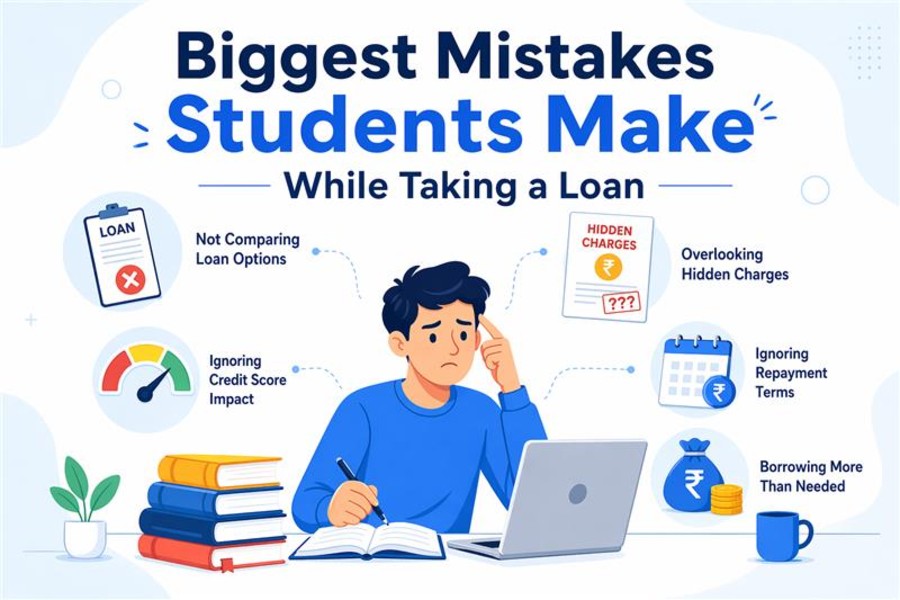
Biggest Mistakes Students Make While Taking a Loan
Education loans have made higher education more accessible than ever before. Whether you're planning to study in India or abroad, taking a loan can help you achieve your academic goals without immediate financial pressure. However, many students make critical mistakes when applying for and managing their loans, which can lead to long-term financial stress.
Understanding concepts like education loan EMI, loan repayment, and EMI calculation is essential before you sign any agreement. In this article, we’ll explore the most common mistakes students make and how to avoid them with smart financial planning tools, such as an education loan calculator.
Why Proper Planning Matters Before Taking an Education Loan
Taking an education loan is not just about funding your studies; it’s about committing to a financial responsibility that may last for years. Without proper planning, students may struggle with repayment, fall into debt traps, or face unnecessary financial burdens.
A well-informed approach helps you:
- Avoid unnecessary borrowing
- Plan your monthly EMI effectively
- Reduce total interest costs
- Stay financially stable after graduation
1. Not Using an Education Loan Calculator
One of the biggest mistakes students make is skipping the use of an education loan calculator before applying for a loan. Many students rely only on bank representatives or rough estimates, which can be misleading. Without proper calculations, you may underestimate your repayment burden.
Why this is a problem:
- You don’t know your exact EMI
- You can’t estimate the total interest payable
- Financial planning becomes unclear
What you should do:
- Use an education loan calculator before applying
- Check different loan amounts and tenures
- Understand your monthly and total repayment
Related blog: What Expenses Are Covered in Student Loans?
2. Ignoring Proper EMI Calculation
Knowing how to calculate EMI is critical before taking out a loan. EMI is the fixed monthly payment you must make to repay your loan. Students often assume they will “manage somehow” after graduation without calculating affordability.
Risks of ignoring Loan EMI calculation:
- High monthly financial burden
- Difficulty managing expenses after getting a job
- Increased chances of missed payments
Smart approach:
- Estimate your future income realistically
- Ensure your education loan EMI stays within 30–40% of your expected salary
- Always calculate EMI before finalizing the loan
3. Overlooking Hidden Charges
Many students focus only on interest rates and ignore the hidden charges associated with loans. This can greatly increase the total cost.
Common hidden charges include:
- Processing fees
- Prepayment or foreclosure charges
- Late payment penalties
- Documentation and administrative fees
- Insurance premiums
Why it matters: Even a small fee can add up over time and impact your total repayment.
What to do:
- Read the loan agreement carefully
- Ask the lender about all applicable charges
- Compare lenders based on total cost, not just interest rate
4. Misunderstanding the Loan Moratorium Period
Students often misunderstand the loan moratorium period. It usually covers the duration of your course plus a grace period after completion. Many students assume that no payments or interest apply during this period.
The reality:
- Interest continues to accrue during the moratorium
- Your total loan amount increases if it is unpaid
Common mistake: Ignoring interest payments during this phase.
Better strategy:
- Pay simple interest during the moratorium period if possible
- Start partial payments early to reduce the total burden
Read also: What is the Education Loan Disbursement Process in India?
5. Borrowing Loan More Than Required
Students sometimes take a higher loan amount than necessary, thinking it will cover future uncertainties.
Why is this risky?
- A higher loan amount leads to a higher EMI
- Increased interest over time
- Longer repayment duration
Smart borrowing tips:
- Calculate your exact education expenses
- Avoid unnecessary lifestyle expenses
- Borrow only what you truly need
6. Not Planning Loan Repayment in Advance
Many students focus only on getting loan approval and ignore loan repayment planning. Without a clear repayment strategy, managing EMIs after graduation becomes difficult.
Consequences of poor planning:
- Missed EMIs
- Financial stress
- Negative impact on credit score
What you should do:
- Plan repayment before taking the loan
- Consider your career prospects and expected salary
- Keep a buffer for emergencies
7. Not Comparing Loan Options
Accepting the first loan offer without loan comparison is another common mistake. Different lenders offer different interest rates, repayment options, and benefits.
What students often miss:
- Lower interest rates from other lenders
- Flexible repayment options
- Better loan terms
Smart move:
- Compare multiple lenders
- Evaluate both banks and NBFCs
- Look beyond interest rates, consider the total loan cost
Recent blog: Co-applicant Rules & Eligibility for Education Loans
8. Choosing a Longer Tenure Without Strategy
A longer loan tenure reduces your EMI but increases the total interest you pay.
Mistake: Choosing a longer tenure just to make EMI look affordable.
Impact: You pay significantly more interest over time.
Better approach:
- Choose a balanced tenure
- Opt for a shorter tenure if possible
- Make prepayments to reduce interest
9. Ignoring the Impact on Credit Score
Your education loan plays a major role in building your credit history.
Mistakes students make:
- Missing EMI payments
- Delaying repayments
Consequences:
- Poor credit score
- Difficulty getting future loans (home loan, car loan, etc.)
Solution:
- Always pay EMIs on time
- Track your credit score regularly
- Maintain financial discipline
10. Depending on the Moratorium Period
Some students rely entirely on the moratorium period and postpone all payments.
Why is this risky?
- Interest keeps adding up
- Total repayment amount increases
Smart strategy:
- Pay interest during the study period
- Start early repayments if possible
11. Ignoring Currency Risks (For Studying Abroad)
For students going abroad, exchange rate fluctuations can affect repayment.
Risk: Increase in repayment cost due to currency changes.
What to do:
- Understand currency risks before borrowing
- Keep a financial buffer
- Choose the loan type wisely
Related blog: Is an Education Loan Calculator Useful for Studying Abroad?
What are the Smart Tips to Avoid Student Loan Mistakes?
To efficiently manage your educational loan, follow these crucial tips for an education loan:
- Use an education loan calculator before applying
- Understand EMI calculation clearly
- Keep your education loan EMI within a manageable range
- Be aware of all hidden charges
- Understand the loan moratorium period properly
- Plan your loan repayment strategy in advance
- Compare multiple loan options before finalizing
- Borrow responsibly and avoid unnecessary debt
Conclusion
Taking an education loan is a major financial decision that requires careful planning and awareness. While loans can help you achieve your academic goals, poor decisions can lead to long-term financial challenges. By understanding key concepts like education loan EMI, EMI calculation, loan repayment, hidden charges, and the loan moratorium period, you can make smarter choices and avoid costly mistakes.
Make smarter borrowing decisions with LoanQuantum. Compare loans, calculate your EMI, and plan your repayment with confidence.
Frequently Asked Questions
The most common mistakes include overborrowing, failing to compare lenders, misunderstanding the loan moratorium period, ignoring interest rates and hidden charges, and failing to plan loan repayments.
Ignoring interest rates can lead to significantly higher total repayment, as even a small difference in rates can greatly increase the overall cost of the loan over time.
An education loan calculator helps you estimate your EMI, total interest, and repayment amount, allowing you to make informed borrowing decisions.
The best way to avoid mistakes is to borrow only what you need, compare lenders carefully, understand all loan terms, plan your repayment early, and stay disciplined with your EMI payments.
Many students assume no cost during the loan moratorium period, but interest continues to accrue. This increases the total loan amount and results in higher EMIs later.