Blog Details
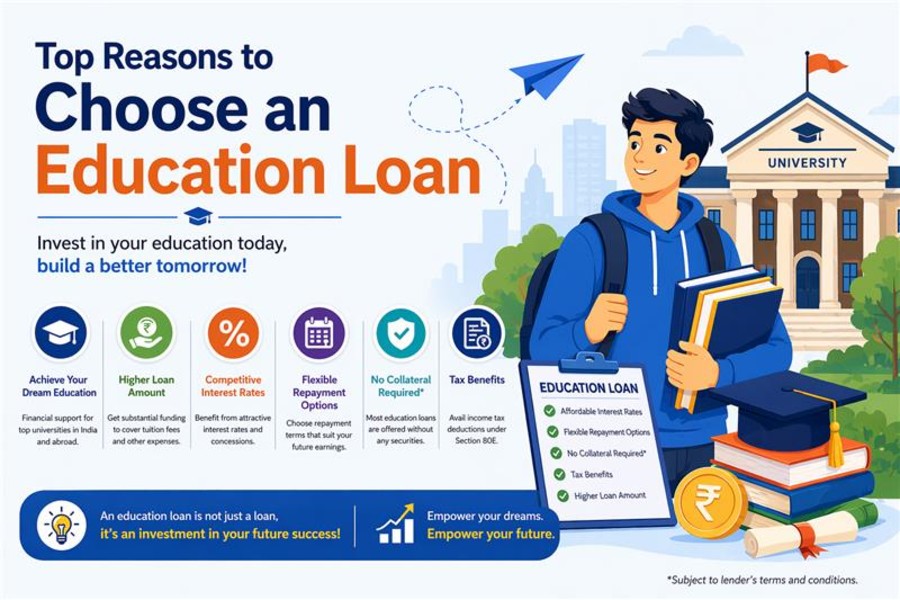
Top Reasons to Choose an Education Loan
Pursuing higher education is one of the most important financial decisions you’ll ever make. Whether you're planning to study in India or abroad, the cost of education has steadily increased over the years. This is where an education loan becomes a powerful financial tool not just to fund your studies, but to help you build a strong financial future.
In this detailed guide, we’ll break down the top reasons to choose an education loan, while also helping you understand key aspects like loan eligibility, education loan expenses, loan comparison, calculating EMI, hidden charges, and loan repayment strategies.
Why Education Loans Are a Smart Financial Choice for Students
1. Access to Quality Education Without Financial Burden
One of the biggest advantages of an education loan is that it allows students to pursue their dream course without immediate financial pressure. Instead of depending entirely on family savings or selling assets, students can spread the cost over time.
This is especially useful when education costs include not just tuition, but also accommodation, travel, books, and living expenses.
2. Covers Comprehensive Education Loan Expenses
Education loans are not limited to tuition fees. Most lenders cover a wide range of education loan expenses, including:
- Tuition fees
- Hostel fees and accommodation charges
- Travel expenses (especially for abroad studies)
- Books, a laptop, and study materials
- Exam and lab fees
This makes education loans a complete funding solution rather than a partial one.
3. Flexible Repayment Options
Unlike other types of loans, education loans come with a moratorium period. This means you don’t have to start full repayment immediately.
Typically:
- Repayment starts after course completion
- An additional grace period (6–12 months) may be available
This structure allows students to secure a job before beginning repayment, making loan repayment more manageable.
4. Lower Interest Rates Compared to Personal Loans
Education loans generally offer lower interest rates than personal loans because they are considered an investment in your future earning potential. However, it’s important to compare loans carefully before applying. Compare:
- Interest rates
- Processing fees
- Repayment tenure
- Moratorium benefits
A slight difference in interest rates might have a huge impact on your overall payments.
Read also: Education loan tips for first-time borrowers in India
5. Easy EMI Planning with an Education Loan Calculator
Before applying for a loan, it’s crucial to understand how much you’ll need to repay every month. This is where an education loan calculator comes in handy.
A study loan calculator helps you:
- Calculate EMI based on loan amount, interest rate, and tenure
- Plan your future finances
- Avoid over-borrowing
When you calculate an education loan EMI in advance, you gain clarity and confidence in your financial decision.
6. Improves Financial Discipline and Credit Score
Taking an education loan and repaying it on time helps build your credit history. This is beneficial for your future financial goals, like:
- Home loans
- Car loans
- Business loans
Timely loan repayment improves your credit score, making it easier to access better financial products later in life.
7. Tax Benefits Under Section 80E
Education loans come with tax advantages. Under Section 80E of the Income Tax Act:
- Interest paid on education loans is tax-deductible
- There is no upper limit on the deduction
- Benefits can be claimed for up to 8 years
This reduces your overall financial burden and makes education loans even more attractive.
Understanding Education Loan Eligibility
Education loan eligibility is one of the most important factors lenders evaluate before approving your application. To qualify, the applicant must be an Indian resident, typically aged 18 to 35, and have secured admission to a recognized institution. The course should be merit-based and approved by authorities such as UGC or AICTE, whether in India or abroad.
In most cases, lenders require a co-applicant, usually a parent, guardian, or spouse, who has a stable source of income. This ensures there is a reliable backup for repayment. Additionally, a strong academic record significantly improves approval chances, as it reflects the student’s dedication and future earning potential. A good credit score, particularly for the co-applicant, further strengthens the application and can help secure better loan terms.
Read also: Co-applicant Rules & Eligibility for Education Loans
Lenders typically evaluate several key factors during the approval process, including academic performance, confirmation of admission to a recognized institution, and the type of course chosen, with professional or technical programs often preferred. They also closely assess the co-applicant’s income stability and credit profile.
Having a financially stable co-applicant with a strong credit history not only increases your chances of loan approval but may also help you access lower interest rates and more favorable repayment conditions.
Importance of Comparing Loans Before Applying
Many borrowers make the mistake of choosing the first loan offer they receive. This can lead to higher long-term costs. A proper loan comparison helps you:
- Identify the lowest interest rates
- Understand the total payable amount
- Compare benefits like moratorium and tenure
- Avoid unnecessary fees
Always compare multiple lenders before finalizing your loan.
Watch Out for Hidden Charges
While education loans are helpful, it’s important to review the terms carefully to avoid hidden charges. Common charges include:
- Processing fees
- Prepayment penalties (in some cases)
- Late payment charges
- Insurance costs
These charges can increase the total cost of loans. Before signing any agreement, always read the fine print.
Read also: Is an Education Loan Calculator Useful for Studying Abroad?
Smart Loan Repayment Strategies
Repayment is where your financial discipline truly matters. Here are some effective loan repayment strategies:
- Start Early if Possible: Even during the moratorium period, pay simple interest if you can. This reduces your overall burden.
- Make Prepayments: If your lender allows it without penalties, make partial prepayments whenever possible.
- Choose the Right Tenure: Don’t just go for the longest tenure. Balance EMI affordability against total interest expense.
- Avoid Missed Payments: Late payments can damage your credit score and increase penalties.
When Should You Choose an Education Loan?
An education loan is ideal when:
- You want to study at a reputed institution, but lack immediate funds.
- You want to avoid financial strain on your family.
- You are confident about your future earning potential.
- You want to build a credit profile early.
It is not just a loan, it is an investment in your career.
Might you have missed: How to Calculate Education Loan Interest: Step-by-Step Guide
Conclusion
Choosing an education loan is more than just a financial decision; it’s a strategic step toward building your future. When planned correctly, it allows you to access quality education without immediate financial stress while giving you the flexibility to manage repayment over time.
By understanding key aspects like education loan eligibility, carefully evaluating education loan expenses, using an education loan calculator to calculate EMI, and comparing lenders to avoid hidden charges, you can make a well-informed choice. A disciplined approach to loan repayment not only reduces financial burden but also strengthens your credit profile, opening doors to better opportunities ahead.
Take control of your education financing today. Compare options, calculate EMI, and make smarter borrowing decisions with Loan Quantum.
Frequently Asked Questions
Absolutely. By funding your own education through a loan, you become financially responsible early in life. Managing repayment builds discipline and independence, which are valuable for long-term financial success.
In most cases, education loans have lower interest rates compared to personal loans. Since they are considered an investment in your future earning potential, lenders offer more favorable terms and repayment flexibility.
Yes, education loans from banks and financial institutions are regulated, transparent, and come with defined terms. Borrowing from informal sources can involve high interest rates and financial risks.
Yes, the government offers schemes like interest subsidies for eligible students, especially those from economically weaker sections. These schemes reduce the overall cost of borrowing.
Yes, depending on your eligibility and course, education loans can offer high funding limits, especially for professional or international courses. This ensures that financial constraints don’t limit your academic goals.