Blog Details
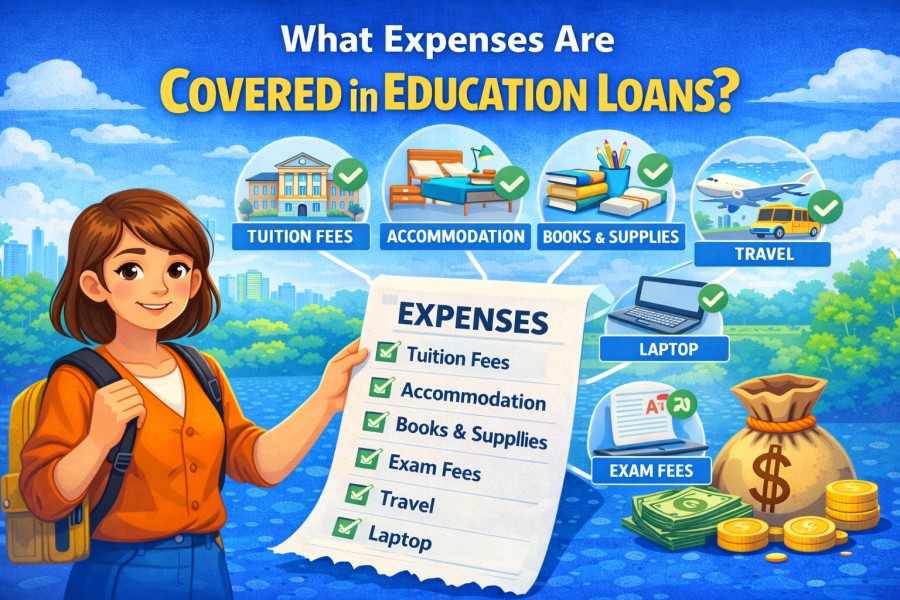
What Expenses Are Covered in Education Loans?
When students and parents think about student loans, the first thing that comes to mind is tuition. But in reality, an education loan is designed to cover much more than just classroom costs. From accommodation to travel, and even daily living expenses, lenders consider the total cost of education before approving funding.
If you’re planning higher studies, whether in India or abroad, understanding the expenses covered under an education loan can help you plan smarter, calculate your budget correctly, and avoid financial surprises later.
Understanding the Scope of a Student Loan
A student loan is structured around the total cost of attendance. This includes every necessary expense required to complete your course successfully.
Banks and NBFCs evaluate your loan eligibility based on:
- Course type and institution
- Total estimated expenses
- Repayment capacity (co-applicant income)
- Future earning potential
Using an education loan calculator helps you estimate how much you’ll actually need and what your loan repayment will look like.
1. Tuition Fees and Academic Charges
The biggest share of any student loan is usually reserved for tuition and core academic expenses. This is the foundation of your education, and lenders treat it as the most essential component while assessing your loan eligibility.
When you apply for a loan, the bank carefully reviews the official fee structure provided by your college or university. Based on that, they approve an amount that typically covers:
- Course or tuition fees charged by the institution
- Admission and enrollment charges
- Registration and semester fees
- Examination fees for each term
- Library and laboratory charges
For courses like MBA, engineering, medicine, or international programs, tuition fees can be quite high. In such cases, lenders often disburse the approved amount directly to the institution. This ensures that fees are paid on time and reduces the financial burden on students and families.
Another important aspect is transparency. Every charge must be backed by official documentation from the institution. This is why having a clear fee breakup is crucial during the loan approval process.
Read also: How to Choose Between Secured and Unsecured Education Loans?
2. Accommodation and Living Expenses
A common question students ask is: "Does an education loan cover living expenses?"
The answer is yes—most lenders include living costs as a key part of the loan, especially when you are studying away from home or abroad.
In fact, living costs in student loan EMI calculations can take up a significant portion of the total amount, depending on the location and duration of your course.
These expenses usually include:
- Hostel fees or rented accommodation
- Food, groceries, and daily meals
- Electricity, water, and internet bills
- Basic daily essentials like toiletries and supplies
Many students also wonder whether the hostel fee is included in the education loan.
Yes, in most cases, hostel charges are fully covered. Whether you choose on-campus housing or rent a place outside, these hostel expenses are considered necessary for completing your education.
For students going abroad, lenders estimate average monthly living costs based on the country and city. For example, living in cities like London, New York, or Sydney will require a higher budget compared to smaller cities. These estimated loan costs are added to your total loan requirement during approval.
Another important point is that lenders don’t assign these figures at random. They follow standard cost-of-living benchmarks and university guidelines to ensure your expenses are realistically covered.
3. Books, Study Materials, and Equipment
A quality education goes far beyond classroom lectures. Most lenders understand that academic success depends on access to proper resources. That’s why they include essential expenses such as textbooks, digital tools, and course-related equipment while evaluating your loan eligibility.
Typically, the following costs are covered:
- Prescribed textbooks and reference books
- Notebooks, stationery, and academic supplies
- Laptops or computers are required for coursework
- Course-specific tools, software, or technical equipment
For students pursuing fields like engineering, architecture, design, or IT, these expenses can add up quickly. Specialized software, drafting tools, or lab equipment are often mandatory, and without financial support, managing these costs can become difficult.
While planning your budget, using a student loan calculator can help you see how these additional costs affect your overall borrowing and future loan repayment. It also allows you to make smarter decisions during loan comparisons, especially when different lenders offer varying equipment funding limits.
4. Travel and Transportation Costs
Travel is an unavoidable part of student life, whether it’s your daily commute or a one-time journey to another country. Recognizing this, education loans also factor in transportation-related expenses as part of the overall funding.
These costs usually include:
- Daily commuting expenses between home or hostel and campus
- Public transport passes or fuel costs
- Occasional academic travel related to your course
- One-time airfare for students going abroad
Many students wonder if travel is considered a valid academic expense. The answer is yes, especially when it directly supports your ability to attend classes and complete your course.
5. Insurance and Medical Expenses
When you plan your education, especially abroad, health and safety become just as important as academics. That’s why many lenders include insurance-related costs as part of a student loan, ensuring that you’re protected financially during your studies.
Most universities, particularly international institutions, require health insurance. Without valid coverage, students may not even be allowed to enroll or continue their course. To support this requirement, education loans often cover:
- Health insurance premiums required by the university
- Travel insurance for international journeys
- Basic emergency medical coverage during the course period
This is not just a formal requirement; it’s a practical necessity. Medical treatment in countries like the US, UK, or Australia can be extremely expensive. Even a minor health issue can lead to high costs if you’re uninsured.
Related blog: Co-applicant Rules & Eligibility for Education Loans
6. Examination, Project, and Thesis Costs
Academic life doesn’t end with attending classes. Many courses, especially professional and postgraduate programs, involve additional academic responsibilities that come with their own costs. These are also considered under a student loan, provided they are part of the official curriculum.
Such expenses are typically included in student loans:
- Final year project costs, including materials and research work
- Thesis or dissertation expenses for postgraduate programs
- Certification fees and professional exam charges
- Costs related to academic submissions or evaluations
These expenses are not optional; they are essential for completing your course successfully. That’s why lenders are willing to include them during loan approval, as long as they are clearly mentioned in the course structure or supported by the institution.
7. Visa Fees and Study Abroad Costs
When you plan to study overseas, your expenses go beyond tuition and living costs. There are several formalities involved before you even step into your university, and these come with their own financial requirements. A well-structured student loan takes these into account and includes them in your total funding.
Education loans for international studies usually cover:
- Visa application and processing fees
- Immigration-related charges and documentation costs
- Pre-departure expenses, such as mandatory orientations or initial setup costs
These are not optional expenses; they are essential for securing your admission and legal entry into the country. Without a valid visa and proper documentation, your admission cannot be completed, no matter how strong your academic profile is.
Recent blog: Is an Education Loan Calculator Useful for Studying Abroad?
8. Caution Deposits and Miscellaneous Charges
Apart from major expenses, there are several smaller but mandatory charges that students need to pay during admission and as they settle into campus life. These are often grouped under miscellaneous costs, and a student loan often covers many of them.
Common examples included in student loans:
- Caution deposits required by colleges or universities
- Security deposits for hostel or rented accommodation
- Mandatory campus charges such as ID cards, facility usage fees, or student services
Caution deposits are usually refundable, but they are still an upfront cost that students must pay at the time of admission. This is why lenders may include them in the loan amount to ease the initial financial burden.
However, it’s important to note that not all lenders treat these expenses the same way. Since caution deposits are refundable, banks may place a limit on how much they are willing to finance under this category. Some lenders might fund only a portion, while others may require you to pay it out of pocket.
This makes loan comparison extremely important. Understanding what each lender covers and to what extent can help you avoid unexpected expenses later.
What Expenses Are Usually NOT Covered in Indian Education Loans?
While a student loan covers most academic and essential costs, there are clear limits on what lenders will finance. These loans are intended solely for educational purposes, so personal or non-essential expenses are usually excluded. Understanding this helps you plan your budget better and avoid last-minute financial gaps.
Most Indian lenders do not cover expenses that are not directly linked to your course or are considered avoidable. For example, personal travel and leisure activities are not included, even if you are studying abroad. Similarly, luxury lifestyle choices are excluded, as student loans are designed to support basic living costs rather than premium upgrades.
Expenses Usually Not Covered:
- Personal travel, vacations, or weekend trips
- Luxury accommodation or lifestyle upgrades beyond basic hostel expenses
- Non-academic purchases like expensive gadgets or personal shopping
- Entrance exam fees, such as GRE, GMAT, TOEFL, and coaching costs
- Application or pre-admission expenses before loan approval
- Fees for repeated subjects, failed exams, or extended course duration
- Penalties, late payment charges, or fines
- Expenses after course completion
It’s important to remember that while lenders do support essential needs, they draw a clear line at non-educational spending. During loan comparison, always check these exclusions carefully so you know exactly what you’ll need to fund on your own.
In short, a student loan supports your education, not your lifestyle. Knowing what’s not covered helps you borrow wisely and manage your loan repayment without unnecessary stress.
Might you have missed: How to Calculate Education Loan Interest: Step-by-Step Guide
Conclusion
A student loan is not just about paying tuition; it’s a complete financial support system designed to cover every essential part of your education journey. From academic fees and accommodation to daily living costs, travel, and even insurance, lenders aim to fund the total cost of attendance so you can focus on your studies without constant financial pressure.
At the same time, knowing the limits is equally important. Not every expense is covered, and understanding these boundaries helps you avoid surprises and plan your finances more effectively. Whether it’s estimating your budget, checking your education loan eligibility, or preparing for future loan repayment, informed decisions make a big difference.
Before choosing a lender, always take time to compare loans, review all inclusions and exclusions, and use tools like an education loan calculator to get a clear picture of your EMI and total cost. A well-planned loan today can set the foundation for a stress-free academic journey and a stronger financial future.
Make smarter education financing decisions with Loan Quantum. Compare top lenders, calculate your EMIs, and find the best student loan tailored to your needs.
Frequently Asked Questions
Yes, some expenses, such as laptops, travel, and miscellaneous costs, may have caps. Lenders approve reasonable amounts based on course requirements and overall fees.
Student loans only cover essential education-related expenses. Non-academic or personal spending is generally not included, even if it falls under daily lifestyle costs.
Yes, lenders may impose conditions or caps on certain categories, such as travel or equipment. The funds must be used only for approved educational purposes and may require documentation.
Yes, basic day-to-day needs such as food, rent, and utilities are included. However, these are limited to essential spending and do not extend to personal lifestyle choices.
Yes, absolutely. Since loans are meant for education, proper usage is important. Misusing funds can create financial stress during loan repayment and may also affect future borrowing.