Personal Loan Calculator
EMI Amount:
$ 0.00
Loan Amount:
$ 0.00
Interest Rate :
0.00%
0.0
Total Interest:
$ 0.00
Total Cost:
$ 0.00
Why Is My Personal Loan Rejected? 10 Common Reasons & What to Do
Personal loan rejected? Here are the 10 most common reasons banks and NBFCs may reject a personal loan application and what you can do before applying again. Getting a personal loan rejected can be frustrating, especially when you need funds for an emergency, medical expense, education, wedding, home renovation, debt consolidation or another important financial requirement. But a rejection does not necessarily mean you can never get a personal loan. Banks and NBFCs assess several factors before approving an unsecured loan, including your credit score, income, employment stability, existing EMIs, repayment history, age, documentation and overall repayment capacity. Understanding the personal loan rejection reasons can help you identify the problem, correct it and make a more informed application next time. Quick answer: Why was my personal loan rejected? A personal loan may be rejected because of your credit history, existing debt, income, employment stability, documentation, recent credit applications, loan amount or the lender's eligibility criteria. The most common loan rejection reasons include: Low or weak credit score High existing debt or FOIR Unstable income or employment Incomplete or incorrect documents Too many recent loan applications Previous loan defaults or missed EMIs High credit-card utilisation Not meeting the lender's age or eligibility criteria Insufficient income for the requested loan amount Incorrect information in the loan application The exact criteria vary between lenders. A borrower who qualifies with one lender may not qualify with another. What Are the Main Personal Loan Rejection Reasons? If your personal loan was rejected, you may be wondering why it happened. The answer is usually connected to one or more aspects of your financial profile. Let's examine the most important reasons for personal loan rejection. 1. Low Credit Score One of the first things lenders may examine is your credit history and credit score. A lower credit score can indicate a higher perceived lending risk, particularly when it is accompanied by missed payments, defaults or high outstanding balances. However, there is no single universal CIBIL score that guarantees personal loan approval. Each lender can apply its own credit policy. Why can a low CIBIL score lead to rejection? A lender may become concerned if your credit report shows: Missed EMI payments Credit-card payment delays Loan defaults Written-off accounts High credit utilisation Numerous recent credit enquiries Large outstanding balances Before submitting another application, review your credit report for errors and understand what is affecting your score. Related reading: Get an Instant Personal Loan with a Low CIBIL Score 2. High Debt-to-Income Ratio or FOIR Another major personal loan rejection reason is excessive existing debt. Lenders want to know whether you can comfortably repay another EMI after accounting for your current financial commitments. This is often assessed through measures such as FOIR (Fixed Obligation to Income Ratio) or debt-to-income calculations. Example Suppose your monthly income is ₹60,000 and your existing EMIs and fixed obligations already consume a substantial portion of that income. Adding another large personal-loan EMI could place considerable pressure on your cash flow. As a result, a lender may: Reject the application Approve a lower loan amount Offer different terms Ask for additional information Before applying, use a personal loan calculator to check whether the proposed EMI fits comfortably within your budget. 3. Unstable Employment or Irregular Income Employment stability is another important factor in loan eligibility. A lender may look at your: Current employment duration Overall employment history Monthly income Salary consistency Bank-account transactions Business income, if self-employed For self-employed applicants, lenders may additionally examine business continuity, ITRs, financial statements and banking activity. If income is irregular or difficult to verify, the lender may consider the application higher risk. 4. Incomplete or Incorrect Documentation Sometimes the reason for a personal loan rejected application is surprisingly simple: documentation problems. Common issues include: Incorrect name Incorrect date of birth Mismatch between application and KYC documents Missing income proof Incomplete bank statements Incorrect employment information Incomplete KYC Documents that cannot be verified Even if your income and credit profile are strong, inconsistent information can delay or prevent approval. Before applying, check: Identity: PAN, Aadhaar or other accepted KYC Income: Salary slips, ITRs or other acceptable income documents Banking: Recent bank statements Employment/business: Relevant employment or business documentation Always enter information exactly as it appears on your supporting documents. 5. Too Many Recent Loan Applications Have you applied for several loans or credit cards recently? Multiple hard credit enquiries within a short period can make your credit profile look more risky to some lenders. For example, applying to several lenders simultaneously may signal that you urgently need credit. This does not mean one credit enquiry automatically causes rejection. Rather, lenders consider the overall credit profile and recent borrowing behaviour. What should you do? Instead of submitting applications everywhere: Check your eligibility first. Estimate your affordable EMI. Compare suitable loan options. Apply only when your financial profile is ready. This is where loan comparison and a personal loan calculator can help with planning. 6. Previous Loan Defaults or Missed EMIs A history of missed payments can be a significant warning sign for lenders. If your credit report contains: Loan defaults Repeated late payments Credit-card overdue amounts Settled accounts Written-off accounts A lender may consider your application higher risk. If you have previously missed an EMI Don't immediately apply for another loan. Instead: Clear overdue amounts. Check your credit report. Ensure future EMIs are paid on time. Avoid unnecessary new credit applications. Reduce outstanding debt where possible. Give your financial profile time to recover. Consistent repayment behaviour is generally more valuable than repeatedly applying for new credit. Related reading: What Happens If You Miss a Personal Loan EMI? 7. High Credit-Card Utilisation Your credit-card utilisation can also affect how lenders view your financial profile. For example, if your credit-card limit is ₹2,00,000 and your outstanding balance is ₹1,80,000, your utilisation is high. High utilisation can indicate that a significant portion of your available revolving credit is already being used. Before applying for a personal loan: Pay down unnecessary credit-card balances. Avoid maxing out cards. Continue making payments on time. Don't take additional credit simply to improve your profile. 8. Your Income Is Too Low for the Requested Loan Amount A borrower can have a good credit score and still face loan rejection. Why? Because lenders don't look only at your credit score. They also consider whether your income supports the requested loan amount and EMI. For example, requesting a very large loan relative to your monthly income may result in: Rejection Lower sanctioned amount Different repayment terms The smarter approach is to determine your repayment capacity first and then choose a realistic loan amount. A personal loan EMI calculator can help you compare different loan amounts, interest rates and tenures. 9. You Don't Meet the Lender's Eligibility Criteria Every lender can have its own eligibility requirements. These may include: Minimum and maximum age Minimum income Employment duration Business vintage Residence/location Credit profile Existing liabilities Loan amount limits Therefore, Why do banks reject personal loans? isn't always about poor credit. Sometimes the applicant simply doesn't fit the lender's eligibility criteria. This is why checking personal loan eligibility before applying can reduce unnecessary applications. Related reading: What Are the Eligibility Criteria for a Personal Loan? 10. Incorrect Information in Your Application Small errors can create major verification problems. Examples include: Wrong mobile number Incorrect employer name Incorrect salary Wrong address Name mismatch Incorrect date of birth Incorrect loan amount Incorrect employment status Before submitting your application, compare every important field with your official documents. Why Do Banks Reject Personal Loans Even With a Good CIBIL Score? This is one of the most important questions borrowers ask. A good CIBIL score does not guarantee personal-loan approval. A lender may still reject an application because of: High existing EMIs High FOIR/DTI Insufficient income Unstable employment Too many recent enquiries Incomplete documents Age-related eligibility issues Internal lender policy Inconsistent application information Requested loan amount being too high In other words, credit score is one part of the lending decision, not the entire decision. What Happens After a Personal Loan Is Rejected? A rejection itself isn't necessarily the end of your borrowing journey. The important question is: What caused the rejection? Check the communication received from the lender and identify whether the issue was related to: Credit score Income Existing debt Documentation Eligibility Employment Recent credit applications Once you know the reason, address the underlying issue before applying again. How to Improve Your Chances After a Personal Loan Rejection If your personal loan rejected status has left you wondering what to do next, follow this checklist. Step 1: Check Your Credit Report - Look for; Missed payments, Incorrect accounts, Unknown enquiries, Incorrect personal information, Outstanding balances. If you find an error, follow the appropriate dispute process with the credit bureau/lender. Step 2: Reduce Existing Debt - If your existing EMIs are already high, reducing outstanding obligations can improve your overall repayment capacity. Step 3: Avoid Multiple Applications - Don't respond to a rejection by immediately applying to five more lenders. First understand the reason for rejection. Step 4: Choose a Realistic Loan Amount - A smaller loan amount may produce a more manageable EMI and improve affordability. Use a personal loan calculator to test different scenarios before applying. Step 5: Prepare Your Documents - Keep your KYC, income documents, bank statements and employment/business records ready. Step 6: Demonstrate Stable Income - Maintain consistent banking activity and accurate income documentation. Step 7: Compare Loan Options - Don't automatically choose the first available loan. Compare: Interest rate, EMI, Processing fee, Tenure, Prepayment conditions, Other applicable charges, Eligibility criteria. LoanQuantum's calculators can help you evaluate the financial side of different borrowing scenarios before you apply. What Should You Do Based on the Reason for Rejection? Rejection reason What it means What you can do Low CIBIL score Your credit history may indicate higher risk Check your credit report and correct errors High FOIR Existing obligations are high relative to income Reduce obligations or consider a lower loan amount High credit utilisation A large portion of available credit is being used Pay down balances Insufficient income Income may not support the requested EMI Consider a smaller loan amount Documentation issue Information cannot be verified Correct mismatches and submit complete documents How Long Should You Wait After a Personal Loan Rejection? There is no universal waiting period after a personal loan rejection. The right time to reapply depends on why your application was rejected. Before applying again, make sure you have addressed the underlying issue: Reason for rejection What to address before reapplying Low credit score Improve repayment behaviour and correct credit-report errors High existing debt Reduce outstanding obligations where possible High FOIR Lower monthly commitments or request a smaller loan amount Documentation issue Correct mismatches and prepare complete documents Unstable income Build consistent and verifiable income documentation Too many recent enquiries Avoid unnecessary credit applications for a while Eligibility mismatch Check whether you meet another lender's criteria Don't apply to multiple lenders immediately after a rejection. First identify the reason, improve your profile where possible, and then check your eligibility before submitting another application. Can You Get a Personal Loan After Rejection? Yes, potentially. A previous rejection does not automatically mean that every future personal-loan application will be rejected. Your eligibility can change when your financial circumstances change. For example, your position may improve after: Reducing existing debt Building a stronger repayment history Correcting credit-report errors Increasing or stabilising income Reducing credit utilisation Choosing a more appropriate loan amount Meeting a lender's eligibility requirements However, approval always depends on the lender's assessment and applicable policies. Personal Loan Rejection vs Personal Loan Eligibility These two concepts are closely connected but not identical. Loan eligibility asks: "Based on my financial profile, what loan amount and terms might I qualify for?" Loan rejection occurs when the lender decides that the application does not meet its approval criteria. This is why checking your loan eligibility before applying is important. LoanQuantum provides tools for estimating loan affordability and eligibility, helping borrowers make more informed decisions before submitting an application. Should You Apply for an Instant Personal Loan After Rejection? An instant personal loan may offer a faster digital application experience, but "instant" does not mean guaranteed approval. The lender still needs to evaluate factors such as: Credit profile Income Existing obligations Eligibility Documents Repayment capacity Therefore, don't apply for multiple instant personal loans simply because the application process is quick. First, determine whether your profile is likely to meet the relevant lender's criteria. Related reading: What Is an Instant Personal Loan & How Does It Work? Personal Loan Rejection Reasons: Quick Checklist Before your next application, ask yourself: Credit profile Is my credit report accurate? Have I missed any recent payments? Is my credit utilisation high? Income Is my income stable? Can I document my income? Is the requested loan amount realistic? Existing debt How much do I currently pay in EMIs? Is my FOIR/DTI already high? Application Are my personal details accurate? Are all documents complete? Does my information match my KYC records? Recent applications Have I applied for several loans recently? Do I really need to apply again immediately? Planning Have I calculated my EMI? Have I compared loan options? Have I checked my eligibility first? How LoanQuantum Can Help You Plan Before Applying Getting rejected can often be avoided by doing more preparation before submitting the application. Loan Quantum provides financial planning tools including a Personal Loan Calculator, Home Loan Calculator, Car Loan Calculator, Educational Loan Calculator, Business Loan Calculator and Gold Loan Calculator. For someone considering a personal loan, the LoanQuantum Personal Loan Calculator can help estimate EMI, interest and repayment scenarios. The goal isn't simply to find the biggest loan available. The goal is to understand: How much can I reasonably borrow?, What EMI can I comfortably afford?, How will the interest rate and tenure affect my total repayment?, Am I financially ready to apply? That preparation can help you make a more informed borrowing decision. Final Takeaway Understanding personal loan rejection reasons can help you avoid repeating the same mistake. The most common reasons for personal loan rejection include weak credit history, high existing debt, insufficient or unstable income, documentation errors, excessive recent credit enquiries, previous defaults and failure to meet lender-specific eligibility criteria. If your personal loan is rejected, don't immediately submit applications to multiple lenders. Instead: Find the reason → fix the issue → check eligibility → calculate your EMI → compare suitable options → apply carefully. A personal loan rejection is a setback, not necessarily a permanent barrier. With better financial preparation and responsible borrowing, you can improve your position for a future application. Before applying, use LoanQuantum to calculate your EMI, review your borrowing capacity and make a more informed loan decision. Frequently Asked Questions Will a personal loan rejection affect my future loan applications? A previous rejection does not automatically prevent you from getting a loan in the future. However, lenders may review your current credit profile, repayment history, income, existing obligations and recent credit activity when assessing a new application. Addressing the underlying issue before applying again can help strengthen your profile. Can a bank reject a personal loan application without giving a specific reason? It can sometimes help with affordability. A longer tenure generally reduces the monthly EMI for the same principal and interest rate, although it can increase the total interest paid over the life of the loan. Whether this changes the approval decision depends on the lender's assessment of your overall repayment capacity. Can changing the loan tenure help avoid personal loan rejection? It can sometimes help with affordability. A longer tenure generally reduces the monthly EMI for the same principal and interest rate, although it can increase the total interest paid over the life of the loan. Whether this changes the approval decision depends on the lender's assessment of your overall repayment capacity. Can a personal loan be rejected because of an existing loan? Yes. Having an existing loan does not automatically lead to rejection, but the lender may consider your current loan obligations when assessing your repayment capacity. If your existing EMIs leave limited room for another obligation, the lender may decide that the additional loan is not affordable. Does being a first-time borrower increase the chances of personal loan rejection? It can make assessment different because a first-time borrower may have limited credit history for the lender to evaluate. However, being new to borrowing does not automatically mean that a personal loan application will be rejected. Lenders can consider factors such as income, employment, banking history and their applicable eligibility criteria.
Personal Loan Pre-Closure Charges: How Much Do You Pay & How to Calculate?
Paying off a personal loan before the end of its tenure can help you reduce the interest payable on the remaining EMIs. However, lenders may impose a personal loan pre-closure charge, also known as a foreclosure fee, when you repay the outstanding loan amount before the scheduled maturity date. This charge is generally calculated as a percentage of the outstanding principal and can vary based on the lender, loan tenure, and the stage at which you decide to close the loan. How much does personal loan pre-closure cost? The overall amount payable for closing a personal loan early may include the applicable foreclosure charges, GST on the fee, and any other outstanding dues. For example, if your outstanding principal is ₹2,00,000 and the lender applies a 4% pre-closure charge, the foreclosure fee would be ₹8,000, excluding applicable GST. This guide explains personal loan pre-closure charges, how foreclosure fees are calculated, when these charges may apply, and how much you could save by repaying your loan before the end of its tenure. You’ll also learn which terms and charges to review in your loan agreement before making a personal loan pre-closure payment. What Are Personal Loan Pre-Closure Charges? Personal loan pre-closure charges, also called foreclosure fees, are costs that a lender may apply when you repay the entire outstanding loan amount before the agreed loan tenure ends. These charges can include a percentage of the remaining principal, along with applicable GST and other charges, depending on the lender and loan terms. Key Aspects of Personal Loan Pre-Closure Charges Percentage of Balance: Pre-closure charges are generally calculated as a fixed percentage of the outstanding principal at the time you close the loan. Applicable Goods and Services Tax (GST) may be charged separately on the fee. Lock-In Periods: Some lenders may restrict borrowers from closing their personal loan during an initial lock-in period, such as the first 6 or 12 months. The specific period depends on the lender's terms and conditions. Sliding Scale Rates: In many cases, the foreclosure fee decreases as the loan progresses. For example, a lender may charge 5% if you close the loan during the first year and reduce the charge to 3% in the third year. Floating vs. Fixed Rates: RBI rules can affect whether foreclosure or pre-closure charges can be levied. For eligible individual borrowers, regulated lenders generally cannot impose such charges on floating-rate loans taken for non-business purposes. Charges may still apply to fixed-rate personal loans, subject to the lender's applicable terms. Net Savings Check: Before pre-closing your personal loan, compare the interest you are likely to save with the total cost of foreclosure, including the pre-closure fee and applicable GST. Prepayment is financially beneficial when the savings from avoided future interest are higher than the charges you pay to close the loan early. Related Blog – Top Reasons Personal Loan Gets Rejected How Much Are Pre-Closure Charges for a Personal Loan? Personal loan pre-closure or foreclosure charges generally range from 0% to 5% of the outstanding principal, along with applicable Goods and Services Tax (GST). The actual pre-closure fee varies from one lender to another and may depend on factors such as the loan type, applicable terms, and the number of EMIs you have already paid. Typical Personal Loan Pre-Closure Fee Structure Fixed or Floating Interest Rates: Some lenders may charge a higher foreclosure fee, typically around 3% to 5%, when you close the loan during the initial period, such as within the first 12 or 24 months. Sliding Scale: Many lenders follow a declining fee structure, where the pre-closure charge becomes lower as you continue repaying the loan. For example, the fee may be 4% during the first year and reduce to 2% or 3% in later years. Zero Pre-Closure Charges: Some lenders may offer 0% foreclosure charges once you complete a specified lock-in period, such as 12 or 24 EMIs. Certain digital lending products and special loan offers may also provide zero pre-closure charges from the beginning of the loan. How Are Personal Loan Pre-Closure Charges Calculated? Personal loan pre-closure charges are usually calculated as a percentage of the outstanding principal amount when you decide to repay the loan early. Applicable Goods and Services Tax (GST) is then added to the pre-closure fee. The actual charge may vary depending on the lender's terms, the number of EMIs already paid, and whether the personal loan carries a fixed or floating interest rate. Formula: Pre-Closure Fee = Outstanding Principal × Pre-Closure Rate GST on Fee = Pre-Closure Fee × Applicable GST Rate Total Pre-Closure Charges = Pre-Closure Fee + GST Example of Personal Loan Pre-Closure Charges Calculation To calculate personal loan foreclosure charges, first multiply the outstanding principal balance by the lender's applicable pre-closure rate. The GST applicable to the foreclosure fee is then added to determine the total charge payable for closing the loan early. Consider the following example: Original Loan Amount: ₹5,00,000 Interest Rate: 12% per annum Loan Tenure: 3 years (36 months) Pre-Closure Timing: After 12 EMIs, with 24 months remaining Outstanding Principal: ₹3,50,000 Pre-Closure Charge: 3% of the outstanding principal GST on Pre-Closure Charges: 18% Step 1: Calculate the pre-closure fee ₹3,50,000 × 3% = ₹10,500 Step 2: Calculate GST ₹10,500 × 18% = ₹1,890 Step 3: Calculate the total pre-closure charges ₹10,500 + ₹1,890 = ₹12,390 What Are the RBI Rules for Personal Loan Pre-Closure? Under the RBI (Pre-payment Charges on Loans) Directions, 2025, regulated lenders covered by the directions cannot levy pre-payment charges on floating-rate loans granted to individual borrowers for purposes other than business. These directions apply to loans sanctioned or renewed on or after January 1, 2026. For loans outside these provisions, applicable pre-closure charges depend on the lender's policy and loan agreement. The directions also provide that the exemption for covered floating-rate loans applies without a minimum lock-in period. Key RBI Guidelines on Personal Loan Pre-Closure Charges Floating-Rate Personal Loans: Eligible individual borrowers generally cannot be charged foreclosure or pre-payment penalties on qualifying floating-rate term loans for non-business purposes, subject to the applicable RBI framework. Fixed-Rate Personal Loans: Pre-closure charges may apply to fixed-rate loans where permitted under the applicable rules and the lender's terms. Any applicable fees and pre-payment conditions should be clearly disclosed to the borrower. Mandatory Fee Disclosure: Lenders are required to provide borrowers with important information about applicable fees, charges, and pre-payment terms. The Key Facts Statement (KFS) is designed to help borrowers understand the key costs and terms of a loan before entering into the agreement. Check the Loan Documents: Before making a foreclosure payment, verify the pre-closure clause, applicable penalty rate, lock-in period, interest-rate type, and other charges mentioned in your KFS and loan agreement. Rules May Vary by Loan and Lender: RBI's pre-payment rules are not identical for every loan product or borrower. Therefore, do not assume that every personal loan is automatically exempt from foreclosure charges. Check whether your specific loan falls within the applicable RBI provisions before making an early repayment. When Can You Pre-Close a Personal Loan? You can generally pre-close a personal loan after completing the lender's required lock-in period. Depending on the lender and loan agreement, you may need to pay a minimum number of EMIs—often 6 to 12 installments or more, before you become eligible for loan foreclosure. Always check the applicable pre-closure conditions in your loan agreement before making an early repayment. Eligibility and Timing for Personal Loan Pre-Closure Lock-in Period: Many lenders do not permit personal loan foreclosure during the initial months of the loan. You may need to complete a specified number of EMIs, such as 6 or 12, before you can request pre-closure. The exact requirement varies by lender and loan terms. Best Time to Pre-Close: Pre-closing a loan during the early or middle part of the tenure can potentially result in greater interest savings. This is because interest generally forms a larger portion of the initial EMIs, while a greater share of later EMIs goes towards repaying the principal. Is It Beneficial to Pre-Close a Personal Loan? Yes, Pre-closing a personal loan can be financially beneficial, as it may reduce the interest you would pay over the remaining tenure and free up your monthly EMI obligation. However, pre-closure is not automatically the best option for every borrower. Before making the decision, compare the interest you can save with the foreclosure charges, applicable GST, and any potential returns you could have earned by using the money elsewhere. If the interest savings are higher than the total cost of pre-closing the loan, early repayment may help reduce your overall borrowing cost. What Documents Are Required for Personal Loan Pre-Closure? To pre-close a personal loan, you may need to submit a few basic loan and identity documents to your lender. The exact requirements can vary between banks and financial institutions, so it is advisable to confirm the document checklist with your lender before initiating the foreclosure process. Personal Loan account number: Keep your loan account number handy. You can usually find it on your loan account statement, sanction letter, or through your lender's online banking or NetBanking facility. Identity proof: Carry a valid government-issued identity document, such as a PAN card, Aadhaar card, passport, driving licence, or another accepted proof of identity. Loan-related documents: Depending on the lender's requirements, you may need your loan approval or sanction letter, latest loan account statement, repayment details, and other documents provided when the loan was sanctioned. Additional documents required for a Personal Loan pre-closure Pre-Closure Statement or Quote: Request a pre-closure statement from your lender before making the payment. It should specify the outstanding principal, applicable foreclosure charges, GST, and the total amount required to close the loan. Cheque or Demand Draft: If your lender requires payment through a cheque or demand draft, prepare it for the exact pre-closure amount mentioned in the statement. Avoid making a large cash payment unless the lender specifically permits it and provides an official receipt. After completing the payment, obtain a loan closure confirmation or No Dues Certificate (NDC) from the lender and check that the account is correctly reported as closed on your credit report. Related Blog – EMI For 12 Lakh Personal Loan Does Pre-Closing a Personal Loan Affect Your CIBIL Score? Yes, Pre-closing a personal loan can affect your CIBIL score, but the impact is not necessarily negative. When you repay the outstanding balance in full and the lender reports the account as closed, it reduces your outstanding debt. However, your CIBIL score is determined by multiple factors, so closing a personal loan does not automatically result in an increase or decrease in your score. Related Blog – Get an Instant Personal Loan with a Low CIBIL Score Potential Positive Effects Lower Debt Burden: Paying off the outstanding personal loan reduces your total debt and can improve your overall credit profile, particularly if you have other active credit obligations. Demonstrates Repayment Behaviour: Making your EMIs on time and subsequently clearing the loan in full reflects responsible credit management. A consistent repayment record can support a healthy credit profile. Reduced Financial Obligations: Once the loan is closed, the EMI obligation ends, which can improve your monthly cash flow and reduce your overall debt commitments. Keep in mind that pre-closing a personal loan does not guarantee a higher CIBIL score. The actual impact can vary based on your repayment history, credit utilisation, number and type of active accounts, length of credit history, and other factors in your credit report. Related Blog – What is Instant Personal Loan and How it Works Conclusion Pre-closing a personal loan can reduce your overall borrowing cost when the interest saved is greater than the applicable pre-closure charges, GST and other costs. Before making the decision, compare the remaining cost of your EMIs with the lender's final settlement amount and ensure that you retain sufficient funds for emergencies and other financial needs. Before making the final payment, request a pre-closure statement from your lender and verify the outstanding principal, applicable charges and total settlement amount. After payment, obtain a loan closure confirmation or No Dues Certificate and check that the account is reported as closed on your credit report. If you are planning to take a personal loan, choosing the right loan quantum based on your financial requirements and repayment capacity can help you manage your EMI and overall borrowing cost more effectively. Frequently Asked Questions Is it compulsory to pay foreclosure charges? No, foreclosure charges are not always compulsory. Under applicable financial regulations, lenders are prohibited from charging these fees for several common types of loans. Is pre-closing a loan good for my credit score? Yes, pre-closing a loan reduces your outstanding debt burden. However, the immediate improvement in your credit score may be limited compared with the positive effect of maintaining a consistent and timely repayment history. What are the RBI guidelines for preclosure of personal loans? Under RBI guidelines, lenders cannot impose prepayment or foreclosure charges on individual floating-rate personal loans taken for non-business purposes. For fixed-rate personal loans, however, lenders may charge foreclosure penalties, typically ranging from 2% to 6% of the outstanding principal, as long as these charges are clearly disclosed in the Key Fact Statement (KFS) and loan agreement. Why do banks charge pre-closure fees? Banks and other lenders may charge a foreclosure fee to recover some of the interest income they would otherwise lose when a borrower repays the loan before the scheduled maturity date. Does pre-closure of personal loan affect Cibil? No, pre-closing a personal loan does not automatically negatively affect your CIBIL score. In most cases, closing the loan can support better long-term credit health, provided your repayment history is maintained properly.
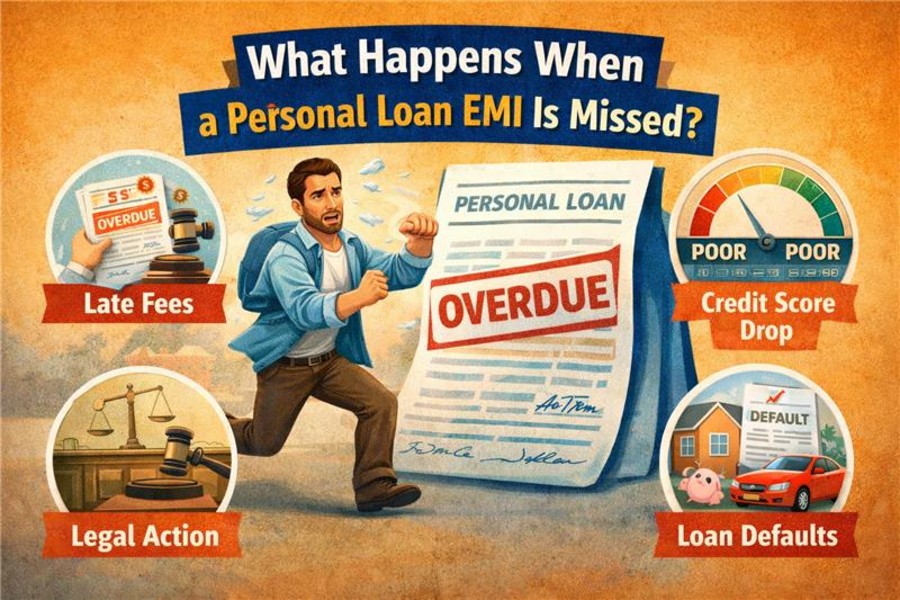
What Happens When You Miss a Personal Loan EMI?
Life doesn’t always go as planned. A sudden expense, a delayed salary, or an emergency, and before you know it, you’ve missed your personal loan EMI. Whether you are a first-time borrower, a salaried employee, or someone using a personal loan calculator for planning, understanding the impact of missed EMIs is crucial for maintaining financial health. Let’s break it down in a simple, practical way so you know exactly what happens and how to stay in control. What is Personal Loan EMI in simple terms? A personal loan's EMI is the exact amount you repay each month. It includes: A portion of your loan principal The interest charged by the lender Your EMI is calculated based on: Loan amount Interest rate Tenure This is where a personal loan calculator becomes extremely useful. It helps you estimate your EMI in advance and choose a repayment plan that actually fits your monthly budget, especially important for salaried employees managing fixed income. Why Proper EMI Planning Matters? Taking a personal loan is easy today, but managing it responsibly is what truly matters. Many borrowers focus only on getting quick approval and overlook whether the EMI actually fits their monthly budget. This is where proper EMI planning becomes essential. When you calculate your personal loan EMI in advance using a personal loan calculator, you get a clear picture of how much you’ll need to pay every month. This helps you avoid over-borrowing and ensures your loan remains affordable throughout the tenure. For salaried employees, this is especially important because income is fixed and expenses are often predictable. If your EMI takes up too much of your salary, even a small financial disruption, like a medical emergency or delayed salary, can lead to missed payments. Proper planning also improves your chances of meeting loan eligibility criteria in the future. Lenders prefer borrowers who show financial discipline and manage their EMIs smoothly. On the other hand, poor planning can lead to: Higher financial stress Increased dependence on credit Difficulty in managing other expenses or savings Another important factor is choosing the right option among different loan types. For example, a flexi personal loan may offer flexibility in repayment, but it still requires careful planning to avoid unnecessary interest costs. In simple terms, EMI planning is not just about calculation; it’s about ensuring your loan fits comfortably into your life without affecting your financial stability or long-term goals like investments and tax savings. Related blog: Top Reasons Why Your Personal Loan Gets Rejected What Really Happens When You Miss an EMI? Missing an EMI isn’t just about one payment; it triggers a chain reaction. Here’s what typically happens: 1. Immediate Penalty Charges The moment your EMI is missed: The bank adds a late payment fee Penal interest starts accumulating on the overdue amount Even if the amount seems small, these charges build up quickly if not cleared. Think of it like a snowball, small at first, but it grows faster than expected. 2. EMI Bounce Charges (If Auto-Debit Fails) If your EMI is set on auto-debit and your account has insufficient funds: The transaction fails You are charged a bounce fee This is very common among salaried employees, especially when expenses and salary dates don’t align properly. 3. Your Credit Score Takes a Hit This is where the real impact begins. Your repayment history plays a major role in your credit score. Missing even one EMI: Sends a negative signal to credit bureaus Lowers your score If you already have a low CIBIL score, this can make things worse and limit your financial options. 4. Future Loan Approvals Become Difficult Lenders look at your past behaviour before approving new loans. A missed EMI can: Reduce your chances of getting approved Affect your loan eligibility criteria Lead to higher interest rates Even if you were eligible for a pre-approved loan, that offer might disappear after a missed payment. 5. Increased Financial Burden Here’s something many borrowers don’t realise: Missing an EMI doesn’t pause your loan; it makes it more expensive. Interest keeps adding up Penalties increase your total cost Your repayment period may feel heavier Over time, this affects your ability to manage other financial goals like savings or tax savings planning. 6. Constant Follow-Ups from Lenders If the payment is not cleared quickly: You’ll start receiving reminder calls, SMS, and emails Lenders may follow up regularly While this is standard procedure, it can become stressful if delays continue. 7. Serious Consequences After 90 Days If you miss EMIs for a longer period (usually 90 days): Your loan may be categorised as a default Your credit profile is severely impacted At this stage, rebuilding your financial reputation becomes much harder. Related blog: Pay Off Your Personal Loan Early Foreclosure Charges, Steps & Benefits How to Avoid Missing Your EMI? Missing an EMI usually doesn’t happen intentionally; it’s often the result of poor planning or timing issues. The good news is that with a few smart habits, you can easily avoid it. Start by using a personal loan calculator before taking a loan. This allows you to choose an EMI amount that aligns with your income and expenses. Avoid the temptation to borrow the maximum amount you’re eligible for; just because you qualify doesn’t mean you should take it. Maintaining a buffer in your bank account is another simple but powerful strategy. Always keep enough balance to cover at least one EMI, especially if you rely on auto-debit. This is crucial for salaried employees, where timing mismatches between salary credits and EMI dates are common. Automation also helps. Set up auto-debit instructions and add calendar reminders as a backup. Even though payments are automatic, reminders ensure you’re always aware of upcoming deductions. Choosing the right tenure plays a big role, too. A longer tenure reduces your EMI burden but increases overall interest, while a shorter tenure does the opposite. Finding the right balance is key to avoiding repayment pressure. You should also understand the terms of your loan, especially if you’re using options like a pre-approved loan or a flexi personal loan. These may offer convenience and flexibility, but they still require disciplined repayment. Finally, always keep track of your financial health. If you already have a low CIBIL score, missing EMIs will worsen your situation and reduce future borrowing opportunities. Recent blog: How to Decide the Best Tenure for Your Instant Personal Loan What Should You Do If You Have Already Missed an EMI? If you’ve missed an EMI, the worst thing you can do is ignore it. But the good news is, if you act quickly, you can limit the damage and regain control of your finances. The first step is to pay the missed personal loan EMI as soon as possible. The longer you delay, the more penalties and interest will accumulate. Even a short delay can increase your total repayment cost and put unnecessary pressure on your finances. Next, inform your lender. Many borrowers hesitate to do this, but early communication can actually work in your favour. Lenders may offer temporary solutions like adjusting your EMI date or giving short-term relief, especially if you have a good repayment history. You should also review your finances immediately. Try to understand why the EMI was missed. Was it due to poor planning, unexpected expenses, or insufficient funds? Once you identify the cause, you can take corrective steps to avoid repeating the mistake. This is also a good time to do a quick loan comparison. Evaluate whether your current loan terms, interest rate, tenure, or EMI amount are still suitable for your financial situation. Sometimes, switching to better terms or refinancing can ease your repayment burden. If you’re facing genuine financial stress, speak to your lender about restructuring options. This could include extending your tenure or reducing your EMI amount to make repayment more manageable. Some borrowers consider short-term solutions like payday loans to cover missed EMIs. While these may offer quick cash, they often come with very high interest rates and should be used cautiously. Relying on such options repeatedly can worsen your financial situation instead of solving it. It’s also important to check your credit report after a missed EMI. This helps you understand how much your score has been impacted, especially if you already have a low CIBIL score or are planning to apply for loans in the future. Most importantly, avoid repeating the mistake. One missed EMI can be managed, but repeated delays can seriously affect your loan eligibility criteria, reduce your chances of getting a pre-approved loan, and limit access to better loan types. Might you have missed: NBFC vs Bank Personal Loan: Which Is Better for Quick Approval? Conclusion Missing a personal loan EMI may seem like a small mistake at first, but it can quickly turn into a bigger financial issue if not handled properly. From penalty charges and credit score impact to reduced loan eligibility and higher borrowing costs, the consequences can affect your overall financial stability. The key is to stay proactive. With the help of a personal loan calculator, proper planning, and disciplined repayment, you can avoid most EMI-related issues. And even if you do miss a payment, acting quickly by paying dues, communicating with your lender, and reviewing your finances can significantly reduce the damage. Whether you’re a salaried employee, a first-time borrower, or exploring different loan options like pre-approved loans, responsible repayment should always be your priority. Smart borrowing today ensures better financial opportunities tomorrow. Don’t let EMIs surprise you. Calculate, compare, and choose the best loan with Loan Quantum. Frequently Asked Questions How many days can I delay my EMI without penalty? Most lenders charge penalties immediately after the due date is missed. There is usually no grace period, so it’s best to pay as soon as possible. What should I do immediately after missing an EMI? Pay the overdue amount as soon as possible, inform your lender, and ensure you don’t miss the next payment to avoid further penalties. Are payday loans a good option to pay missed EMIs? Payday loans provide quick cash but come with very high interest rates. They should only be used as a last resort, as they can increase your financial burden. Does missing EMI increase total loan cost? Yes, due to penalties and additional interest, your overall repayment amount increases if you miss EMIs. What is the difference between EMI delay and EMI default? An EMI delay is when you miss a payment but clear it within a short time. A default happens when EMIs remain unpaid for a longer period (usually 90 days), severely impacting your credit profile.
Personal Loan Calculator- Your Guide to Smart Borrowing
Who doesn’t want a secure financial future in the contemporary fast-paced financial world? Without any costly mistakes and by revamping your financial life i.e. A personal loan may be the right choice for your economic future. But the main interrogation is: What exactly is a personal loan, and how to ensure a smart burrowing decision? When a person borrows any funds or funds from a financial institution or any lender to pay the debt or buy something that cannot be afforded at that point in time; it is understood as a personal loan. That borrowed sum is to be paid in fixed monthly installments with some additional interest. But how can you plan your burrowing, and make some informed decisions? Enter a personal loan calculator- your trusted ally in financial planning.
All About Personal Loan Calculator: Calculate your Loan Easily
After borrowing a certain amount of credit, you might be thinking about how to calculate the EMI amount. Look no further- a Personal Loan calculator is just a click away from calculating your EMI. You can easily calculate the EMI as per the interest charged, and the overall time period you have opted. All you need is to give these inputs to the personal loan calculator, and you will get the exact figures. So with this personal loan calculator stay ahead & top on your financial journey.
How Does a Personal Loan Payment Calculator Work?
Now you might be contemplating how to use a personal loan payment calculator effectively. Below are some guiding steps:
- Desired loan amount: Start calculating your EMI by first entering the desired amount of loan you need to borrow at that time.
- Interest rates: You need to select the suitable interest rate for your amount.
- Tenure: Select the number of years or months you would need to pay the amount back.
- Calculate: After all the inputs, tap on the calculate button, and you will get the following loan parameters, Loan Amount, Monthly EMI, Interest Rate, Years, Total Interest.
The personal loan payment calculator will generate the details you need, like monthly installments, total interest payable, and the total amount that is to be repaid.
Personal Loan Rate Calculator: Comparing your Options
After analyzing the functions and concepts of a personal loan rate calculator, it becomes important to have a look at its various advantages for potential borrowers:
- Comparing Shopping: You can easily compare different loan offers from multiple lenders by easily adjusting and calculating interest rates, loan amounts, and periods.
- Accuracy: How about obtaining accurate monthly payment estimates? A personal loan rate calculator is a perfect way of calculating monthly estimates which helps you plan accordingly.
- Time-saving: By removing the need for laborious computations, the calculator offers rapid, comprehensive insights into the payback schedule for your loan.
- Risk reduction: With the help of a personal loan rate calculator, you get an accurate estimate of how much you need to pay on a monthly basis, lowering any financial risk. An
- Strategic planning: The personal loan rate calculator assists in finding an acceptable loan amount depending on your available monthly income for EMI payments.
Why Loan Quantum's Personal Loan EMI Calculator is the Best Choice?
When it comes to Loan Quantum’s personal loan EMI calculator, it comes with unique features that gives it a competitive edge. With accuracy, flexibility, and suitability for different types of loans, the personal loan EMI calculator offered by Loan Quantum is great for calculating exact annual percentage rates (EMIs), as well as for modifying loan terms and setting up early repayments for any personal loan calculator. This mortgage loan calculator can be useful for calculating education loan calculators for both individual and investment loans.
With the right use of personal loan calculators, you can always make well-informed decisions about your borrowing needs.
How LoanQuantum Personal Loan, Home Loan, Car Loan EMI Calculator Works?
- Adjust the slider on the top or type the loan amount.
- Under the ‘Loan Amount’ slider, adjust the ‘Tenure’ slider or type in the loan repayment tenure that you are willing to avail.
- Fill in the field provided for the rate of interest.
- Fill in the field provided for the processing fee.
- Check the box under these field, if you want to make pre-payments.
- Hit the 'Calculate' button after entering all details.
Frequently Asked Questions
Get answers to your questions about home loans, car loans, personal loans, education loans, and gold loans.
We're here to help if you need further assistance.
A loan calculator is an online tool designed to help you calculate the monthly EMI, interest payments, and overall repayment schedule for different types of loans. Using a loan calculator helps you plan your finances by providing an estimate of your monthly obligations before you apply for a loan. It is especially useful for comparing different loan offers and selecting the best one based on your repayment capacity.
A loan EMI calculator helps you calculate the Equated Monthly Installment (EMI) you need to pay for a specific loan amount, interest rate, and tenure. Simply enter these details, and the calculator will show the exact EMI amount. This helps you understand the financial commitment and plan your budget accordingly. With a loan EMI calculator, you can adjust the loan tenure or amount to find the most suitable EMI for your needs.
A loan interest calculator is a useful tool for determining how much interest you will pay over the life of a loan. By entering the loan amount, interest rate, and repayment tenure, the calculator gives you a clear picture of your interest payments. This helps you compare different loan options and choose one with the lowest interest cost. It’s an essential tool for anyone looking to make informed decisions about their loans.
Yes, you can use a loan calculator for various types of loans, including personal loans, home loans, car loans, and business loans. A comprehensive loan calculator like ours at Loan Quantum allows you to input different loan parameters and get customized results. This flexibility ensures that you find the most accurate EMI and repayment schedule, no matter what type of loan you are considering.
Using a loan EMI calculator online offers several benefits, such as quick calculations, easy comparisons between different loan options, and the ability to adjust loan parameters instantly. You can try different interest rates, loan amounts, and tenures to see how they affect your EMI. This makes it easier to choose a loan that fits your budget, helping you avoid financial stress in the future.
A loan calculator provides a highly accurate estimate of your monthly payments, interest costs, and total repayment amount based on the inputs you provide, such as loan amount, interest rate, and tenure. However, the final figures may vary slightly due to factors like processing fees or changes in interest rates by your lender. It’s a reliable tool for getting a clear picture of what to expect before applying for a loan.
Absolutely! A loan interest calculator helps you compare different loan options by showing how much interest you will pay over time. This way, you can choose a loan with a lower interest rate or a shorter tenure to reduce your overall interest expenses. By making an informed decision, you can save a significant amount of money throughout your loan period.
To use a loan EMI calculator online, you will need to enter three key details: the loan amount, interest rate, and loan tenure. Once you provide this information, the calculator will quickly show your estimated EMI and total repayment amount. It’s a simple process that helps you evaluate whether a loan fits your financial capacity.
A Loan EMI Calculator is a valuable tool for individuals considering short-term loans as it helps in estimating the monthly payments they will need to make. By inputting the loan amount, interest rate, and tenure, borrowers can quickly see how different variables affect their EMI (Equated Monthly Installment). This clarity allows them to make informed decisions about which loan offers the best terms for their financial situation. Additionally, understanding the repayment structure helps borrowers manage their budgets effectively and avoid overextending themselves financially.
A home loan calculator is a tool that helps you estimate your monthly mortgage payments based on the loan amount, interest rate, and loan tenure. It provides a clear picture of your financial commitments before applying for a home loan.
The home loan EMI calculator computes your Equated Monthly Installment (EMI) based on your loan amount, interest rate, and repayment period. Simply enter these details, and the calculator will instantly provide you with the EMI amount, helping you budget effectively.
Using an EMI calculator for a home loan allows you to determine the monthly payment amount you will owe throughout the loan's duration. This information is crucial for planning your finances and ensuring that your monthly budget accommodates the EMI comfortably.
Yes, our home loan calculator enables you to compare various loan options. By adjusting the loan amount, interest rates, and tenure, you can see how different scenarios affect your monthly EMI and total repayment amount.
Yes, the home loan EMI calculator provides a reliable estimate based on the information you input. However, actual EMI amounts may vary slightly due to additional fees, insurance, and changing interest rates. It’s always best to consult with your lender for precise figures.
The results from the home loan calculator can guide you in making informed decisions about your home loan. By understanding the estimated EMI, you can evaluate your budget, assess loan affordability, and choose a loan that fits your financial situation.
Several factors can affect your home loan EMI, including the loan amount, interest rate, and tenure. Using a home loan EMI calculator, you can see how changes in these variables impact your monthly payments. A higher loan amount or interest rate will increase your EMI, while a longer tenure typically results in lower EMIs but a higher total repayment amount.
Absolutely! The home loan EMI calculator is designed to let you experiment with various loan amounts and tenures. By inputting different scenarios, you can determine how adjustments to the loan amount or repayment period affect your EMI, helping you choose the best option for your financial needs.
A personal loan calculator is an online tool that helps you estimate your monthly payments, total interest, and overall cost of a personal loan. By inputting your loan amount, interest rate, and loan term, you can quickly see how different factors impact your loan repayment.
A personal loan payment calculator allows you to input details such as the loan amount, interest rate, and repayment period. It then calculates your estimated monthly payments, helping you plan your budget accordingly.
To use a personal loan rate calculator, you typically need to enter the loan amount, desired loan term, and interest rate. This information will help you understand the potential costs associated with borrowing.
Yes, a personal loan EMI calculator can help you determine the most affordable monthly payment plan by adjusting the loan amount, interest rate, and tenure. This way, you can find a loan structure that fits your budget while minimizing overall costs.
The factors that influence your personal loan EMI include the principal loan amount, interest rate, and loan tenure. A personal loan EMI calculator can help you visualize how changes in these factors affect your monthly payments.
Absolutely! You can use a personal loan calculator for multiple loans by entering the details for each one separately. This helps you compare different loan options and understand which one is more cost-effective.
By entering your loan amount, interest rate, and tenure into a personal loan rate calculator, you can see the total interest payable over the life of the loan. This will give you a clearer picture of your financial obligations.
Using a personal loan EMI calculator offers several benefits, such as easy calculation of monthly payments, understanding total repayment costs, and helping you choose the right loan amount and tenure for your needs.
You can use a personal loan calculator to simulate various loan scenarios. By adjusting the loan amount, interest rate, and repayment period, you can find a loan that fits your financial situation and helps you make informed decisions.
When using a car loan calculator, consider the loan amount, interest rate, loan tenure, and any down payment. These factors will affect your monthly payments and overall loan cost. Using a car loan payment calculator can help you visualize how changes in these parameters impact your car loan EMI.
Yes! A car loan calculator allows you to input various loan offers, helping you compare the monthly payments and total interest paid. This is especially useful when using a car loan payment calculator to assess different financing options and select the one that best suits your budget.
A car loan calculator provides an overview of your monthly payments based on the loan parameters, while a car loan EMI calculator specifically focuses on calculating the Equated Monthly Installment (EMI) for your loan. Both tools are essential for making informed borrowing decisions.
To lower your monthly payments, you can adjust the loan amount, extend the loan tenure, or find a lower interest rate in the car loan payment calculator. This flexibility allows you to assess the best combination for your financial situation while ensuring affordability.
While it's not mandatory, making a down payment can significantly reduce your loan amount and monthly payments. When using a car loan calculator, including a down payment helps you see how it impacts your car loan EMI and overall cost.
If your car loan EMI is too high, consider using a car loan payment calculator to explore options such as reducing the loan amount, increasing the loan tenure, or seeking a loan with a lower interest rate. This can help make your monthly payments more manageable.
Absolutely! A car loan calculator can be used for both new and used cars. Just input the loan amount based on the price of the used car and the applicable interest rates to get an accurate estimate of your car loan EMI.
You can enter both fixed and floating interest rates in a car loan payment calculator. A fixed rate remains constant throughout the loan term, while a floating rate may change based on market conditions, impacting your car loan EMI.
You should use a car loan calculator at various stages—initial research, after selecting a car, and when comparing financing options. Regularly updating your calculations with new data helps you make informed decisions and ensures your chosen loan fits your budget.
Equated Monthly Installments (EMIs) are fixed monthly payments made to the lender to repay a loan. Each EMI consists of both the principal amount and the interest, calculated as: EMI = Principal + Interest. The EMI can be determined using the formula: {P x R x (1+R)^N / [(1+R)^N-1]}, where P represents the principal loan amount, R is the interest rate, and N denotes the total number of monthly installments.
Auto loan EMI calculators simplify the process, making it much easier and faster than manual calculations in Excel.
Enter the loan amount, interest rate, and repayment tenure to calculate your EMI.
Eligibility typically includes a minimum age of 21 years, a maximum age of 60 at loan maturity, a net annual income of at least ₹2,40,000, and at least one year of continuous employment.
An auto loan calculator estimates your monthly payments, helping you select a loan amount and tenure that align with your budget.
Calculate the monthly interest using the formula: (Annual interest rate ÷ 12) × Outstanding loan amount.
Many banks, credit unions, and financial institutions offer online EMI calculators to help estimate your monthly car loan payments accurately.
Although primarily designed for auto loans, the same principles can be used for calculating other types of loans.
Auto loan payment calculators are available on financial websites, banks, and lending institutions. They help estimate total loan payments, interest breakdowns, and monthly EMIs.
The EMI (Equated Monthly Installment) for an education loan depends on several factors, including the loan amount, interest rate, and loan tenure. To calculate your education loan EMI, you can use an education loan EMI calculator, which allows you to input the loan amount you need, the interest rate offered by your lender, and the duration for which you plan to repay the loan.
Yes, most lenders have a maximum limit for Education Loans, which can vary based on the course, institution, and your repayment capability. Typically, loans for higher education can range from ₹10 lakhs to ₹20 lakhs or more for studying abroad. Always check with your lender for specific limits.
To reduce your Education Loan EMIs, consider opting for a longer loan tenure, increasing your down payment, or negotiating for a lower interest rate. Using the Education Loan EMI Calculator can help you experiment with these variables to find the best solution.
To use the Education Loan Calculator effectively, you’ll need the loan amount you plan to borrow, the interest rate offered by your lender, and your desired loan tenure. Inputting this information will give you accurate EMI estimates.
Absolutely! Our Education Loan EMI Calculator allows you to adjust the loan tenure. This flexibility enables you to see how extending or shortening the repayment period affects your monthly EMI and total interest payable.
The interest rate for Education Loans varies by lender and can range from 8% to 15% or more. Factors like your credit history, course, and institution can impact the rate. Using the Education Loan Interest Rate Calculator can help you determine the best options available to you.
While it's not mandatory, using an Education Loan Calculator is highly recommended. It helps you understand your potential EMIs and total interest payable, enabling you to make informed decisions about your loan application and budgeting.
Yes, our Education Loan Interest Rate Calculator allows you to compute the total interest payable over the loan tenure. By inputting your loan amount and interest rate, you can see how much interest you will pay in addition to the principal amount.
The Education Loan Interest Rate can be influenced by various factors, including your credit score, the bank or financial institution's policies, the type of course you are pursuing, and the duration of the loan. A good credit rating often leads to lower interest rates.
The Education Loan EMI Calculator works by taking inputs such as the loan amount, interest rate, and repayment period. It then uses these figures to calculate your monthly EMI, making it easier for you to plan your finances for education expenses.
The business loan calculator estimates how much you can borrow based on several factors, including your business's revenue, existing debts, credit score, and the lender's specific criteria. By entering your monthly income, expenses, and any outstanding loans, the calculator can provide an approximate loan amount you may qualify for. Additionally, lenders often use this information to assess your repayment capacity and overall financial health, ensuring you borrow an amount that is manageable for your business's needs.
A business loan calculator helps you estimate the monthly payments and total interest on a business loan. It uses factors like loan amount, interest rate, and tenure to give you an idea of your repayment schedule. Use our business loan calculator to plan your finances better before applying.
A small business loan calculator is designed to assist small business owners in understanding their loan repayment obligations. By entering your loan amount, interest rate, and loan tenure, you can quickly calculate your monthly EMI and manage your business finances effectively.
Using a business loan calculator before applying helps you estimate your monthly payments, making it easier to manage your cash flow. It also allows you to compare different loan offers and choose the one that best suits your business needs.
Yes, our business loan payment calculator can help you understand the impact of prepayments on your loan. By entering prepayment details, you can see how it affects your overall interest and tenure, making it easier to decide whether prepayment is beneficial for you.
Our business property loan calculator provides highly accurate estimates based on the information you provide, such as loan amount, interest rate, and tenure. It helps you understand your repayment obligations and plan your finances accordingly.
A business loan calculator helps you compare different loan offers by showing the monthly EMI and total interest for each. This allows you to choose a loan with lower interest costs, ultimately saving money over the repayment period.
A small business loan calculator is specifically designed for smaller loan amounts and shorter tenures, typical for small businesses. In contrast, a regular business loan calculator can accommodate larger loan amounts and longer repayment periods.
Yes, a business property loan calculator can help you plan your commercial real estate investments by providing an estimate of your monthly payments and interest costs. It helps you understand the financial commitments before investing in property.
Yes, our business loan calculator not only shows your monthly EMI but also calculates the total interest payable over the loan tenure. This helps you understand the complete cost of the loan and plan your finances accordingly.
A business loan calculator helps you experiment with different loan amounts to see how they affect your monthly payments and overall affordability. This allows you to choose a loan amount that fits your budget and financial goals.
Yes, our business loan calculator is completely free to use online. You can access it anytime to calculate your business loan EMIs and plan your repayment strategy without any charges.
The loan amount you can receive on 10 grams of gold depends on the gold's purity and the lender's policies. Generally, banks and financial institutions provide loans of up to 75-90% of the gold's value based on the current market rate. Use a gold loan calculator for an accurate estimate.
To calculate a gold loan, you need to determine the current market price of gold per gram and the purity level. Multiply the weight of your gold by the market price to find the total value. Then, apply the lender's Loan-to-Value (LTV) ratio to estimate the loan amount.
A Gold Loan Interest Rate Calculator helps borrowers by allowing them to see how different interest rates affect their EMI. This helps in selecting the most cost-effective gold loan option, ensuring you get the best deal available.
A Gold Loan Calculator provides highly accurate estimates based on the information you input. While it gives a precise calculation of EMI and interest, it's always recommended to check with your lender for exact figures.
Yes, a Gold Loan Calculator can help compare different loan offers by allowing you to enter various interest rates and tenures. This enables you to see which loan offer gives you the most favorable EMI and total interest amount.
Using a Gold Loan Calculator before applying helps you understand the potential EMI and interest payments. This allows you to plan your budget effectively and choose a loan amount and tenure that suits your financial needs.
To calculate your EMI using a Gold Loan EMI Calculator, input the loan amount, interest rate, and repayment tenure. The calculator will display your monthly EMI and the total interest payable over the loan period.
Using a Gold Loan Calculator online is convenient, accurate, and saves time. It allows you to calculate EMI and interest rates without any manual effort, helping you make informed financial decisions before applying for a gold loan.
A Gold Loan Per Gram Calculator helps you determine the loan amount you can get per gram of gold. Simply enter the weight of your gold and the current market rate to find out the eligible loan amount.
The gold loan interest rate depends on several factors, including the loan amount, loan tenure, market rates, and the lending institution’s policies. Using a Gold Loan Interest Rate Calculator can help you compare different rates and choose the best option.
A loan eligibility calculator is a tool that helps you estimate the amount of loan you are eligible for based on your income, expenses, and financial profile.
You can check your loan eligibility in India by using an online loan eligibility checker. Input details such as your income, monthly expenses, and existing debts to get an accurate estimate.
Your loan eligibility depends on factors such as your income, credit score, existing debts, employment stability, and the debt-to-income ratio.
The debt-to-income (DTI) ratio is a key factor in determining loan eligibility. A lower DTI ratio indicates better financial health and increases your chances of loan approval.
A debt-to-income ratio calculator helps you calculate the percentage of your income that goes toward paying debts, helping you understand your financial standing for loan applications.
Yes, you can use the loan eligibility calculator to assess eligibility for personal loans, home loans, car loans, and other types of loans.
To check your loan eligibility based on salary, input your monthly salary, other income sources, and financial obligations into the loan eligibility calculator to get an estimate.
Yes, most online loan eligibility calculators are free to use and provide instant results without any cost.
The minimum salary required varies by lender and loan type. Use a loan eligibility checker to find specific requirements based on your financial profile.
Calculating your debt-to-income ratio helps you understand if you can comfortably manage a loan and improves your chances of approval by showing financial stability.
Get In Touch
We believe in the power of connection. Contact us and let’s make things happen.
Send Message
-
 329, 3rd Floor, Kalasagar Shopping Hub,
Nr. Satadhar Cross Road, Ghatlodiya,
Ahmedabad - 380061, Gujarat, India. -
 [email protected]
-
 +91 8140820000