Blog Details
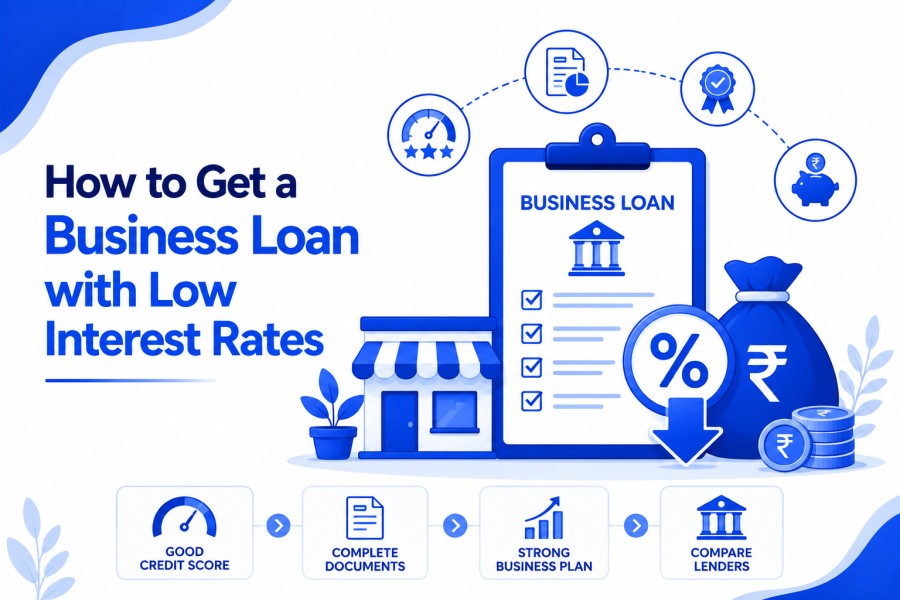
How to Get a Business Loan with Low Interest Rates
Getting a business loan at a lower interest rate can make a major difference in the growth and stability of your business. Whether you are expanding operations, managing working capital, purchasing equipment, or launching a startup, choosing the right financing option helps reduce repayment pressure and improve profitability.
Today, many banks and financial institutions offer small business loans, unsecured business loans, and instant business loan options with competitive rates. However, not every borrower qualifies for the lowest rates. Lenders evaluate your financial profile, business performance, repayment history, and eligibility before approving a loan.
In this guide, you will learn how business loan interest rates work, what affects them, and how to improve your chances of getting a bank business loan at lower interest rates.
What is Business Loan Interest Rates?
A business loan interest rate is the percentage charged by a lender on the borrowed amount. It represents the cost of borrowing and directly impacts your monthly EMI and total repayment amount.
For example, if you borrow ₹10 lakh for business expansion, the final repayment amount depends heavily on the business loan interest applied by the lender. Even a small difference in interest rates can significantly increase or reduce the overall loan cost.
Business loan rates in India vary based on several factors, including:
- Type of business
- Credit score
- Annual turnover
- Business stability
- Loan amount
- Repayment tenure
- Collateral availability
Most lenders offer both secured and unsecured business loans. Secured loans usually come with lower interest rates because they are backed by collateral. Unsecured business loans, on the other hand, are approved without security but may carry slightly higher rates.
Related blog: Business Loan Calculator: How It Works, Benefits & Smart Usage Guide
What are the Current Business Loan Interest Rates in India
Business loan, lowest interest rate bank offers generally start from around 9% to 12% per annum for highly eligible borrowers. However, the final rate depends on the lender and borrower profile.
Public sector banks often provide lower rates for established businesses with strong financial records. Private banks and NBFCs may offer faster approvals and instant business loan options, but the interest rates can be comparatively higher.
Some lenders also provide special startup loans for new business schemes under government-backed programs. These loans may include subsidized interest rates and relaxed eligibility requirements.
Before applying for a business loan, it is important to compare:
- Interest rates
- Processing fees
- Prepayment charges
- EMI structure
- Loan tenure
- Approval speed
A proper loan comparison helps identify the most affordable financing option for your business needs.
How to Calculate Business Loan Interest
Understanding how lenders calculate interest rates helps you estimate repayment obligations more accurately.
Most lenders calculate EMIs based on:
- Loan amount
- Interest rate
- Repayment tenure
Using a business loan calculator or a business loan interest rate calculator can help you estimate:
- Monthly EMI
- Total repayment amount
- Total interest payable
- Suitable tenure
A business loan calculator is useful because it allows you to adjust tenure and loan amount before applying. This helps businesses choose an EMI that fits their monthly cash flow.
For example, a longer repayment tenure may reduce the monthly loan EMI but increase the total interest paid over time. A shorter tenure may increase EMI but lower the total borrowing cost. Businesses should always calculate repayment affordability before selecting a loan offer.
Different Types of Business Loan Interest Rates
Business loans in India generally come with two types of interest structures. There are two types of online business loan interest types,
Fixed Interest Rates
In a fixed-rate loan, the interest remains unchanged throughout the tenure. This provides stable EMIs and predictable repayments. Fixed-rate loans are suitable for businesses that prefer consistent monthly expenses and better budgeting control.
Floating Interest Rates
Floating rates change according to market conditions and benchmark lending rates. EMIs may increase or decrease during the tenure. Floating rates can be beneficial when market interest rates decline, but they also carry uncertainty. Businesses should evaluate market conditions and financial flexibility before choosing between fixed and floating rates.
Business Loan Eligibility Criteria in India
Meeting business loan eligibility requirements is one of the most important steps toward securing low-interest financing. Although eligibility varies across lenders, most banks consider the following factors:
- Business Vintage: Lenders usually prefer businesses operating for at least 1 to 3 years. Established businesses are considered lower risk compared to newly launched firms.
- Credit Score: A high credit score improves your chances of approval and helps secure lower business loan interest rates. Most lenders prefer a credit score above 700.
- Annual Turnover: Higher business turnover indicates stronger repayment capability. Banks assess revenue trends before sanctioning a bank loan for business.
- Profitability: Consistent profits increase lender confidence. Businesses with stable income and healthy financial records are more likely to receive favorable rates.
- Existing Debt: If your business already has multiple active loans, lenders may consider you a higher-risk borrower.
- Industry Type: Some industries are considered more stable and may qualify for better loan terms.
Understanding loan eligibility before applying helps businesses avoid unnecessary rejections and improve approval chances.
Recent blog: Secured vs Unsecured Business Loans: Which Is Better?
How Startups Can Get Business Loans at Lower Interest Rates
Getting a business loan for startups can be challenging because new businesses often lack financial history. However, startups can still improve their chances of getting affordable funding.
- Maintain a Strong Personal Credit Score: For startup loans for new business applications, lenders often evaluate the founder’s personal credit profile.
- Prepare a Detailed Business Plan: A strong business plan with revenue projections and market analysis increases lender confidence.
- Apply Under Government Schemes: Several government initiatives support startup financing and small business loan programs with lower interest rates.
- Add a Co-Applicant or Guarantor: A financially strong co-applicant can improve loan approval chances and reduce lending risk.
- Choose Smaller Initial Loan Amounts: Startups applying for moderate funding amounts often receive quicker approvals.
Tips to Get Business Loans at Low Interest Rates
Securing the lowest possible business loan interest requires preparation and careful financial planning.
- Improve Your Credit Score: A strong repayment history and low credit utilization improve your credit profile. Paying Loan EMIs and credit card bills on time can help increase your score.
- Compare Multiple Lenders: Never accept the first loan offer immediately. Conduct proper loan comparison between banks, NBFCs, and digital lenders.
- Maintain Healthy Financial Records: Accurate GST filings, ITRs, bank statements, and audited financials improve lender confidence.
- Opt for Secured Loans When Possible: Providing collateral often helps secure lower business loan rates compared to unsecured business loans.
- Reduce Existing Debt: Lower debt obligations improve your debt-to-income ratio and repayment capability.
- Select the Right Loan Tenure: Choosing the right tenure balances EMI affordability and total interest cost.
- Apply for the Correct Loan Amount: Borrowing more than required may increase financial pressure and affect approval chances.
- Build a Relationship with Your Bank: Existing banking relationships sometimes help businesses negotiate better rates and faster approvals.
Read also: Key Mistakes to Avoid When Applying for a Business Loan
Final Thoughts
Getting a business loan at low interest rates requires more than simply applying to multiple banks. Businesses need strong financial discipline, proper documentation, healthy credit scores, and a clear repayment strategy. Whether you need a small business loan, startup funding, an instant business loan, or a long-term bank loan for business expansion, comparing lenders carefully can help reduce borrowing costs significantly.
Before applying, evaluate your loan eligibility, calculate your EMIs using a business loan interest rate calculator, and compare repayment terms from multiple lenders. The right loan structure not only supports business growth but also protects long-term financial stability. Businesses that prepare in advance and maintain strong financial records are more likely to secure affordable financing with better repayment flexibility.
Compare business loan offers, calculate EMIs, and find the right financing solution for your business growth with LoanQuantum.
Frequently Asked Questions
Businesses with strong credit profiles, stable revenue, and existing lender relationships may be able to negotiate lower business loan rates or reduced processing fees.
A low business loan interest rate usually starts from around 9% to 12% per annum for eligible borrowers. The actual rate depends on the lender, credit profile, business performance, and collateral availability.
Yes, government-backed schemes for MSMEs and startups often provide lower interest rates, flexible repayment terms, and reduced collateral requirements for eligible businesses.
Many banks offer preferential business loan interest rates to existing customers with strong banking relationships, regular transactions, and healthy account history.
Small businesses can improve approval chances by maintaining proper financial records, filing taxes regularly, reducing existing debt, and improving their credit score.