Blog Details
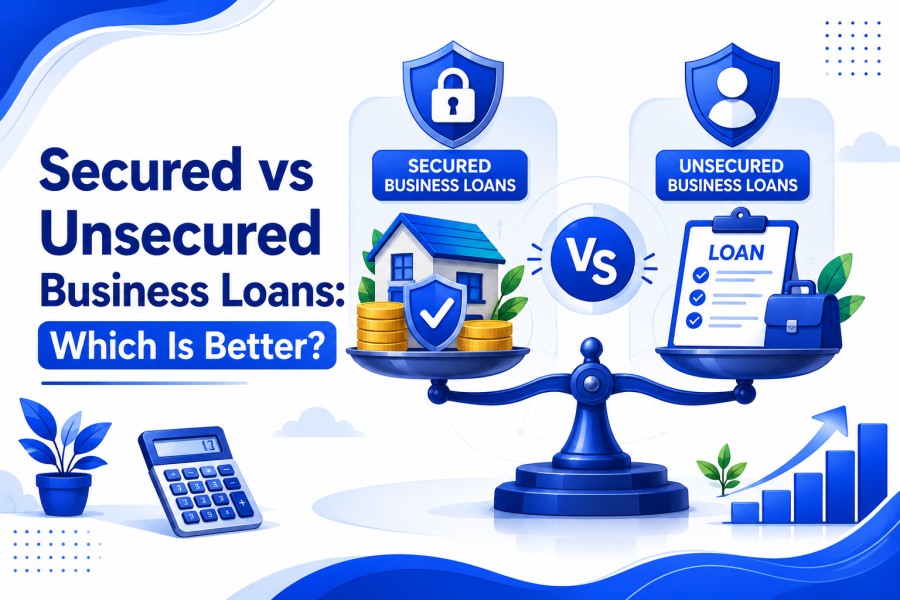
Secured vs Unsecured Business Loans: Which Is Better?
Running a business often requires timely financial support. Whether you are expanding operations, managing working capital, purchasing equipment, or launching a new venture, choosing the right financing option is critical. One of the biggest decisions borrowers face is choosing between a secured and an unsecured business loan.
Both loan types come with their own advantages, risks, eligibility requirements, and repayment structures. Understanding the differences can help business owners make smarter borrowing decisions and choose the most suitable financing option for long-term growth.
In this detailed guide, we will compare secured and unsecured business loans, explain their benefits, discuss eligibility criteria, interest rates, EMI calculations, and help you determine which option is better for your business.
What Is a Secured Business Loan?
A secured business loan is a loan backed by collateral. The borrower pledges an asset such as property, machinery, inventory, fixed deposits, or commercial equipment as security against the loan amount.
If the borrower fails to repay the loan, the lender has the right to recover dues by selling the pledged asset. Secured loans are commonly preferred by businesses looking for larger loan amounts and lower interest rates.
Common Collateral Used for Secured Business Loans
- Commercial property
- Residential property
- Machinery and equipment
- Inventory or stock
- Fixed deposits
- Vehicles
- Business assets
Secured loans are often suitable for selected businesses with valuable assets and stable revenue.
What Is an Unsecured Business Loan?
An unsecured business loan does not require any collateral or security. Lenders approve the loan based on factors such as:
- Business revenue
- Credit score
- Bank statements
- Income tax returns
- Business vintage
- Financial stability
These loans are ideal for businesses that need quick funding but do not want to pledge assets. Today, several lenders provide online business loans with quick approvals and low documentation.
Unsecured loans are especially popular among:
- Startups
- Small businesses
- Freelancers
- MSMEs
- Service-based businesses
Many lenders now provide instant business loan approvals through digital applications.
Secured vs Unsecured Business Loans: Key Differences
| Features | Secured Business Loan | Unsecured Business Loan |
|---|---|---|
| Collateral Requirement | Requires collateral such as property or machinery | No collateral required |
| Business Loan Interest Rate | Usually lower | Usually Higher |
| Loan Amount | Higher loan amounts available | Lower borrowing limits |
| Approval Speed | Slower due to asset verification | Faster approvals and quick disbursal |
| Eligibility Criteria | Based on collateral and financials | Based on credit score and cash flow |
| Repayment Tenure | Longer repayment tenure | Shorter repayment tenure |
| Best Suitable For | Business expansion and large investments | Working capital and urgent funding |
Benefits of Secured Business Loans for Small Businesses
A secured business loan can be a smart financing option for businesses looking for larger funding amounts at affordable repayment terms. Since the loan is backed by collateral, lenders usually offer better terms compared to unsecured financing. Many businesses use this type of small business loan for expansion, equipment purchases, or working capital needs.
- Lower Business Loan Interest Rate: One of the biggest advantages of a secured business loan is the lower business loan interest rate. Since the lender’s risk is reduced through collateral, borrowers can access more affordable financing and reduce their total repayment burden.
- Higher Loan Amount Eligibility: Businesses can usually secure larger funding amounts with a secured loan. This is beneficial for companies planning expansion, purchasing machinery, or managing operational costs.
- Flexible Repayment Tenure: Secured loans often come with longer repayment periods, making the monthly Business loan EMI more manageable. Businesses can use a business loan EMI calculator or a small business loan calculator to plan repayments effectively.
- Better Approval Chances: Businesses with collateral may have improved approval chances, even if their credit score is average. This makes secured financing useful for growing businesses seeking reliable funding.
- Suitable for Business Expansion: A secured small business loan is commonly used for opening new branches, increasing inventory, upgrading infrastructure, or purchasing commercial property.
Read also: Business Loan Calculator: How It Works, Benefits & Smart Usage Guide
Disadvantages of Secured Business Loans You Must Know
Although secured loans offer lower interest rates and higher loan amounts, they also come with certain risks. Businesses should carefully evaluate these factors before choosing a secured financing option.
- Risk of Losing Collateral: The biggest disadvantage of a secured business loan is the risk associated with pledged assets. If the borrower does not return the loan, the lender may confiscate the collateral.
- Lengthy Approval Process: Secured loans usually require property verification and legal checks, which can increase processing time compared to an instant business loan.
- Extensive Documentation: Borrowers often need to submit multiple financial and property-related documents while applying for a secured online business loan.
- Asset Valuation Requirements: Lenders evaluate the market value of collateral before approving the loan amount. This process may delay funding.
- Limited Flexibility for Startups: Many Startups may not own sufficient collateral, making secured financing difficult to access during the early stages of business growth.
Best Reasons to Choose an Unsecured Business Loan
An unsecured business loan is ideal for businesses that need quick funding without pledging assets. These loans are becoming increasingly popular among startups, MSMEs, and service-based businesses.
- No Collateral Requirement: The biggest benefit of the best unsecured business loans is that businesses do not need to mortgage property or assets to access funding.
- Faster Loan Approval: Many lenders now offer fast unsecured business loans with quick approvals and minimal paperwork. Some digital lenders even provide same-day disbursal.
- Easy Online Application: Applying for an online business loan is simple and convenient. Businesses can upload documents digitally and track application status online.
- Ideal for Startups and Small Businesses: Many startup business loans are unsecured, making them suitable for businesses that may not have assets for collateral.
- Flexible Usage of Funds: An unsecured small business loan can be used for inventory purchases, marketing campaigns, payroll management, equipment upgrades, and operational expenses.
- Quick Financial Support: Businesses with urgent cash flow needs frequently prefer speedy business loans since they provide quick access to funding.
Related blog: Key Mistakes to Avoid When Applying for a Business Loan
Hidden Disadvantages of Unsecured Business Financing
While unsecured loans offer speed and convenience, businesses should also understand the potential drawbacks before borrowing.
- Higher Business Loan Interest Rate: Since there is no collateral involved, lenders usually charge a higher business loan interest rate on unsecured financing.
- Lower Loan Amounts: Compared to secured loans, unsecured financing may offer limited borrowing capacity depending on the borrower’s financial profile.
- Strict Credit Evaluation: Lenders carefully review credit score, business turnover, and bank statements before approving unsecured funding.
- Higher EMI Burden: Due to shorter repayment tenures and higher interest rates, Business loan EMI for unsecured loans may be comparatively higher.
- Impact on Credit Score: Missing EMI payments on an unsecured business loan can negatively affect the borrower’s credit profile and future loan eligibility.
- Limited Options for New Businesses: Some lenders may hesitate to provide unsecured financing to newly established Startups with unstable cash flow.
Eligibility Conditions for Secured Loans in India
Before you apply for a business loan, lenders evaluate several loan eligibility factors for secured financing. Meeting these requirements can improve approval chances and help businesses access better loan terms.
- Ownership of Collateral: Applicants must own eligible collateral such as property, machinery, vehicles, or fixed deposits.
- Stable Business Operations: Lenders usually prefer businesses with a stable operational history and consistent income generation.
- Good Financial Records: Businesses should maintain healthy financial statements, GST returns, and bank transaction history.
- Acceptable Credit Score: Although collateral reduces lender risk, a decent credit score still improves approval chances for a secured business loan.
- Business Vintage Requirement: Most lenders require businesses to operate for a minimum number of years before applying for secured financing.
- EMI Repayment Capacity: Lenders assess repayment ability using income and cash flow analysis. Using a business loan calculator or a business loan EMI calculator helps businesses estimate affordability before borrowing.
Business Loan Eligibility for Unsecured Loans
Eligibility for unsecured financing mainly depends on the financial strength and repayment capacity of the business. Since there is no collateral involved, lenders follow stricter assessment criteria.
1. Strong Credit Score: A good credit score significantly improves approval chances for the best unsecured business loans.
2. Consistent Bank Transactions: Lenders evaluate banking history and cash flow stability before approving an unsecured business loan.
3. Minimum Business Turnover: Businesses must meet the lender’s minimum turnover requirement to qualify for financing.
4. Operational Stability: Most lenders prefer businesses with a proven operational track record and stable revenue generation.
5. Proper Documentation: Applicants usually need to submit:
- Bank statements
- GST returns
- PAN and Aadhaar details
- Income tax returns
- Business registration proof
6. Digital Eligibility Verification: Many lenders offering online business loan services perform instant digital verification for faster approvals.
7. Repayment Capacity Assessment: Lenders calculate affordability based on existing obligations and projected cash flow. Businesses should use a small business loan calculator to understand estimated EMI obligations before applying.
Read also: Easy EMI Planning Tips for Small Business Loans
Conclusion
Choosing between secured and unsecured financing is one of the most important borrowing decisions for any business owner. While secured loans offer lower interest rates and higher funding limits, unsecured loans provide convenience, speed, and flexibility. Businesses should carefully assess their financial goals, repayment capacity, and operational needs before selecting a loan type.
Whether you are looking for a small business loan, an instant business loan, or exploring the best unsecured business loans, understanding the differences between these financing options can help you make smarter financial decisions and support long-term business growth.
If you plan to apply for a business loan, make sure to compare lenders, review eligibility requirements, and calculate EMIs carefully to choose the best financing solution for your business. Turn your business plans into reality with the right loan support from Loan Quantum.
Frequently Asked Questions
An unsecured business loan is generally better for urgent working capital requirements because approvals are faster, and no collateral is needed.
Yes, lenders usually check credit score, business turnover, and bank statements before approving unsecured financing. A strong repayment history improves eligibility for larger loan amounts.
Secured loans usually offer longer repayment tenures compared to unsecured loans. This helps businesses manage monthly Business loan EMI more comfortably.
Yes, many lenders now provide startup business loans without collateral. These financing options are especially useful for Startups that may not own valuable assets but require working capital or operational funding.
An unsecured instant business loan is more suitable for urgent financial requirements because approvals and disbursals are much faster than secured loans.