Blog Details
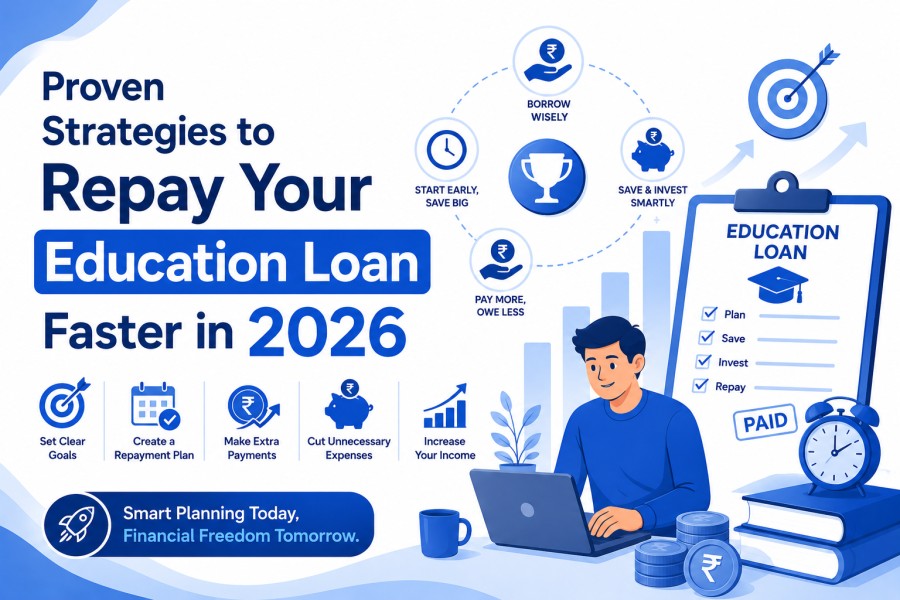
Proven Strategies to Repay Your Education Loan Faster in 2026
Education loans have become an important financial tool for students pursuing higher education in India and abroad. Whether you are planning for a professional degree, a technical course, or international education, an education loan can help cover tuition fees, hostel charges, travel expenses, books, and other academic costs. However, loan repayment becomes a major concern once the moratorium period ends.
In 2026, increasing education costs and increasing education loan interest rates make smart repayment planning more important than ever. A well-structured education loan repayment strategy can reduce financial stress, lower interest burden, and help borrowers become debt-free earlier.
This guide explains practical and proven ways to repay your education loan faster while managing your monthly budget effectively.
Why Early Education Loan Repayment Matters
Early loan repayment is important because many students delay repayment, assuming the repayment term will be long enough to manage later. But delaying repayment often increases the total interest amount paid over time.
The benefits of Faster loan repayments:
- Reduces overall interest costs
- Improves credit score and repayment history
- Increases future loan eligibility
- Helps achieve financial freedom sooner
- Reduces long-term financial pressure
If you are planning higher studies, a career switch, or major investments later, closing your education loan early can significantly improve your financial stability.
Related blog: Bank vs NBFC for Education Loans: Key Differences Explained
What are the Proven Strategies to Pay Off Student Loans Faster?
Before starting repayment, students should understand their loan terms clearly, including the interest rate, moratorium period, repayment tenure, and any applicable hidden charges. Many borrowers also fail to calculate the long-term cost of borrowing and end up struggling financially later. Using an Education loan calculator can help estimate monthly EMI obligations and total repayment costs in advance. It also allows borrowers to understand how extra payments or shorter tenures can reduce total interest.
Another important factor is avoiding over-borrowing during college. Many students take larger loans than required for lifestyle expenses, gadgets, or unnecessary accommodation upgrades. Borrowing only what is genuinely needed makes repayment after graduation more manageable. A responsible co-applicant, such as a parent or guardian with stable income and strong credit history, can also help secure better loan terms and lower interest rates.
Below are some of the most effective, proven strategies to help borrowers pay off student loans faster while maintaining financial stability.
1. Make Biweekly Payments
Instead of paying one full EMI every month, divide your payment into two smaller payments every two weeks. This creates one additional EMI payment each year, helping reduce the principal balance faster and lowering total interest costs during study loan repayment.
2. Use an Education Loan Calculator
An Education loan calculator helps borrowers estimate monthly EMI, interest payable, and repayment tenure before making financial decisions. It also helps compare repayment plans and understand how extra payments can reduce total loan costs.
3. Avoid Over-Borrowing
Many students borrow more than required for lifestyle expenses, gadgets, or luxury accommodation. Avoiding over-borrowing keeps your EMI manageable after graduation and reduces long-term financial pressure during repayment.
4. Pay Extra Towards the Principal
Whenever you receive bonuses, incentives, or extra income, use a portion to reduce the principal amount directly. A lower principal means lower interest accruals, helping you clear the loan faster.
5. Refinance to a Lower Interest Rate
Refinancing allows borrowers to transfer their loan to another lender offering lower interest rates or better repayment terms. This strategy can reduce the EMI burden and significantly lower the total repayment amount.
6. Sign Up for Auto-Pay
When consumers enable automatic EMI deductions, many lenders provide modest interest rate reductions. Auto-pay also helps avoid missed payments and improves repayment discipline.
7. Use Windfalls and Bonuses Wisely
Tax refunds, annual bonuses, freelance income, or side-hustle earnings can be used to prepay a loan. Occasional lump-sum payments can shorten the repayment tenure and reduce overall interest payable.
8. Pay Interest During the Moratorium Period
Even small payments during the study or grace period can prevent interest capitalization. This helps reduce future EMI amounts and lowers the total repayment burden after graduation.
9. Choose a Strong Co-Applicant
A financially stable co-applicant with good credit history can improve loan approval chances and help secure better interest rates. This can reduce overall borrowing costs over the repayment period.
10. Watch Out for Hidden Charges
Before finalizing any loan, carefully check for hidden charges such as processing fees, late payment penalties, foreclosure charges, or documentation fees. Understanding the complete loan cost helps avoid financial surprises later.
11. Follow the Debt Avalanche Method
If you have multiple loans, allocate extra payments to the loan with the highest interest rate first, while continuing minimum payments on the others. This strategy helps reduce overall interest costs faster.
12. Increase EMI with Salary Growth
As your salary increases over time, gradually increase your EMI amount instead of maintaining the same payment for years. Even small EMI increases can significantly shorten the repayment period.
13. Create a Budget for Study Loan Repayment
A proper monthly budget helps borrowers manage expenses and maintain regular EMI payments. Tracking spending habits also helps identify areas where money can be saved and redirected toward faster repayment.
14. Explore Employer Repayment Assistance
Some companies offer student loan repayment support as part of employee benefits. Checking with your employer about repayment assistance programs can significantly reduce your financial burden.
Recent blog: Education Loan Against Property in India: Process, Benefits & Risks
What Are the Education Loan Repayment Plans?
Education loan repayment plans are designed to help students repay borrowed amounts in a structured and manageable way after completing their studies. Most lenders offer a moratorium period that covers the course duration and an additional 6 to 12 months after graduation, giving students time to secure employment before starting repayment.
Depending on the lender, borrowers can choose from different repayment options based on income, career growth, loan amount, and financial stability. Selecting the right repayment plan can help reduce financial pressure, improve repayment discipline, and lower the total interest burden over time.
Common Education Loan Repayment Plans for Students
- Moratorium Period (Grace Period): Borrowers are not required to pay the full EMI during the study period and for a few months after graduation. However, interest may continue to accumulate during this time.
- Standard Repayment Plan: This plan includes fixed monthly EMIs throughout the loan tenure, typically 5 to 10 years, making budgeting easier for salaried professionals.
- Graduated Repayment Plan: EMI payments start at a lower amount and gradually increase over time as the borrower’s income grows after starting a career.
- Flexible or Partial Repayment Plan: Some lenders allow borrowers to pay only simple interest or partial EMI during studies to reduce future repayment burden.
- Income-Driven Repayment Plan: Common in some international loan systems, this plan adjusts monthly payments based on the borrower’s income.
- Extended Repayment Plan: Borrowers can choose a longer repayment tenure, sometimes up to 15 years, to reduce monthly EMI amounts.
Related blog: Is an Education Loan Calculator Useful for Studying Abroad?
Things to Consider While Repaying an Education Loan
Repaying an education loan is a long-term financial responsibility that requires careful planning and disciplined money management. Many borrowers face repayment difficulties because they do not fully understand their loan structure, repayment timeline, or interest accumulation. Proper repayment planning can help reduce the overall loan burden, save money on interest, and improve financial stability after graduation. Borrowers should focus on managing EMIs smartly, making timely payments, and reducing the principal amount whenever possible to avoid long-term debt stress.
Important Points to Consider During Education Loan Repayment
- Understand the Moratorium Period Properly: Most lenders provide a moratorium period covering the course duration plus 6–12 months after graduation. Although EMI payments may not start immediately, interest usually continues to accumulate during this period. Paying interest early can prevent the total loan amount from increasing significantly later.
- Choose Higher EMI Amounts if Financially Possible: Paying slightly higher EMIs can reduce the loan tenure and lower the total interest payable over time. Borrowers with stable income should consider gradually increasing their EMI amounts after salary hikes or promotions.
- Make Regular Partial Prepayments: Use bonuses, incentives, freelance income, or savings to prepay directly, reducing the principal balance. Lower principal means lower interest accumulation and faster loan closure.
- Use Tax Benefits Under Section 80E: Education loan borrowers in India can claim deductions on interest paid under Section 80E of the Income Tax Act. This benefit can reduce taxable income for up to 8 years and provide financial relief during repayment.
- Avoid Missing EMI Payments: Timely EMI payments are extremely important for maintaining a healthy credit score. Missed or delayed payments can attract penalties, increase financial stress, and negatively affect future loan approvals.
- Track Loan Statements and Interest Rates: Borrowers should regularly monitor loan statements, outstanding balance, EMI deductions, and interest rate changes. This helps identify unexpected expenses or repayment errors quickly.
- Use an Education Loan Calculator for Planning: An education loan calculator helps estimate EMI amounts, repayment schedules, and total interest payable. It also allows borrowers to compare different tenure options and repayment strategies.
- Maintain a Proper Monthly Budget: Creating a monthly financial plan helps prioritize EMI payments and manage daily expenses effectively. Reducing unnecessary spending can free up extra funds for faster loan repayment.
- Consider Refinancing if Interest Rates Are High: If another lender offers lower interest rates or better repayment terms, refinancing may help reduce EMI burden and overall repayment costs.
- Keep Emergency Savings Available: An emergency fund helps borrowers continue EMI payments in the event of unexpected situations such as job loss, medical emergencies, or financial instability.
Related blog: RBI Education Loan Guidelines Explained in Simple Terms
Conclusion
Repaying an education loan successfully requires proper planning, financial discipline, and a clear understanding of repayment terms. Borrowers who actively manage their loans through timely EMI payments, partial prepayments, and smart budgeting can significantly reduce their overall interest burden and become debt-free faster. Understanding factors such as the moratorium period, interest accumulation, tax benefits, and repayment tenure helps avoid financial stress later. Using tools such as an education loan calculator and regularly reviewing repayment progress can also improve financial decision-making. With the right repayment strategy and consistent financial habits, borrowers can manage their student loan debt effectively while building a stronger financial future.
Plan your education loan repayment smarter with Loan Quantum. Compare loan options, calculate EMIs, explore repayment strategies, and make informed financial decisions for a stress-free future.
Frequently Asked Questions
Many banks and NBFCs allow early repayment or foreclosure without penalties, but borrowers should always check the lender’s terms and conditions before making prepayments.
Yes, using bonuses, tax refunds, or side income to make lump-sum prepayments directly reduces the principal amount and speeds up loan repayment.
Maintaining a monthly budget, tracking expenses, avoiding unnecessary spending, and keeping emergency savings can help manage repayment smoothly.
The fastest way to repay an education loan is to pay higher EMIs, make regular prepayments, and reduce the loan principal whenever possible using bonuses or extra income.
Yes, paying partial interest or small amounts during studies can reduce future EMI burden and lower total interest accumulation.