Blog Details
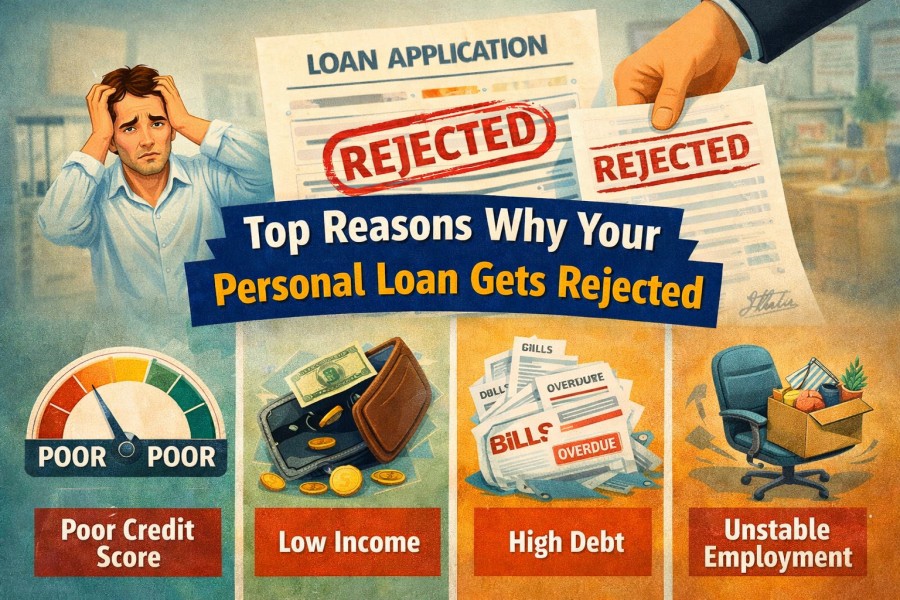
Top Reasons Why Your Personal Loan Gets Rejected
Personal loans are among the most popular types of unsecured financing in India. They are flexible, quick to disburse, and can be utilized for a variety of objectives, including medical costs, travel, education, and debt consolidation. But what happens when your personal loan application gets rejected? A loan rejection can be frustrating, especially when you need funds urgently. Understanding the common personal loan rejection reasons can help you improve your chances next time.
In this comprehensive guide, we’ll explain the top reasons why your personal loan gets rejected, the impact of factors like your CIBIL report, documentation mistakes, income issues, and the steps you can take to improve approval chances.
1. Low Credit Score — Top Reason for Loan Rejection
One of the most common personal loan rejection reasons is a poor credit score. Most banks and NBFCs prefer a CIBIL score of 750 and above. A lower score indicates a greater risk to lenders.
Why a Low CIBIL Score Leads to Rejection
- A low CIBIL score often reflects late payments, defaults, or high credit utilization.
- Lenders use credit ratings to assess your creditworthiness.
- If a bank finds your credit history unstable, it may reject your personal loan application.
Loan Rejected Due to CIBIL Report — What It Means
When your loan gets rejected due to CIBIL report issues, it’s often because:
- You have missed past EMIs or loan repayments.
- You have overdue credit card bills.
- There are errors or discrepancies in your credit file.
- You have a history of defaults.
Tip: Before applying, check your credit report and use a personal loan calculator to check how your credit decisions affect eligibility.
2. High Debt‑to‑Income Ratio (FOIR)
Your Fixed Obligations to Income Ratio (FOIR) assesses how much of your monthly income goes toward loan EMIs and bills. If too much of your income is already committed, lenders may feel you cannot service another loan.
How FOIR Impacts Loan Approval
- Lenders generally prefer that your total EMIs and fixed obligations are below 40–50% of your net monthly income.
- If your existing EMIs or credit card dues are too high, your application may be rejected.
Related blog: How to Calculate Your Debt-to-Income Ratio Using a Home Loan Calculator
Example
If you earn ₹50,000/month and already pay ₹25,000/month in existing EMIs, your FOIR is 50% — which might be considered risky by lenders.
3. Unstable Employment History
Banks want assurance that you have a steady income and job continuity before approving any instant personal loan. Since personal loans are unsecured, lenders rely heavily on your employment stability to assess repayment capacity.
Job-Related Loan Rejection Reasons
- Frequent employment transfers cause concerns among lenders.
- Sudden career gaps may signal financial or professional instability.
- Short duration in current employment (e.g., less than 6 months).
When your job history appears inconsistent, lenders may doubt your ability to handle regular repayments. This becomes even more important when they perform an EMI calculation to evaluate whether your current income can comfortably support the monthly installments.
Related blog: Salary-Based Personal Loans: Benefits, EMI Tips & Approval
4. Incomplete or Incorrect Documentation
Another common reason for loan rejection is missing or incorrect paperwork, even when you are eligible for a pre approved personal loan. Many borrowers assume pre-approval guarantees instant disbursal, but lenders still verify your documents before final approval.
Common Loan Documentation Issues
- Mismatched name or DOB on ID and application forms
- Incorrect income proofs
- Missing bank statements
- Incomplete KYC documentation, including PAN and Aadhaar
When documentation mismatches, lenders cannot verify your information accurately, leading to an automatic rejection. Even in the case of a pre approved personal loan, incorrect or incomplete details can delay or cancel the approval process.
Loan Document Checklist before applying:
- PAN Card
- Aadhaar Card
- Salary slips or Income tax returns
- Bank account statements
- Address proof
5. Low or Unstable Income Profile
Every lender sets a minimum income requirement for personal loans. If your monthly income is below the lender’s threshold or very irregular (e.g., freelance earnings), your loan may be denied.
Income‑Related Loan Rejection Scenarios
- Income below the required minimum
- Seasonal or inconsistent income
- Self‑employed with insufficient documentary proof
Tip: If you’re self‑employed, prepare accurate financials and tax returns to show consistent earnings.
6. Multiple Recent Loan Applications
When you apply for several loans in a short period, lenders view you as credit hungry. Every loan inquiry gets recorded in your credit file, and a high number of recent enquiries can hurt your score. Even if you are planning to opt for a Flexi personal loan, applying at multiple lenders simultaneously can reduce your chances of approval.
Why Too Many Inquiries Cause Loan Rejections
- Signals financial distress
- Lowers credit score temporarily
- Reduces lender confidence
Frequent applications can also impact your ability to qualify for better loan features or benefits. While some borrowers explore options like tax savings through financial planning, multiple loan enquiries can weaken your overall credit profile and limit such advantages.
Strategy: Wait at least 3–6 months between applications and avoid submitting multiple loan requests at the same time. This improves your chances of approval and helps maintain a healthy credit score.
Related blog: Pay Off Your Personal Loan Early Foreclosure Charges, Steps & Benefits
7. Previous Loan Defaults or Poor Credit History
If you have previously defaulted on loans or missed EMIs, most lenders will reject your application. Bank loan rejections related to poor credit history are common.
How Default History Affects Approval
- Defaults can linger on your credit report for up to seven years.
- Lenders are less likely to approve applicants with past payment issues
- Even if your CIBIL score is borderline acceptable, negative comments can lead to rejection
8. Age & Other Eligibility Criteria
Each lender has eligibility criteria involving:
- Age limits (usually 21–60 years)
- Minimum working experience
- Specific job types or industry standards
Failing to meet these loan eligibility criteria will result in rejection, sometimes even if your credit score and income are strong.
9. Too Many Existing Loans or High Credit Utilization
Lenders check your credit utilization ratio, the percentage of credit you have used versus the total available limit.
High Credit Utilization = Higher Rejection Risk
- If your credit cards are maxed out
- If you have multiple loans running
- If existing debt is large compared to your income
This signals poor financial discipline, and lenders may reject your application.
Recent blog: Top Personal Loan Types in India for 2026
10. Incorrect Personal Details
Sometimes a minor error can trigger a rejection:
- Spelling mistakes
- Wrong date of birth
- Mismatched mobile number or email
- Errors in employment details
Any inconsistency across your loan application and credit reports can lead to a rejection letter.
Understanding Your Personal Loan Rejection Letter
A personal loan rejection letter will usually include basic reasons for non‑approval. Commonly mentioned causes include:
- Low CIBIL score
- Incomplete documentation
- High debt obligations
- Income disparity
Always read the rejection letter carefully; banks often specify the exact reason that you can fix before reapplying.
How Soon Can You Apply Again After a Loan Rejection?
There’s no fixed rule, but it’s best to wait until you correct the issues that led to the rejection. That could mean:
- Improving your CIBIL score
- Clearing existing dues
- Updating pending documentation
- Reducing credit utilization
Waiting for about 3–6 months before reapplying gives time for positive changes to reflect in your credit report.
How to Avoid Personal Loan Rejection — Quick Tips
Below are practical ways to increase your chances of approval:
- Check Your CIBIL Score: Ensure your credit score is above 700–750. Fix errors by reviewing the credit report.
- Reduce Your Debt Burden: Use a personal loan calculator to estimate EMIs and FOIR. Lower your EMIs if possible.
- Submit Complete & Correct Documents: Double-check your loan application for correctness.
- Don’t Apply at Multiple Places Simultaneously: Too many enquiries in a short span can reduce your creditworthiness.
- Provide Proof of Stable Income: For self‑employed professionals, keep tax returns and balance sheets handy.
- Use a Co‑Applicant If Needed: Having a co‑applicant with strong credit improves approval chances.
Related blog: How to Decide the Best Tenure for Your Instant Personal Loan
Conclusion
Getting a personal loan rejection can be disappointing, but it isn’t the end of the road. Most personal loan rejection cases are due to fixable issues like credit score, documentation, or income levels.
By understanding the top reasons your personal loan gets rejected — such as low CIBIL score, high debt, incomplete documents, unstable employment, or incorrect details- you can take targeted steps to improve your eligibility and get approved the next time you apply.
Remember, lenders are looking for reliability, repayment capacity, and financial discipline. With the right preparation and a carefully completed application, you can turn a rejection into approval.
Don’t let your loan get rejected. Use LoanQuantum to check eligibility and plan better before you apply.
Frequently Asked Questions
A loan rejection letter is an official communication from the lender explaining why your application was not approved. It may include reasons like low credit score, insufficient income, or incomplete documentation.
It is possible, but difficult. If your income is below the lender’s minimum requirement, your loan may be rejected unless you apply with a co-applicant or show additional income sources.
Yes, banks are not always obligated to provide detailed reasons. However, most lenders issue a loan rejection letter mentioning general causes like low credit score, high debt, or eligibility mismatch.
Yes, self-employed individuals may face higher rejection rates due to irregular income, lack of stable cash flow, or insufficient financial documentation, such as ITRs and bank statements.
Yes, lenders have age criteria, usually between 21 and 60 years. Applicants outside this range may face rejection due to limited earning years or higher risk.