Blog Details
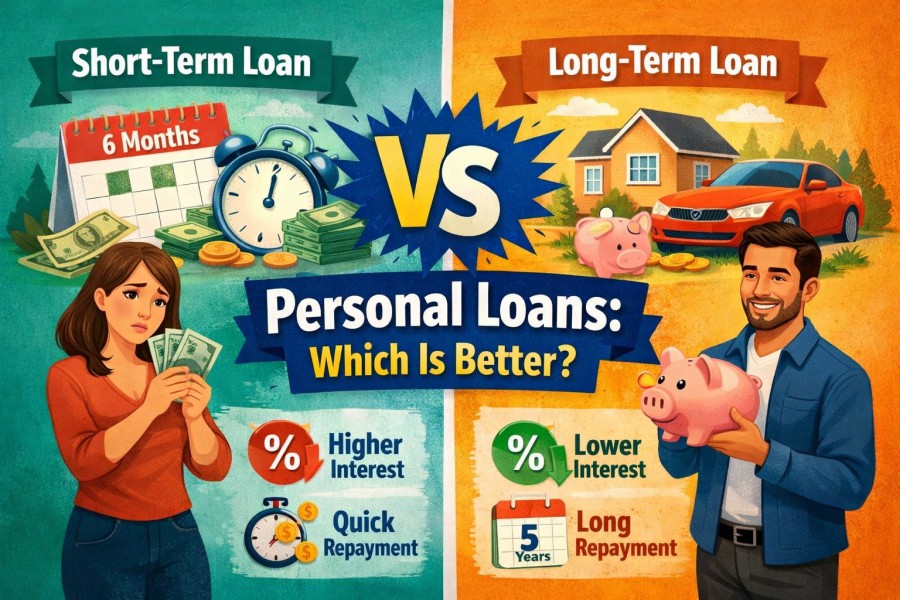
Short-Term vs Long-Term Personal Loans: Which Is Better?
When it comes to borrowing money, choosing the right type of personal loan can make a significant difference in your finances. Short-term and long-term personal loans each serve unique purposes, but understanding which option best fits your needs requires careful consideration. Factors such as loan eligibility, repayment capacity, and interest rates play a crucial role in determining the best choice. Using a personal loan calculator can help you estimate your loan EMI and compare different scenarios, making it easier to plan your repayments.
In this guide, we’ll explore the pros and cons of short-term and long-term personal loans to help you make an informed decision.
What Are Personal Loans and Why Tenure Matters
A personal loan is an unsecured loan you can use for almost anything, such as medical emergencies, travel, home renovations, weddings, or debt consolidation. Lenders approve loans based on your cibil score rather than collateral.
The loan tenure for the personal loan you choose affects your loan EMI calculation, total interest, and how quickly you can become debt-free. Short-term loans have higher EMIs but lower overall interest, while long-term loans have lower monthly payments but increase the total interest over time.
Related blog: What is the EMI for a 12 Lakh Personal Loan for 5 Years?
What Is a Short‑Term Personal Loan?
Short‑term personal loans are designed to be repaid quickly, often within a few months to around two years. They are ideal when you need fast cash for immediate or unplanned expenses like emergency medical bills, urgent travel, vehicle repairs, or small one‑off costs.
Pros of Short-term Personal Loans
- Shorter Loan Tenure: Personal loan terms are typically 3 to 24 months, helping borrowers repay faster and reduce long-term debt.
- Quick Approval and Disbursal: These loans often feature fast, digital processes, with approvals and fund transfers completed within 24–48 hours, making them ideal for emergencies.
- Lower Total Interest Cost: Even if interest rates may vary, short-term loans can help you secure relatively lower interest rates overall in terms of total interest paid, since the repayment period is shorter.
- Unsecured and No Collateral: These loans do not require collateral, making them accessible to both salaried employees and self-employed individuals.
- Flexible Usage: You can use the funds for various needs such as medical emergencies, travel, or temporary cash flow gaps. Some lenders also offer a flexi personal loan, allowing you to withdraw funds as needed and pay interest only on the amount you use.
- Minimal Documentation: The application process is simple and requires only basic documents such as ID, proof of address, and income details, ensuring quick access to funds.
- Faster Debt Freedom: With a shorter tenure, you can become debt-free quickly and focus on other financial goals.
- Helpful for Loan Comparison: During loan comparison, short-term personal loans stand out for faster repayment and lower overall interest, though they require the ability to manage higher EMIs.
Cons of Short‑Term Personal Loans
While short-term loans offer quick access to funds, they also come with certain drawbacks that borrowers should carefully consider before applying:
- Higher Loan EMI: Due to the shorter loan tenure, the loan EMI is significantly higher. This can put pressure on your monthly budget and affect your overall loan EMI calculation.
- Higher Interest Rates and Charges: Short-term loans may come with relatively higher interest rates, along with processing fees and other charges, increasing the overall cost of borrowing.
- Risk of Cash Flow Strain: The high EMI and quick repayment cycle can create financial stress, especially if your income fluctuates or unexpected expenses arise.
- Limited Loan Amount: These loans are generally suitable for smaller financial needs, as lenders may restrict the loan amount compared to long-term options.
- Higher Risk of Default: If you miss EMIs due to the high repayment burden, it can lead to penalties, additional charges, and negatively impact your credit score and loan eligibility.
- Debt Trap Possibility: Under high repayment pressure, some borrowers may take another loan to repay the existing one, creating a cycle of debt.
- Less Repayment Flexibility: Unlike a flexi personal loan, standard short-term loans offer limited repayment flexibility, as their tenures are fixed and short.
- Not Ideal for Large Expenses: Short-term personal loans are better suited for urgent or small needs and may not be practical for large financial requirements.
Related blog: Top 10 Mistakes to Avoid When Applying for a Personal Loan
What Is a Long‑Term Personal Loan?
Long‑term personal loans extend repayment over several years, usually more than two and often up to 5–7 years, depending on the lender. These are suitable when you need larger funds and prefer smaller monthly payments that fit comfortably into your budget.
Pros of Long‑Term Personal Loans
Long-term personal loans are a suitable option for borrowers seeking manageable repayments and long-term financial flexibility. With easy online access, these loans have become even more convenient to apply for and manage. Here are the key benefits:
- Lower Loan EMI: One of the biggest advantages is the lower EMI, as the repayment is spread over a longer loan tenure.
- Better Cash Flow Management: Smaller EMIs improve monthly cash flow, allowing you to handle other expenses, savings, or investments more comfortably. This also makes the loan EMI calculation more practical for monthly budgeting.
- Higher Loan Eligibility: A longer tenure reduces the monthly repayment burden, which can increase your loan eligibility and allow you to borrow a higher loan amount.
- Suitable for Large Expenses: Long-term loans are ideal for major financial needs such as home renovations, weddings, or debt consolidation, where a larger loan amount is required.
- Easy Access with Online Loan: Many lenders offer quick approval and disbursement through online personal loan platforms, making the process fast and convenient for borrowers.
- Improves Financial Stability: Lower EMIs reduce financial stress and help maintain a stable budget over time, especially for salaried employees managing multiple expenses.
- Flexible Repayment Options: Many lenders offer features such as step-up plans, giving borrowers more control over their repayments.
- Helps Build Credit Score: Regular, timely EMIs over a longer period demonstrate financial discipline and can improve your credit profile.
- Potential Tax Savings (in Specific Cases): While personal loans usually don’t offer direct tax savings, you may claim deductions if the loan is used for specific purposes like home renovation or business expenses, subject to applicable tax rules.
- Useful for Loan Comparison: Long-term loans stand out for affordability and flexibility, making them a practical choice for borrowers with limited monthly surplus income.
Cons of Long‑Term Personal Loans
While long-term personal loans offer lower EMIs and flexibility, they also come with certain drawbacks that borrowers should evaluate carefully before applying for a loan:
- Higher Total Interest Cost: One of the biggest disadvantages is the significantly higher total interest paid. A longer loan tenure for a personal loan increases the overall loan costs, even if the EMI is lower. This directly impacts your loan EMI calculation over time.
- Long-Term Debt Commitment: With extended tenures, you remain in debt for several years, which can limit financial freedom and delay other financial goals.
- Reduced Loan Eligibility in Future: A long-term loan keeps your debt-to-income ratio high for a longer period, which can affect your future loan eligibility when applying for other loans.
- Higher Overall Borrowing Cost: Even if monthly payments seem affordable, the total repayment amount is much higher than with short-term options, increasing the overall cost of the loan.
- Increased Risk of Default: Over a longer period, unexpected financial challenges such as job loss or emergencies can increase the risk of missed EMIs, which can affect your credit score.
- Prepayment Charges: Some lenders may charge penalties if you try to close your loan early, limiting your ability to reduce loan costs and save on interest.
- Overborrowing Risk: Lower EMIs may encourage borrowers—especially salaried employees to take on higher loan amounts than necessary, leading to excessive debt.
- Limited Tax Benefits: Unlike home loans, personal loans generally offer minimal tax benefits, unless used for specific purposes such as business or home improvement, under applicable conditions.
Recent blog: Payday Loans vs Personal Loans in India: EMI, Eligibility & Risks
Comparison: Short‑Term and Long‑Term Personal Loans
| Features | Short‑Term Personal Loan | Long‑Term Personal Loan |
|---|---|---|
| Tenure | Up to ~2 years | Several years (up to 5–7+) |
| Monthly EMI | Higher | Lower |
| Total Interest Paid | Lower | Higher |
| Cash Flow Impact | More strain | Easier to manage |
| Best For | Urgent, small expenses | Larger costs with longer planning |
| Debt Freedom | Fast | Slow |
How to Decide: Choosing the Best Loan Tenure
There’s no specific answer; it ultimately depends on your financial situation, goals, and repayment capacity. Here’s how you can decide:
1. Evaluate Your Monthly Budget: Start by calculating your monthly income versus essential expenses. Use a personal loan calculator to simulate different tenure options and see how the loan EMI changes as the tenure grows or shrinks.
2. Assess Your Financial Goals: If you want to be debt‑free quickly and save on interest, a short‑term loan could be right for you. But if you prefer to balance debt with savings or investments, a long‑term loan might make more sense.
3. Check Your Loan Eligibility: Your loan eligibility, based on your income, credit score, age, and existing obligations, also affects what tenure you can safely choose. Sometimes a borrower qualifies only for a particular tenure range.
4. Plan for Emergencies: A longer tenure often gives breathing room if you face unexpected expenses later. However, prepayment options can let you close the loan early if your finances improve, helping you save interest without the high initial EMI burden.
Related blog: NBFC vs Bank Personal Loan: Which Is Better for Quick Approval?
When Each Option Works Best
Choose Short‑Term If:
- You have a steady income and can handle a higher personal loan EMI.
- You want to minimize interest and get out of debt quickly.
- You’re borrowing for a short‑lived need like medical bills or repairs.
Choose Long‑Term If:
- Your monthly cash flow is tight, or you have multiple financial goals.
- The loan is for a larger expense, like wedding costs or extensive renovations.
- You want lower monthly EMIs to balance your budget.
Conclusion
Both short‑term and long‑term personal loans have a place in financial planning, and the “better” option depends on your personal circumstances. Short‑term personal loans let you pay less interest and clear debt quickly, while long‑term personal loans make monthly payments more affordable and help preserve cash flow.
Using a personal loan calculator, evaluating your loan eligibility, and understanding your monthly budget will make your decision clearer and more financially sound. Ultimately, the smartest choice is the one that aligns with your goals, repayment capacity, and long‑term financial well‑being.
Make smarter borrowing decisions with LoanQuantum. Use our advanced tools to compare options, calculate EMIs, and find the best personal loan for your needs in minutes.
Frequently Asked Questions
Yes, long-term loans are ideal for larger financial needs such as home renovation, weddings, or debt consolidation. The extended tenure lowers monthly EMIs, making it easier to manage your monthly budget.
Some lenders allow refinancing or prepayment, which lets you reduce the tenure of a long-term personal loan. This can help save interest if your financial situation improves.
Use a loan calculator to compare EMIs for different tenures. Consider your cash flow, financial goals, urgency of the expense, and total interest cost. Choose short-term for faster repayment and lower interest, and long-term for manageable EMIs and larger loan amounts.
Yes, most lenders allow partial or full prepayment. Paying off a long-term loan early reduces the total interest, effectively combining the benefits of both short-term and long-term loans.
The longer the tenure, the more interest accrues. A short-term personal loan may have higher EMIs but lower total interest, whereas a long-term loan has lower EMIs but higher total interest costs.