Blog Details
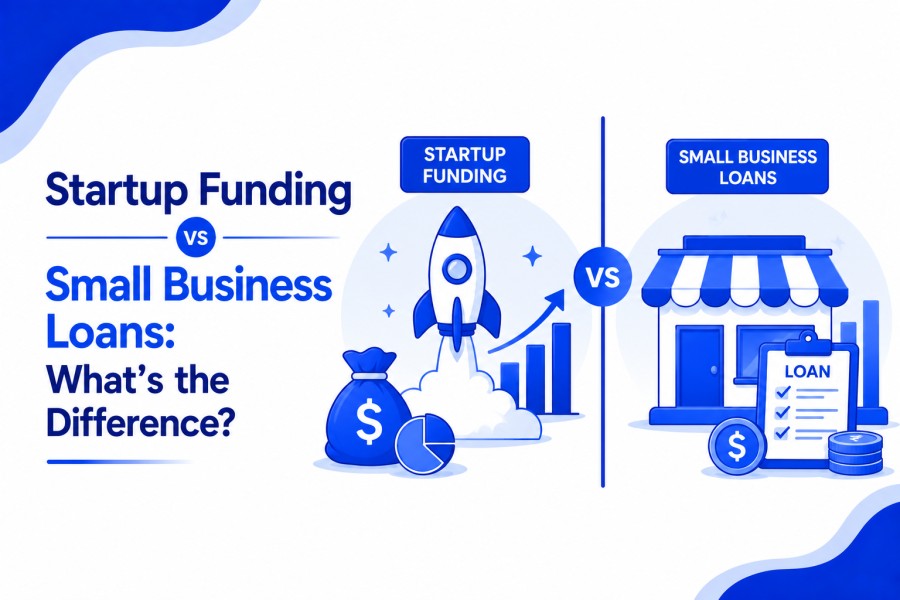
Startup Funding vs Small Business Loans: What’s the Difference?
Starting a business requires more than a great idea. Every entrepreneur eventually reaches a point where additional capital is needed to launch operations, purchase equipment, hire staff, or expand into new markets. This is where understanding the difference between startup funding and business loans becomes essential.
Many business owners use the terms interchangeably, but they are two very different financing options. Choosing the right one can significantly impact your company's growth, ownership structure, and long-term financial health.
In this guide, we'll explore how business start-up funding differs from business loans, their advantages and disadvantages, and how to determine which option is right for your venture.
Understanding Startup Funding
Startup funding refers to the capital raised by a new business to develop products, launch operations, and grow the company before it generates sufficient revenue. Unlike traditional lending, startup funding often comes from investors who provide money in exchange for ownership or future returns.
Common Sources of Startup Funding
- Angel investors
- Venture capital firms
- Crowdfunding platforms
- Friends and family
- Government grants
- Incubator and accelerator programs
Many entrepreneurs seek start-up funding because new businesses often lack the revenue history and financial records required by traditional lenders.
Related blog: Easy EMI Planning Tips for Small Business Loans
Why Businesses Seek Startup Funding?
Businesses typically require funding for start-up businesses to cover:
- Product development
- Market research
- Website and technology development
- Hiring employees
- Inventory purchases
- Marketing campaigns
- Office setup and equipment
For companies in their early stages, obtaining business start-up funds can provide the resources needed to establish a market presence and accelerate growth.
What Is a Business Loan?
A business loan is money borrowed from a bank, financial institution, or lender that must be repaid with interest over a specific period. Unlike startup funding, a business loan does not require giving up ownership in the company.
Business loans are commonly used by:
- Established businesses
- Growing startups with revenue
- Small business owners
- Entrepreneurs seeking working capital
Many lenders now offer small business start-up funding through specialized loan programs designed for new and growing businesses.
Recent blog: Key Mistakes to Avoid When Applying for a Business Loan
Startup Funding vs Business Loans: Key Differences
| Factor | Startup Funding | Business Loan |
|---|---|---|
| Ownership | May require equity sharing | No ownership dilution |
| Repayment | Usually no monthly repayments | Fixed repayment schedule |
| Approval Basis | Business idea and growth potential | Credit profile and financial strength |
| Risk | Shared with investors | Borrower assumes risk |
| Control | Investors may influence decisions | Business owner retains control |
| Funding Speed | Can take months | Often faster |
| Long-Term Cost | Equity can become expensive | Interest is predictable |
Understanding these differences helps entrepreneurs choose the most suitable financing option.
When Startup Funding Makes Sense
- You Have an Innovative Business Model: Investors often look for businesses with high growth potential. If your company has a unique product or scalable model, company start-up funding from investors may be easier to obtain.
- Revenue Has Not Started Yet: Traditional lenders generally prefer businesses with operating history. Startups with little or no revenue often rely on startup business funding from investors.
- Rapid Growth Is the Goal: If expansion is a priority, startup funding can provide larger amounts of capital than some loan programs.
- You Need Industry Expertise: Many investors bring valuable connections, mentoring, and strategic guidance in addition to funding.
When a Business Loan Is a Better Choice
- You Want Full Ownership: A business loan allows entrepreneurs to retain complete control over their company.
- Revenue Is Already Flowing: Businesses generating steady income often qualify more easily for financing.
- Predictable Repayment Is Preferred: Business loans provide structured repayment schedules, making budgeting easier.
- Expansion Requires Additional Capital: Business loans are commonly used for:
- Equipment purchases
- Inventory financing
- Working capital
- Office expansion
- Technology upgrades
How Loan Eligibility Affects Financing Options
One of the biggest factors in obtaining financing is loan eligibility.
Lenders typically evaluate:
- Credit Score: A stronger credit profile improves approval chances and may help secure lower interest rates.
- Business Revenue: Consistent revenue demonstrates repayment capacity.
- Time in Business: Some lenders require at least six months to two years of operational history.
- Existing Debt: Lower debt obligations often improve eligibility.
- Business Plan: A detailed business plan helps demonstrate future growth potential.
Before applying, it is advisable to review loan eligibility requirements carefully to avoid unnecessary rejections.
Related blog: How to Get a Business Loan with Low Interest Rates
Using a Business Loan Calculator Before Applying
Many entrepreneurs focus only on loan approval and overlook repayment planning. A business loan calculator helps estimate:
- Monthly EMI payments
- Total interest costs
- Loan affordability
- Repayment schedules
Using a loan calculator before submitting an application allows business owners to understand the financial commitment involved.
For example, increasing the loan tenure may reduce monthly payments, while a shorter tenure can lower total interest costs. A business loan calculator can help compare multiple borrowing scenarios and make informed decisions.
What are the Advantages of Startup Funding?
- No Immediate Repayment Pressure: Businesses can focus on growth rather than monthly loan obligations.
- Access to Larger Capital: Investors may provide substantial funding for promising ventures.
- Strategic Guidance: Experienced investors often contribute valuable business insights.
- Improved Networking Opportunities: Investors frequently introduce founders to customers, partners, and future investors.
Recent blog: How Digital Lending Is Changing Business Loans
Advantages of Business Loans
- Retain Ownership: You remain the sole decision-maker.
- Predictable Costs: Repayment schedules are established from the beginning.
- Faster Access to Funds: Loan approvals can often be completed more quickly than investor negotiations.
- Flexible Usage: Funds can be used for various business purposes depending on the loan product.
Challenges of Startup Funding
- Equity dilution
- Longer fundraising process
- Investor expectations
- Potential loss of decision-making control
Challenges of Business Loans
- Interest expenses
- Regular repayment obligations
- Eligibility requirements
- Potential collateral requirements
Can You Use Both Startup Funding and Business Loans?
Yes. Many successful companies combine start-up funds and business loans at different growth stages.
For example:
Early Stage: A startup secures business start-up funding from angel investors to build its product and launch operations.
Growth Stage: Once revenue becomes stable, the company obtains a business loan to finance expansion without giving away additional equity. This blended financing approach allows businesses to balance growth opportunities with ownership retention.
How to Choose the Right Financing Option
Consider the following questions:
- Do You Have Revenue? If not, startup funding may be easier to obtain.
- Are You Comfortable Sharing Ownership? If retaining control is important, a business loan may be preferable.
- How Quickly Do You Need Funds? Loans are often faster than investor fundraising.
- Can Your Business Support Monthly Payments? A business loan calculator can help determine affordability.
- What Are Your Long-Term Goals? Rapid scaling may benefit from investor funding, while loans may better support steady growth.
Read also: Why Small Businesses Need Flexible Loan Solutions
Final Thoughts
Both startup funding and business loans play important roles in business growth. The right choice depends on your company's stage, financial position, growth plans, and willingness to share ownership. If your priority is launching an innovative venture with significant growth potential, start-up funding may provide the capital and expertise needed to move forward. If your business already generates revenue and you want to maintain full ownership, a business loan can offer a structured and predictable financing solution.
Before deciding, evaluate your loan eligibility, compare financing options, and use a business loan calculator or loan calculator to understand repayment commitments. Careful planning today can help create a stronger financial foundation for future growth.
Ready to fund your business journey? Compare funding options, check your loan eligibility, and make informed borrowing decisions with Loan Quantum today.
Frequently Asked Questions
The right choice depends on your business goals, financial position, and growth plans. Startup funding may suit businesses with high growth potential, while business loans are often preferred by owners who want to retain full ownership.
Some lenders offer startup business loans without significant revenue, but approval often depends on factors such as credit score, business plan, and the financial stability of the founders.
In most cases, startup funding does not require monthly repayments because investors earn returns through future business growth or equity appreciation rather than scheduled repayments.
Consider factors such as funding needs, repayment capability, desired ownership control, business stage, and long-term financial goals before making a decision.
Yes. Many businesses use a combination of investor funding and business loans to support growth, manage cash flow, and finance expansion projects.