Blog Details
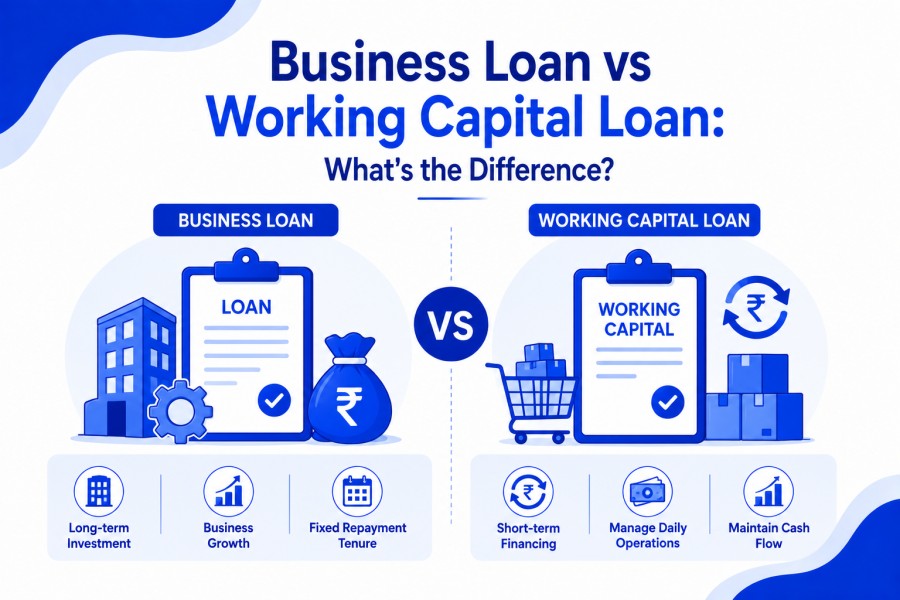
Business Loan vs Working Capital Loan: What's the Difference?
Businesses often require additional funds to support growth, purchase inventory, manage cash flow, or handle unexpected expenses. However, many business owners struggle to decide between a business loan and a working capital loan.
While both financing options provide access to funds, they serve different purposes. Choosing the right one can help reduce borrowing costs, improve cash flow management, and support long-term business growth.
In this guide, we'll compare business loans and working capital loans, explain their benefits, discuss loan eligibility requirements, and show how a business loan calculator can help you make a smarter borrowing decision.
What Is a Business Loan?
A business loan is a financing solution designed to help companies meet long-term financial requirements. Businesses typically use these funds for expansion, purchasing machinery, opening new branches, upgrading infrastructure, or making large investments. The loan amount is usually provided as a lump sum, which is repaid over a fixed tenure through monthly installments.
Common Uses of a Business Loan
- Business expansion
- Purchasing machinery or equipment
- Opening a new office or branch
- Infrastructure development
- Technology upgrades
- Large inventory purchases
- Acquiring commercial property
A business loan fund can provide substantial capital, making it suitable for projects that generate returns over time.
What Is a Working Capital Loan?
A working capital loan is specifically designed to finance a company's day-to-day operational expenses. Instead of funding long-term investments, it helps businesses maintain smooth operations during periods of fluctuating cash flow. These loans are particularly useful for seasonal businesses, retailers, manufacturers, and service providers that experience temporary cash shortages.
Common Uses of Working Capital for Business
- Employee salaries and wages
- Rent and utility payments
- Inventory replenishment
- Supplier payments
- Marketing campaigns
- Short-term operational costs
- Managing seasonal demand
A business working capital loan ensures that operations continue uninterrupted even when incoming revenue is delayed.
Business Loan vs Working Capital Loan: Key Differences
| Features | Business Loan | Working Capital Loan |
|---|---|---|
| Purpose | Long-term business growth, expansion, and asset purchases | Managing day-to-day operational expenses and cash flow |
| Loan Amount | Generally higher funding limits | Usually lower funding amounts |
| Repayment Tenure | Longer repayment periods | Shorter repayment periods |
| Primary Usage | Equipment purchases, expansion projects, and infrastructure development | Payroll, inventory purchases, rent, and supplier payments |
| Interest Cost | May be lower due to longer tenure and structured repayment | Can be comparatively higher depending on tenure and lender |
| Funding Objective | Business growth and long-term investments | Short-term cash flow management |
| Best Suitable For | Businesses planning expansion or large investments | Businesses facing temporary cash flow shortages |
What Are the Advantages of A Business Loan?
Business loans offer several advantages for growing companies.
- Higher Loan Amounts: Lenders often provide higher loan limitations for expansion and investment objectives.
- Longer Repayment Terms: Extended repayment periods help businesses manage monthly obligations more comfortably.
- Predictable Business Loan EMI: Fixed monthly installments simplify budgeting and financial planning.
- Supports Business Growth: Business loans help companies invest in opportunities that can increase revenue and profitability.
- Improves Business Credit Profile: Timely repayments may strengthen future borrowing eligibility.
What are the advantages of a working capital loan?
Working capital loans are designed to solve short-term funding needs.
Benefits include:
- Faster approval and disbursement
- Improved cash flow management
- Flexible fund usage
- Support during seasonal demand fluctuations
- Reduced operational disruptions
For many small business owners, working capital financing acts as a financial safety net.
When Should You Consider a Working Capital Loan?
A business loan is the better choice when your company requires significant funding for strategic growth initiatives.
Consider a Business Loan If:
- You want to expand operations.
- You need to purchase expensive equipment.
- You are opening additional locations.
- You require long-term financing.
- The investment will generate returns over several years.
Before applying, use a business loan calculator to estimate repayment obligations and assess affordability.
A calculator helps you determine:
- Monthly installments
- Total interest payable
- Overall borrowing cost
- Suitable loan tenure
Understanding your business loan EMI in advance helps avoid repayment challenges later.
When Should You Choose a Working Capital Loan?
A working capital loan is ideal when your business is healthy but facing temporary cash flow gaps.
Consider a Working Capital Loan If:
- Customer payments are delayed.
- You need funds to meet payroll obligations.
- Inventory needs increase during peak seasons.
- Operational expenses rise unexpectedly.
- Revenue fluctuates throughout the year.
For many small business owners, working capital financing acts as a financial cushion during challenging periods.
Which Loan Is Better for Small Businesses: Business Loan or Working Capital?
The answer depends on the purpose of funding.
Choose a Business Loan If:
- You need large capital.
- You are investing in long-term growth.
- You plan to purchase assets.
- Expansion is your primary goal.
Choose a Working Capital Loan If:
- You need immediate operational funds.
- Cash flow is temporarily tight.
- Inventory purchases are urgent.
- Customer payments are delayed.
Many successful businesses use both financing options at different stages of growth. A business loan promotes growth, whereas working capital funding maintains seamless day-to-day operations.
Final Thoughts
Understanding the difference between a business loan and a working capital loan can help business owners make smarter borrowing decisions. If your objective is growth, expansion, or major investments, a business loan may be the right solution. However, if your priority is managing operational expenses and maintaining cash flow, a working capital loan is often the better choice.
Before applying, evaluate your funding needs, check your loan eligibility, and use a business loan calculator to estimate repayments. Taking these steps can help you select the most cost-effective financing option and support the long-term success of your business.
Before applying for a business loan or working capital loan, calculate your EMI and repayment costs with Loan Quantum to choose the financing option that fits your business goals.
Frequently Asked Questions
Generally, yes. Business loans often provide larger funding amounts because they are intended for significant investments and expansion plans, while working capital loans focus on short-term financing needs.
In many cases, working capital loans may have faster approval processes because they are designed to address immediate cash flow requirements. However, eligibility criteria vary by lender.
Start by identifying your funding objective. If you need funds for growth and long-term investments, a business loan may be suitable. If you need funds to manage everyday expenses and maintain cash flow, a working capital loan is often the better choice.
Retail, manufacturing, wholesale, e-commerce, healthcare, logistics, hospitality, and service-based businesses frequently use working capital loans to manage daily expenses.
A working capital loan is designed to improve cash flow by providing immediate funds for operational expenses, helping businesses maintain smooth operations.