Blog Details
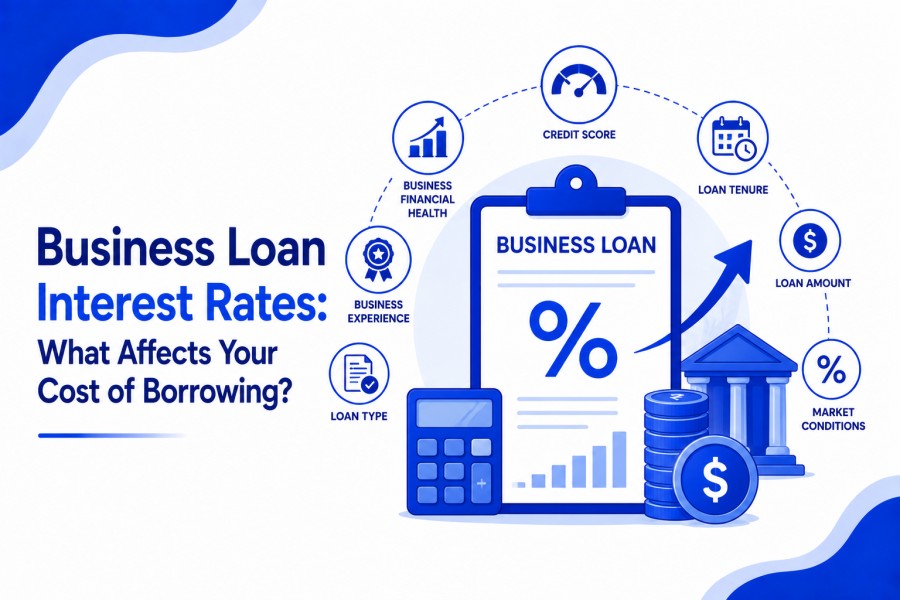
Business Loan Interest Rates: What Affects Your Cost of Borrowing?
Businesses often rely on external funding to manage working capital, expand operations, purchase equipment, hire staff, or invest in growth opportunities. While obtaining financing can help a company achieve its goals faster, understanding business loan interest rates is crucial because it directly impacts the total cost of borrowing.
Whether you are applying for a small business loan or comparing multiple financing options, knowing what influences interest rates can help you secure better terms and manage repayment effectively.
Business Loan Interest Rates in Simple Words
A business loan interest rate is the percentage charged by a lender on the amount borrowed. This rate determines how much you will pay in addition to the principal loan amount over the loan tenure.
Even a small difference in interest rates can significantly affect your monthly business loan EMI and the overall repayment amount. Therefore, understanding the factors that influence these rates is essential before signing a loan agreement.
Why Business Loan Interest Rates Matter the Most
Interest rates affect:
- Monthly business loan EMI
- Total repayment amount
- Cash flow management
- Business profitability
- Long-term financial planning
A lower interest rate reduces borrowing costs, allowing businesses to allocate more funds toward growth and operations.
Key Factors That Affect Business Loan Interest Rates in 2026
1. Business Credit Score
Lenders evaluate your business credit profile before approving a loan. A strong credit history demonstrates responsible borrowing behavior and reduces the lender's risk. Businesses with higher credit scores often qualify for:
- Lower interest rates
- Higher loan amounts
- Better repayment terms
- Faster approvals
Maintaining timely repayments on existing loans and credit facilities can help improve your creditworthiness.
2. Revenue and Cash Flow Stability
Lenders want assurance that your business generates enough income to meet repayment obligations. Factors considered include:
- Monthly revenue
- Annual turnover
- Profit margins
- Cash flow consistency
- Existing liabilities
Businesses with stable financial performance generally receive more favorable interest rates.
3. Loan Amount
The amount borrowed can affect the interest rate offered. Lenders may provide competitive rates for larger loan amounts because the administrative cost per loan is lower. However, the final rate depends on multiple factors, including risk assessment and business performance.
4. Loan Tenure
The repayment period plays a significant role in determining borrowing costs.
Short-term loans often have:
- Higher monthly EMIs
- Lower total interest paid
Long-term loans may offer:
- Lower monthly EMIs
- Higher overall interest costs
Choosing the right tenure requires balancing affordability and total repayment expense.
5. Business Vintage
Business vintage refers to how long your company has been operational. Established enterprises frequently get higher loan offers since they have:
- Proven revenue history
- Operational stability
- Lower perceived risk
New businesses and startups may face slightly higher interest rates due to limited financial history.
6. Industry Type
Certain industries are considered riskier than others. For example, businesses operating in highly volatile sectors may face stricter lending requirements compared to companies in stable industries. Lenders evaluate:
- Market conditions
- Industry growth trends
- Competition
- Economic risks
7. Collateral Availability
Secured business loans require assets as collateral, such as:
- Commercial property
- Equipment
- Inventory
- Fixed deposits
Because secured loans reduce lender risk, they often come with lower interest rates compared to unsecured business loans.
8. Existing Debt Obligations
If your business already carries significant debt, lenders may view additional borrowing as a higher risk. They assess:
- Existing loan EMIs
- Debt-to-income ratio
- Debt service coverage ratio
Reducing outstanding obligations can improve your chances of obtaining better rates.
Related blog: How Digital Lending Is Changing Business Loans
How Business Loan EMI Is Calculated
Your business loan EMI depends on:
- Loan amount
- Interest rate
- Loan tenure
A higher interest rate results in a higher EMI and increased repayment burden. Businesses should estimate their monthly obligations before applying for financing to ensure the loan fits within their budget.
Benefits of Using a Business Loan EMI Calculator
A business loan EMI calculator helps borrowers estimate monthly payments before applying for a loan.
Advantages of a Business Loan EMI Calculator
- Calculates monthly EMIs instantly
- Helps compare multiple loan options
- Assists in financial planning
- Evaluates affordability
- Reduces repayment surprises
By adjusting the loan amount, tenure, and interest rate, businesses can identify the most suitable financing structure.
Small Business Loan Options Available
Small businesses have access to various financing solutions depending on their needs.
- Working Capital Loans: Used to manage day-to-day operational expenses.
- Equipment Financing: Designed for purchasing machinery, tools, and equipment.
- Business Expansion Loans: Support growth initiatives such as opening new locations or increasing production capacity.
- Invoice Financing: Allows businesses to obtain funding for overdue invoices.
- Term Loans: Provide a lump sum amount repaid through fixed monthly installments.
Choosing the right small business loan depends on your objectives and repayment capacity.
Recent blog: Startup Funding vs Small Business Loans: What’s the Difference?
Tips to Secure Lower Business Loan Interest Rates
- Improve Your Credit Score: Maintain timely repayments and reduce outstanding debts.
- Organize Financial Records: Accurate documentation helps lenders assess your business more confidently.
- Reduce Existing Liabilities: Lower debt levels can improve your financial profile.
- Demonstrate Stable Revenue: Consistent income strengthens your loan application.
- Compare Multiple Lenders: Always compare the loan offers available in the market before making a decision.
Common EMI Mistakes Businesses Should Avoid in 2026
- Borrowing more than necessary
- Ignoring hidden fees
- Choosing longer tenures without evaluating total interest costs
- Not using a business loan EMI calculator
- Failing to compare the loan options available
- Overlooking repayment obligations
Avoiding these mistakes can help businesses reduce borrowing costs and maintain healthy cash flow.
Managing Repayment Successfully
Effective repayment management is essential for maintaining financial stability. Best practices include:
- Setting aside funds for EMI payments
- Monitoring cash flow regularly
- Maintaining emergency reserves
- Avoiding unnecessary borrowing
- Reviewing financial performance periodically
Timely repayment also strengthens your credit profile and improves access to future financing.
Read also: Business Loan Myths That Every Small Business Owner Should Know
Final Thoughts
Business loan interest rates play a major role in determining the overall cost of borrowing. Factors such as credit score, revenue, loan amount, tenure, collateral, and business history all influence the rates offered by lenders.
Before applying for a small business loan, evaluate your loan eligibility, use a business loan EMI calculator to estimate monthly obligations, compare the loan options available, and carefully review repayment terms. Making informed borrowing decisions can help businesses secure affordable financing, maintain healthy cash flow, and support long-term growth.
Compare business loan options, calculate your EMI, and find financing that fits your business goals with Loan Quantum.
Frequently Asked Questions
Yes. A higher credit score can improve loan eligibility and increase the likelihood of receiving a lower business loan interest rate because it indicates lower lending risk.
A strong repayment history demonstrates financial discipline and reliability. Lenders often use repayment records to assess risk and determine loan approval and interest rates.
Borrowers should review processing fees, prepayment charges, foreclosure fees, late payment penalties, documentation fees, and other administrative charges.
Some lenders may allow top-up loans or additional financing if your repayment history and business performance meet their requirements.
Banks assess creditworthiness, business income, industry risk, existing liabilities, loan tenure, and repayment capacity before determining the interest rate.