Blog Details
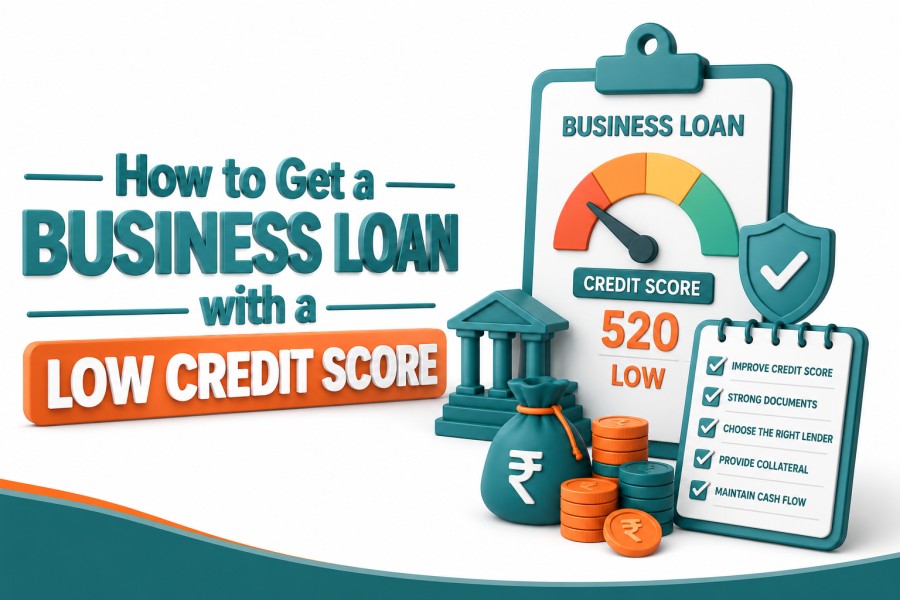
How to Get a Business Loan with a Low Credit Score
A low credit score can make borrowing more difficult, but it doesn't necessarily prevent you from getting a business loan. Today, lenders evaluate more than just your credit history. Your business income, repayment capacity, cash flow, and financial records all contribute to the decision-making process.
Whether you own a small business or are launching one of many business startups, understanding how lenders assess applications can significantly improve your chances of approval. This guide explains practical strategies to qualify for a business loan with a low credit score while helping you choose the right lender and repayment plan.
What is a low credit score for a business loan?
A credit score is one of the first factors lenders review when assessing a business loan application. It represents your borrowing history, payback patterns, and overall credit management. While there is no universal minimum score required for every lender, a score below the preferred lending range is generally considered a low credit score.
A lower score does not automatically disqualify you from getting a business loan. Many lenders evaluate your complete financial profile, including business performance, cash flow, and repayment capacity, before making a decision. This approach gives many small business owners and business startups an opportunity to secure funding despite having a lower credit score.
Related blog: Key Mistakes to Avoid When Applying for a Business Loan
Is it possible to get a business loan with a low credit score?
Yes, you can possibly get a business loan with a low credit score. Many banks, NBFCs, and digital lending platforms understand that credit scores do not always represent the current financial health of a business.
Instead of relying only on your credit score, lenders may also review:
- Monthly business revenue
- Cash flow consistency
- Existing loan obligations
- Business stability
- Industry experience
- Financial statements
- Tax filings
If your company has a consistent income and the ability to repay the loan, your application may still be granted, even if your credit score is poor.
How Lenders Determine Your Loan Eligibility Using Your Credit Score
Your loan eligibility is determined by several financial and business-related factors, with your credit score being only one part of the evaluation.
Lenders typically assess:
- Credit score and repayment history
- Business turnover and profitability
- Existing debts and liabilities
- Bank account transactions
- Business age and operational stability
- Income tax and GST returns
- Ability to repay the proposed loan
Applicants with lower credit scores can improve their loan eligibility by reducing existing debt, maintaining healthy cash flow, filing financial returns on time, and avoiding missed EMI payments. A strong financial profile often strengthens the overall loan application.
Why Digital Lending Is Helping Borrowers with Low Credit Scores
The growth of digital lending has created more financing opportunities for businesses with limited or poor credit history. Unlike traditional lending, many digital lenders use advanced technology to evaluate multiple financial indicators instead of focusing only on credit scores.
Some advantages of digital lending include:
- Faster online applications
- Minimal documentation
- Quick approval decisions
- Faster loan disbursement
- Flexible eligibility criteria
Digital lending platforms often analyze business transactions, revenue trends, and repayment capacity, making them an attractive option for borrowers with lower credit scores.
Recent blog: Startup Funding vs small Business Loans: What’s the Difference?
Best Ways to Get a Business Loan with Poor Credit
Although a low credit score presents challenges, several practical steps can improve your chances of approval. Some of the best strategies include:
- Paying off past-due bills can help you improve your credit score.
- Check your credit report for errors before applying.
- Apply only for the loan amount your business requires.
- Use a business loan calculator to estimate affordable repayments.
- Choose a business loan EMI that matches your monthly cash flow.
- Instead of accepting the initial offer, look into other lenders.
- Compare the loan based on interest rates, processing fees, repayment flexibility, and prepayment charges.
- Maintain complete financial records to demonstrate business stability.
- Consider offering collateral if required.
Careful planning before applying helps lenders view your application more positively.
Is it possible to get an unsecured business loan with a low credit score?
Yes, some lenders offer unsecured business loans even to applicants with lower credit scores. However, approval depends on factors such as business income, turnover, repayment capacity, and financial stability. Since unsecured loans do not require collateral, lenders usually perform a more detailed assessment of your business finances.
Businesses with consistent revenue and a strong repayment history generally have better approval chances. If your application is approved, the lender may offer a lower loan amount or charge a higher interest rate to offset the additional lending risk.
Related blog: Business Loan Approval Process: Step-by-Step Guide
Can Business Startups Get a Loan with a Low Credit Score?
Yes. Many business startups can qualify for business loans even with a limited or low credit history. Since startups often lack extensive financial records, lenders may evaluate additional factors such as:
- Business plan
- Revenue projections
- Market opportunity
- Industry experience
- Founder expertise
- Future growth potential
Preparing a detailed business plan, maintaining transparent financial records, and applying for an affordable loan amount can improve approval chances. Many startups also benefit from digital lending platforms that consider business potential alongside traditional credit assessments.
Tips for Business Startups with Low Credit Scores
Business startups often have limited borrowing history, making loan approval more difficult. To strengthen your application:
- Prepare a detailed business plan.
- Maintain accurate financial projections.
- Show stable business revenue where possible.
- Keep business and personal finances separate.
- Apply only for the amount your business needs.
Many lenders are willing to finance startups when they demonstrate strong business potential and repayment capability.
Read also: How Does Prepayment Affect Your Business Loan?
Final Thoughts
Getting a business loan with a low credit score is possible when you prepare your application carefully and understand what lenders evaluate beyond your credit history. Improving your loan eligibility, maintaining accurate financial records, using a business loan calculator, selecting an affordable business loan EMI, and taking time to compare the loan offers available can all improve your chances of approval.
Whether you're operating a small business or building one of many promising business startups, responsible borrowing, smart repayment planning, and understanding prepayment options can help you secure financing while supporting long-term business growth.
Make smarter borrowing decisions with Loan Quantum. Compare business loans and find the right financing for your business.
Frequently Asked Questions
Yes. You may still be eligible if your business has consistent revenue, sound financial records, and a high payback ability.
Some banks do, but approval depends on factors such as your business performance, existing debt, income, and repayment history. NBFCs and digital lending platforms may have more flexible eligibility criteria.
Yes. Some lenders provide unsecured business loans to borrowers with low credit scores, but approval depends on your income, business performance, and overall loan eligibility.
Most lenders require identity proof, address proof, PAN, Aadhaar, business registration documents, bank statements, GST returns, and income tax returns.
Yes. Multiple loan applications within a short period can negatively impact your credit score and reduce approval chances.