Blog Details
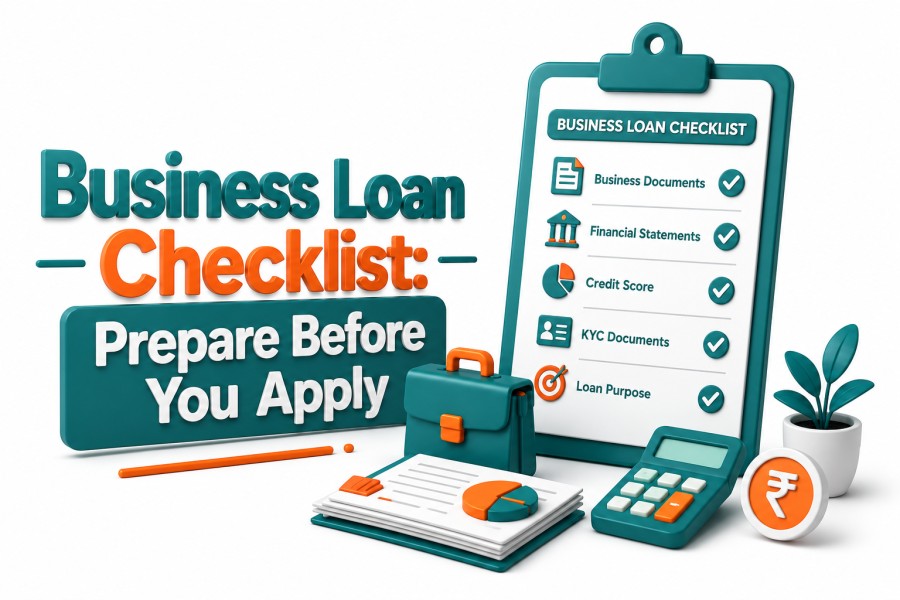
Business Loan Checklist Prepare Before You Apply
Applying for a business loan is more than filling out an application form. Whether you run a growing company, a small business, or one of the many ambitious startups, preparation plays a major role in getting your application approved.
Many business owners focus only on finding a lender. However, lenders evaluate your financial health, repayment ability, business performance, and documentation before making a decision. Missing even one important document or applying without understanding your repayment capacity can delay the approval process or even lead to rejection.
This guide explains everything you should prepare before applying for a business loan. It also covers how to improve your loan eligibility, compare lenders, estimate your business loan EMI, and choose the financing option that supports your long-term growth.
Why Preparing Before Applying for a Business Loan Matters
A business loan can help you:
- Expand your operations
- Purchase machinery or equipment
- Increase inventory
- Hire employees
- Improve cash flow
- Launch a new product
- Manage seasonal business expenses
However, lenders want confidence that you can repay the loan on time. A well-prepared application demonstrates professionalism and reduces unnecessary delays during verification. Preparing in advance also helps you understand whether borrowing is the right financial decision.
Recent blog: Secured vs Unsecured Business Loans: Which Is Better?
Step 1: Clearly Define Why You Need the Loan
Before approaching any lender, identify the exact purpose of borrowing.
Ask yourself:
- Are you expanding your business?
- Do you need working capital?
- Are you purchasing equipment?
- Are you renovating your office?
- Do you need additional inventory?
- Are you covering temporary cash flow shortages?
A clear purpose helps you determine the right loan amount instead of borrowing more than necessary. Lenders also appreciate applicants who have a defined funding plan rather than vague borrowing requirements.
Step 2: Check Your Loan Eligibility
One of the biggest mistakes business owners make is applying without checking their loan eligibility. Although requirements differ across lenders, they usually evaluate:
- Business age
- Annual turnover
- Monthly revenue
- Profitability
- Existing debts
- Banking history
- Credit score
- Income Tax Returns
- GST records (where applicable)
Knowing your eligibility beforehand prevents multiple rejected applications, which may negatively affect your credit profile.
Step 3: Organize Every Required Document
A complete application moves faster than one with missing paperwork. Keep these documents ready before applying.
Business Documents
- Business registration certificate
- Partnership deed or incorporation certificate
- GST registration
- Udyam registration (if applicable)
- Business licenses
Identity Documents
- PAN Card
- Aadhaar Card
- Passport or Driving Licence (if required)
Financial Documents
- Income Tax Returns
- Profit and Loss Statement
- Balance Sheet
- Cash Flow Statement
- Bank statements for the last 6–12 months
Additional Documents
- Business address proof
- Ownership documents
- Existing loan details
- Vendor invoices (if requested)
Proper documentation often reduces repeated verification requests and speeds up approval.
Related blog: Business Loan Eligibility Criteria and Documents Explained
Step 4: Review Your Credit Score
Your credit history is one of the first things lenders review. A solid credit profile may benefit you:
- Get faster approval
- Negotiate a lower interest rate
- Qualify for a larger loan amount
- Receive flexible repayment options
If your score needs improvement, consider:
- Paying existing EMIs on time
- Clearing overdue balances
- Reducing outstanding debt
- Avoiding many loan applications within a short period
Good financial discipline reflects positively on your business.
Step 5: Understand Your Repayment Capacity
Many businesses qualify for loans but later struggle with repayments because they borrowed more than they could comfortably manage. Before applying, calculate:
- Monthly business income
- Fixed expenses
- Existing EMIs
- Operating costs
- Emergency reserves
Borrow only what your business can repay without affecting day-to-day operations.
Step 6: Use a Business Loan Calculator
Never apply without estimating your monthly repayments. A business loan calculator helps you estimate:
- Monthly EMI
- Total repayment amount
- Interest payable
- Loan affordability
- Different repayment scenarios
Instead of guessing, you can experiment with different loan amounts and repayment periods to find a comfortable monthly commitment.
Step 7: Calculate Your Business Loan EMI
Your business loan EMI determines your monthly repayment commitment. Several factors influence EMI:
- Loan amount
- Interest rate
- Loan tenure
- Processing charges
- Repayment schedule
Even a small reduction in interest rate or a slightly longer tenure can significantly change your monthly EMI. Always calculate your EMI before signing any loan agreement.
Related blog: Collateral-Free Business Loans: Are They Worth It?
Step 8: Compare Multiple Lenders Before Choosing One
One common mistake is to accept the first loan offer. Instead, loan compare options from different lenders by evaluating:
- Interest rates
- Processing fees
- Loan tenure
- Prepayment charges
- Foreclosure charges
- Customer support
- Approval timelines
- Hidden fees
Comparing multiple lenders helps you identify the most suitable financing option rather than simply choosing the quickest approval. Recent lending guides also underline comparing total borrowing costs instead of focusing only on interest rates.
Step 9: Aim for a Lower Interest Rate
Every business owner wants affordable financing. To increase your chances of receiving a lower interest rate:
- Maintain a strong credit score
- Keep business finances transparent
- Show consistent revenue
- Reduce existing liabilities
- Apply for a realistic loan amount
- Maintain healthy banking transactions
Even a modest reduction in interest rate can lower your total borrowing cost over the life of the loan.
Step 10: Consider Whether a Credit Line Is a Better Option
Not every business requires a traditional term loan. A credit line offers flexible borrowing where you can withdraw funds as needed instead of receiving the entire loan amount upfront. It may be suitable if your business experiences:
- Seasonal cash flow gaps
- Inventory purchases
- Short-term operational expenses
- Unexpected business opportunities
You generally pay interest only on the amount you use, making it a practical option for businesses with changing funding needs.
Recent blog: Business Loan Against Property: Features, Benefits & Eligibility
Business Loan Checklist for Small Business Owners
If you operate a small business, ensure you have:
- Clear business goals
- Updated financial statements
- Organized tax records
- Strong banking history
- Good repayment record
- Realistic borrowing amount
- Business growth plan
- Backup repayment strategy
Preparation improves both confidence and credibility during the application process.
Business Loan Checklist for Startups
Unlike established businesses, startups may have limited financial history. To strengthen your application:
- Prepare a detailed business plan
- Show projected cash flow
- Demonstrate market demand
- Highlight founder experience
- Maintain accurate financial records
- Build business credit where possible
Some lenders also consider alternative funding assessments for newer businesses.
Read also: How Does Prepayment Affect Your Business Loan?
Common Mistakes to Avoid Before Applying
Many loan applications face delays because of avoidable mistakes. Avoid these common errors:
- Borrowing more than required
- Applying with incomplete documents
- Ignoring your credit score
- Not checking loan eligibility
- Underestimating the monthly EMI
- Choosing the first lender without comparison
- Hiding existing liabilities
- Applying for multiple loans simultaneously
A little preparation today can save weeks of unnecessary delays later.
Final Thoughts
Applying for a business loan should never be a rushed decision. Whether you own a growing enterprise, manage a small business, or are building one of many promising startups, preparing your finances before applying can make the process smoother and more predictable.
Take time to review your loan eligibility, organize your documents, estimate your business loan EMI, use a business loan calculator, compare different lenders, and explore whether a credit line better fits your needs. Most importantly, focus on securing a lower interest rate that keeps borrowing affordable over the long term.
Ready to finance your business growth? Use LoanQuantum to compare business loans, calculate EMIs, and make confident borrowing decisions.
Frequently Asked Questions
A business loan checklist helps you avoid missing documents, reduces delays during verification, improves your chances of approval, and allows you to identify any gaps in your financial information before submitting your application.
A well-prepared business loan checklist ensures that all required documents and financial records are ready before you apply. This helps lenders assess your loan eligibility more efficiently and reduces the chances of missing information.
Yes. A complete business loan checklist should include loan compare as an important step. Comparing lenders allows you to evaluate interest rates, processing fees, repayment terms, and loan features before making a decision.
You should review your business loan checklist before every new loan application. Lender requirements may change, and updating your documents ensures a smoother application process.
Yes. A business loan checklist is especially useful for first-time borrowers because it provides a clear roadmap of what to prepare before applying, helping them avoid common mistakes and improve their chances of approval.